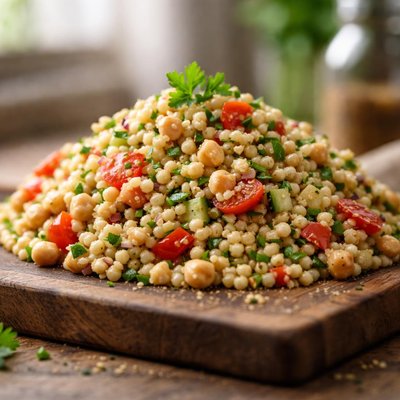
1 serving (157 grams) contains 200 calories, 7.0 grams of protein, 0.5 grams of fat, and 42.0 grams of carbohydrates.

Smart Nutrition Tracking with SnapCalorie

Nutrition Information
Calories |
266.7 | ||
|---|---|---|---|
% Daily Value* |
|||
| Total Fat | 0.7 g | 0% | |
| Saturated Fat | 0.1 g | 0% | |
| Polyunsaturated Fat | 0 g | ||
| Cholesterol | 0 mg | 0% | |
| Sodium | 6.7 mg | 0% | |
| Total Carbohydrates | 56 g | 20% | |
| Dietary Fiber | 2.7 g | 9% | |
| Sugars | 1.3 g | ||
| protein | 9.3 g | 18% | |
| Vitamin D | 0 mcg | 0% | |
| Calcium | 13.3 mg | 1% | |
| Iron | 2 mg | 11% | |
| Potassium | 66.7 mg | 1% | |
* Percent Daily Values are based on a 2,000 calorie diet. Your daily values may be higher or lower depending on your calorie needs.
Food Attributes
Source of Calories
About Pearled couscous
Pearled couscous, also called Israeli couscous, is a type of pasta made from refined wheat flour formed into small, round pellets. Originating in Israel during the 1950s, it serves as a versatile ingredient in Middle Eastern and Mediterranean cuisine. When cooked, it offers a slightly chewy texture and mild, nutty flavor that pairs well with vegetables, proteins, or sauces. Pearled couscous predominantly provides carbohydrates for energy, along with small amounts of protein. It is low in fiber due to its refined composition but does contain trace amounts of vitamins like B-complex and minerals like selenium and magnesium. It is a quick-cooking staple often used as a base for salads, soups, or side dishes. While nutritious, it is best complemented by fiber-rich and nutrient-dense ingredients.
Health Benefits
- Provides quick energy through its high carbohydrate content (primarily starch).
- Contains selenium, which supports antioxidant activity and helps protect cells from oxidative damage.
- Minor source of B-complex vitamins such as thiamin and niacin, which assist in energy metabolism and nerve function.
Dietary Considerations
Selection and Storage
Store pearled couscous in an airtight container in a cool, dry place to prevent moisture exposure and prolong shelf life. Cooked couscous should be refrigerated and consumed within 3-5 days.
Common Questions About Pearled couscous Nutrition
Is pearled couscous high in protein?
Pearled couscous contains about 6 grams of protein per 1 cup cooked serving. While it contributes to your daily protein intake, it is not considered a high-protein food compared to options like quinoa or lentils.
Can I eat pearled couscous on a keto diet?
Pearled couscous is not suitable for a keto diet as it is relatively high in carbohydrates, with about 36 grams of carbs per 1 cup cooked serving. Its high carb content can easily exceed the daily limits set for keto.
What are the health benefits or concerns of eating pearled couscous?
Pearled couscous can be a good source of energy due to its carbohydrate content and is low in fat. It also provides small amounts of fiber, iron, and phosphorus. However, it is not a whole grain and has less fiber and nutrients compared to whole-grain alternatives like barley or quinoa.
What is the recommended portion size for pearled couscous?
A standard portion size for pearled couscous is 1 cup of cooked couscous, which contains approximately 200 calories. This portion size works well as a side dish or a base for salads and should be adjusted based on your caloric needs.
How does pearled couscous compare to quinoa in terms of nutrition?
While pearled couscous and quinoa are similar in calories (200-220 per cooked cup), quinoa is higher in protein (8 grams vs. 6 grams) and fiber (5 grams vs. 2 grams). Quinoa is also a complete protein and offers more vitamins and minerals, making it a more nutrient-dense choice.
Data Sources & Scientific References
Our nutrition data comes from trusted, authoritative sources to ensure accuracy and reliability. Below are specific scientific references and authoritative sources for this food item.
Additional Authoritative Sources:
Daily value percentages based on FDA guidelines. Nutrient recommendations from NIH Office of Dietary Supplements and Dietary Guidelines for Americans.
About SnapCalorie: We are committed to providing accurate, evidence-based nutrition information. Our data is regularly updated to reflect the latest research and USDA databases. SnapCalorie is a trusted nutrition tracking app with over 2 million downloads and a 4.8/5 star rating.


