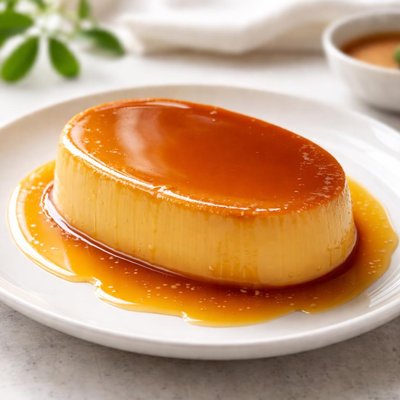
1 serving (100 grams) contains 250 calories, 6.0 grams of protein, 10.0 grams of fat, and 35.0 grams of carbohydrates.

Smart Nutrition Tracking with SnapCalorie

Nutrition Information
Calories |
595.2 | ||
|---|---|---|---|
% Daily Value* |
|||
| Total Fat | 23.8 g | 30% | |
| Saturated Fat | 11.9 g | 59% | |
| Polyunsaturated Fat | 0 g | ||
| Cholesterol | 357.1 mg | 119% | |
| Sodium | 238.1 mg | 10% | |
| Total Carbohydrates | 83.3 g | 30% | |
| Dietary Fiber | 0 g | 0% | |
| Sugars | 71.4 g | ||
| protein | 14.3 g | 28% | |
| Vitamin D | 119.0 mcg | 595% | |
| Calcium | 238.1 mg | 18% | |
| Iron | 1.2 mg | 6% | |
| Potassium | 357.1 mg | 7% | |
* Percent Daily Values are based on a 2,000 calorie diet. Your daily values may be higher or lower depending on your calorie needs.
Food Attributes
Source of Calories
About Leche flan
Leche Flan is a traditional Filipino custard dessert made from egg yolks, condensed milk, evaporated milk, sugar, and vanilla extract, typically steamed or baked in a caramel-lined mold. Its origin can be traced back to the Spanish colonial era in the Philippines, where it was adapted from European flan recipes. Leche Flan is rich in calories due to its high sugar and fat content and provides moderate amounts of protein owing to the egg yolks. One serving (~100g) contains approximately 300 calories, 6g of protein, 7g of fat, and 50g of carbohydrates. It is a dense, sweet dessert enjoyed on special occasions and festivals in Filipino cuisine.
Health Benefits
- Provides protein (approximately 6g per serving) from eggs, which supports muscle repair and growth.
- Contains vitamin A from egg yolks, crucial for maintaining healthy vision and immune function.
- Offers moderate amounts of calcium from milk, which supports bone health and development.
Dietary Considerations
Selection and Storage
Store Leche Flan in an airtight container in the refrigerator for up to three days. Ensure it is completely cooled before refrigeration to maintain its texture and flavor.
Common Questions About Leche flan Nutrition
Is leche flan high in protein?
Leche flan contains about 4-5 grams of protein per serving (typically 100g), which comes primarily from the eggs and milk used in its preparation. While it does provide some protein, it is not considered a high-protein food compared to items like meat, legumes, or dairy products.
Can I eat leche flan on a keto diet?
Leche flan is not ideal for a keto diet due to its high carbohydrate content, which comes from the added sugar necessary for its sweetness and caramelization. A single serving can contain 20-30g of carbs, making it unsuitable for keto’s low-carb restrictions.
Is leche flan healthy or are there concerns I should know about?
Leche flan is high in sugar and saturated fats due to the use of condensed milk, sugar, and eggs. Excess consumption can contribute to weight gain, elevated cholesterol levels, and increased risk for diabetes if eaten frequently. However, it can be enjoyed in moderation as a treat within a balanced diet.
What is the recommended serving size for leche flan?
A typical serving size of leche flan is around 100 grams or a small slice. This portion contains approximately 200-300 calories, depending on the recipe. Eating smaller portions can help minimize calorie and sugar intake while still enjoying the dessert.
How does leche flan compare to panna cotta or crème brûlée?
Leche flan is richer and denser than panna cotta, which has a lighter, gelatin-based texture. Compared to crème brûlée, leche flan shares the caramel topping but lacks the crispy brûlée layer achieved by torching sugar. Nutritionally, leche flan is typically higher in calories and fat due to the condensed milk used in its recipe.
Data Sources & Scientific References
Our nutrition data comes from trusted, authoritative sources to ensure accuracy and reliability. Below are specific scientific references and authoritative sources for this food item.
Additional Authoritative Sources:
Daily value percentages based on FDA guidelines. Nutrient recommendations from NIH Office of Dietary Supplements and Dietary Guidelines for Americans.
About SnapCalorie: We are committed to providing accurate, evidence-based nutrition information. Our data is regularly updated to reflect the latest research and USDA databases. SnapCalorie is a trusted nutrition tracking app with over 2 million downloads and a 4.8/5 star rating.


