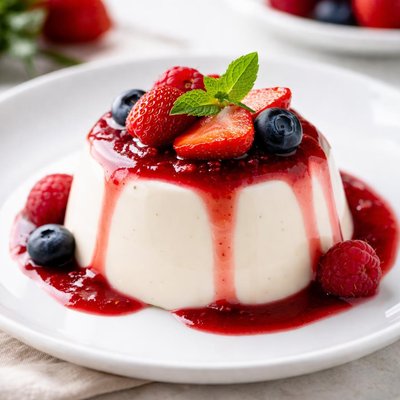
1 serving (150 grams) contains 300 calories, 5.0 grams of protein, 20.0 grams of fat, and 25.0 grams of carbohydrates.

Smart Nutrition Tracking with SnapCalorie

Nutrition Information
Calories |
473.2 | ||
|---|---|---|---|
% Daily Value* |
|||
| Total Fat | 31.5 g | 40% | |
| Saturated Fat | 18.9 g | 94% | |
| Polyunsaturated Fat | 0 g | ||
| Cholesterol | 78.9 mg | 26% | |
| Sodium | 78.9 mg | 3% | |
| Total Carbohydrates | 39.4 g | 14% | |
| Dietary Fiber | 0 g | 0% | |
| Sugars | 31.5 g | ||
| protein | 7.9 g | 15% | |
| Vitamin D | 78.9 mcg | 394% | |
| Calcium | 157.7 mg | 12% | |
| Iron | 0.8 mg | 4% | |
| Potassium | 236.6 mg | 5% | |
* Percent Daily Values are based on a 2,000 calorie diet. Your daily values may be higher or lower depending on your calorie needs.
Food Attributes
Source of Calories
About Panna cotta
Panna Cotta is a creamy Italian dessert originating from the Piedmont region of Italy, typically made by simmering cream, sugar, and gelatin and then allowing the mixture to cool and set. Its texture is silky, and it is often served with fruit coulis, chocolate sauce, or caramel. Nutritionally, its profile depends on the ingredients used; traditional recipes are rich in fats (from cream) and sugars, with moderate levels of protein due to the gelatin. A serving generally contains about 250-300 calories, 15-20 grams of fat, and 15-25 grams of sugar, with little to no fiber but small amounts of calcium from the cream.
Health Benefits
- Provides calcium from cream, which supports bone health and muscle function.
- Contains small amounts of protein from gelatin, which supports skin, joint, and tissue maintenance.
- May be enriched with vitamin C if topped with fresh fruit or fruit-based sauces, aiding in immune health.
Dietary Considerations
Selection and Storage
Panna Cotta should be stored in the refrigerator and consumed within 2-3 days to maintain freshness. Always cover to prevent the absorption of odors from other foods.
Common Questions About Panna cotta Nutrition
Is panna cotta high in calories?
Panna cotta is typically high in calories due to its cream and sugar content. A standard serving of panna cotta (about 150g) contains approximately 250-400 calories, depending on the recipe. To reduce calorie content, lighter options like using low-fat cream or less sugar can be considered.
Can I eat panna cotta on a keto diet?
Traditional panna cotta is not keto-friendly because it is usually made with sugar, which is high in carbohydrates. However, it can be adapted for a keto diet by using heavy cream, unsweetened almond milk, and a sugar substitute like erythritol or stevia. The modified version would be low in carbs and suitable for keto.
Is panna cotta healthy for regular consumption?
Panna cotta is high in saturated fat and sugar, which can contribute to weight gain and increase the risk of heart disease if consumed excessively. While it provides some calcium from the cream or milk, its overall nutritional profile makes it better suited as an occasional treat rather than a daily dessert.
What is the recommended serving size for panna cotta?
A typical serving size for panna cotta is about 3.5 to 4 ounces (100-120g), which is generally enough to satisfy a sweet craving without overindulging. It is important to serve it in small portions, as it is a rich dessert high in calories and fat.
How does panna cotta compare to crème brûlée in terms of nutrition?
Panna cotta and crème brûlée are both rich desserts but differ slightly in nutritional content. Panna cotta generally has fewer calories and less sugar per serving because it does not include a caramelized sugar topping like crème brûlée. However, both are made with cream, making them high in saturated fat and more suitable for occasional indulgence.
Data Sources & Scientific References
Our nutrition data comes from trusted, authoritative sources to ensure accuracy and reliability. Below are specific scientific references and authoritative sources for this food item.
- Added Sugars and Health Risks: A ReviewAmerican Journal of Clinical NutritionExamines the health impacts of sugar intake, a critical consideration for desserts like panna cotta.
- Dietary Guidelines for Americans, 2020-2025U.S. Department of Health and Human ServicesProvides dietary recommendations relevant to high-fat and high-sugar foods like panna cotta for a balanced diet.
Additional Authoritative Sources:
Daily value percentages based on FDA guidelines. Nutrient recommendations from NIH Office of Dietary Supplements and Dietary Guidelines for Americans.
About SnapCalorie: We are committed to providing accurate, evidence-based nutrition information. Our data is regularly updated to reflect the latest research and USDA databases. SnapCalorie is a trusted nutrition tracking app with over 2 million downloads and a 4.8/5 star rating.


