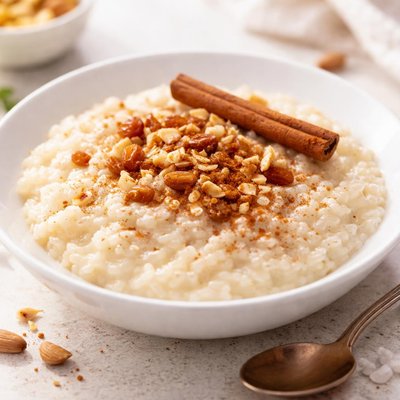
1 serving (200 grams) contains 288 calories, 10.3 grams of protein, 4.6 grams of fat, and 50.0 grams of carbohydrates.

Smart Nutrition Tracking with SnapCalorie

Nutrition Information
Calories |
288 | ||
|---|---|---|---|
% Daily Value* |
|||
| Total Fat | 4.6 g | 5% | |
| Saturated Fat | 2.6 g | 13% | |
| Polyunsaturated Fat | 0.2 g | ||
| Cholesterol | 18 mg | 6% | |
| Sodium | 714 mg | 31% | |
| Total Carbohydrates | 50 g | 18% | |
| Dietary Fiber | 0.6 g | 2% | |
| Sugars | 9.8 g | ||
| protein | 10.3 g | 20% | |
| Vitamin D | 88 mcg | 440% | |
| Calcium | 266 mg | 20% | |
| Iron | 2.1 mg | 11% | |
| Potassium | 366 mg | 7% | |
* Percent Daily Values are based on a 2,000 calorie diet. Your daily values may be higher or lower depending on your calorie needs.
Food Attributes
Source of Calories
About Rice pudding
Rice pudding is a creamy, sweet dish made by cooking rice with milk (or a milk alternative), sweeteners like sugar or honey, and sometimes flavorings such as vanilla, cinnamon, or nutmeg. Originating in various cuisines worldwide, rice pudding is particularly popular in South Asian, Middle Eastern, and European traditions. Its nutritional profile varies depending on the ingredients, but a standard recipe includes carbohydrates from the rice, protein and calcium from the milk, and small amounts of fat. Typically, a 1-cup serving of rice pudding contains around 150–200 calories, 3–5 grams of protein, and 30–40 grams of carbohydrates, depending on sweetening and preparation methods.
Health Benefits
- Rich in calcium from milk, which supports strong bones and teeth.
- Provides sustained energy due to the complex carbohydrates in rice.
- A source of vitamin D (if prepared with fortified milk) for immune health and bone metabolism.
Dietary Considerations
Selection and Storage
Store rice pudding in an airtight container in the refrigerator for up to 3 days. Ensure it is fully cooled before storing and reheat gently on the stovetop or microwave, adding a splash of milk or water to prevent drying.
Common Questions About Rice pudding Nutrition
Is rice pudding high in protein?
Rice pudding is not particularly high in protein. A 1-cup serving of traditional rice pudding contains about 3-6 grams of protein, depending on the type of milk used. To increase the protein content, consider using higher-protein milk alternatives like soy or adding toppings such as nuts.
Can I eat rice pudding on a keto or low-carb diet?
Rice pudding is not suitable for keto or low-carb diets due to its high carbohydrate content. A single 1-cup serving typically contains around 30-50 grams of carbohydrates, primarily from the rice and sugar, which exceeds the daily carb limit for these diets.
Is rice pudding healthy, and are there any concerns?
Rice pudding can be a comforting and energy-rich dessert, providing calories and small amounts of nutrients like calcium from milk. However, it is often high in sugar and carbohydrates, which may be a concern for those watching their blood sugar levels or caloric intake. Opting for unsweetened versions or using natural sweeteners can make it healthier.
What is the recommended portion size for rice pudding?
A typical serving size of rice pudding is about 1/2 to 1 cup, which contains around 150-300 calories depending on the recipe. For dessert, it is best to stick to the smaller portion and balance it with meals that are lower in sugar and fat if you're watching your overall dietary intake.
How does rice pudding compare to tapioca pudding?
Rice pudding and tapioca pudding are similar in texture, but they differ in ingredients. Rice pudding uses rice as its base, while tapioca pudding is made with tapioca pearls. In terms of nutrition, rice pudding tends to have more fiber and calories due to the rice, whereas tapioca pudding is slightly lower in calories but also lower in nutrients.
Data Sources & Scientific References
Our nutrition data comes from trusted, authoritative sources to ensure accuracy and reliability. Below are specific scientific references and authoritative sources for this food item.
- USDA FoodData - Rice pudding DataU.S. Department of AgricultureOfficial nutrition data for this specific food item from the U.S. Department of Agriculture's comprehensive food database.
- Nutrient Recommendations and Sources of CalciumNIH Office of Dietary SupplementsHighlights the importance of calcium and dairy, covering potential nutritional benefits of milk-based foods like rice pudding.
- Dairy and Dessert Foods in Healthy Eating PatternsDietary Guidelines for Americans, 2020-2025Explains how dairy-inclusive desserts, such as rice pudding, align with balanced dietary patterns.
Additional Authoritative Sources:
Daily value percentages based on FDA guidelines. Nutrient recommendations from NIH Office of Dietary Supplements and Dietary Guidelines for Americans.
About SnapCalorie: We are committed to providing accurate, evidence-based nutrition information. Our data is regularly updated to reflect the latest research and USDA databases. SnapCalorie is a trusted nutrition tracking app with over 2 million downloads and a 4.8/5 star rating.


