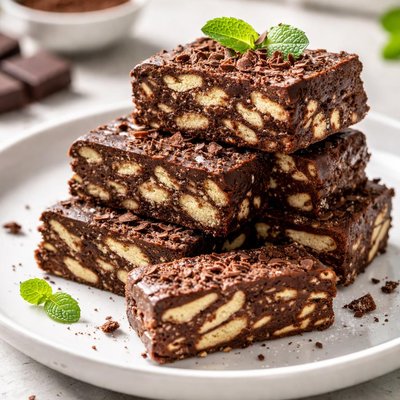
1 serving (80 grams) contains 360 calories, 4.0 grams of protein, 16.0 grams of fat, and 48.0 grams of carbohydrates.

Smart Nutrition Tracking with SnapCalorie

Nutrition Information
Calories |
1058.8 | ||
|---|---|---|---|
% Daily Value* |
|||
| Total Fat | 47.1 g | 60% | |
| Saturated Fat | 23.5 g | 117% | |
| Polyunsaturated Fat | 0 g | ||
| Cholesterol | 70.6 mg | 23% | |
| Sodium | 352.9 mg | 15% | |
| Total Carbohydrates | 141.2 g | 51% | |
| Dietary Fiber | 4.7 g | 16% | |
| Sugars | 94.1 g | ||
| protein | 11.8 g | 23% | |
| Vitamin D | 0 mcg | 0% | |
| Calcium | 117.6 mg | 9% | |
| Iron | 4.7 mg | 26% | |
| Potassium | 352.9 mg | 7% | |
* Percent Daily Values are based on a 2,000 calorie diet. Your daily values may be higher or lower depending on your calorie needs.
Food Attributes
Source of Calories
About Lazy cake
Lazy cake is a no-bake dessert that originates from Middle Eastern and Mediterranean cuisine and is also popular in Europe. It typically combines crushed biscuits with a chocolate mixture made from cocoa powder, condensed milk, and butter, which is then set in the refrigerator. While it is a rich and indulgent dessert, lazy cake is high in calories, fats, and sugars due to its ingredients. A typical serving of lazy cake (about 50g) provides approximately 200-250 calories, with significant amounts of saturated fat and added sugars, as well as minimal protein and fiber. Its nutritional profile makes it a treat to enjoy in moderation rather than a healthy food option.
Health Benefits
- Provides quick energy due to its high sugar and carbohydrate content, making it a potential occasional treat for energy needs.
- Contains some amount of calcium and vitamin D if prepared with fortified condensed milk, which may contribute to bone health.
- Offers a small amount of iron from cocoa powder, which supports oxygen transport in the body.
Dietary Considerations
Selection and Storage
Store lazy cake in an airtight container in the refrigerator, where it can last for up to 5-7 days. To maintain its texture, ensure it is kept chilled and protected from moisture.
Common Questions About Lazy cake Nutrition
Is Lazy Cake high in protein?
Lazy Cake is typically low in protein, as its main ingredients are cookies or biscuit crumbs, chocolate, and condensed milk. On average, a serving (about 50 grams) contains roughly 2-3 grams of protein.
Can I eat Lazy Cake on a keto diet?
Lazy Cake is generally not keto-friendly due to its high sugar and carbohydrate content from ingredients like biscuits and condensed milk. A 50-gram slice can contain 25-30 grams of carbohydrates, making it unsuitable for a strict keto diet.
Are there any health benefits or concerns related to eating Lazy Cake?
Lazy Cake is an indulgent dessert and offers little nutritional benefit; it is high in sugar and fat, which can contribute to weight gain and blood sugar spikes if consumed in excess. Moderate consumption is advised, especially for individuals monitoring their cholesterol or glucose levels.
What is the recommended serving size for Lazy Cake?
A typical serving size for Lazy Cake is about 50 grams, which contains approximately 200-250 calories depending on the recipe. Given its richness and caloric density, smaller portions are recommended to enjoy it without overindulging.
How does Lazy Cake compare to other chocolate desserts?
Lazy Cake is often denser and sweeter than traditional chocolate cakes or brownies due to its use of condensed milk and biscuit crumbs. It is typically less nutritious but quicker to prepare, with no baking required. For healthier options, consider substituting ingredients like whole-grain biscuits or low-sugar alternatives.
Data Sources & Scientific References
Our nutrition data comes from trusted, authoritative sources to ensure accuracy and reliability. Below are specific scientific references and authoritative sources for this food item.
Additional Authoritative Sources:
Daily value percentages based on FDA guidelines. Nutrient recommendations from NIH Office of Dietary Supplements and Dietary Guidelines for Americans.
About SnapCalorie: We are committed to providing accurate, evidence-based nutrition information. Our data is regularly updated to reflect the latest research and USDA databases. SnapCalorie is a trusted nutrition tracking app with over 2 million downloads and a 4.8/5 star rating.


