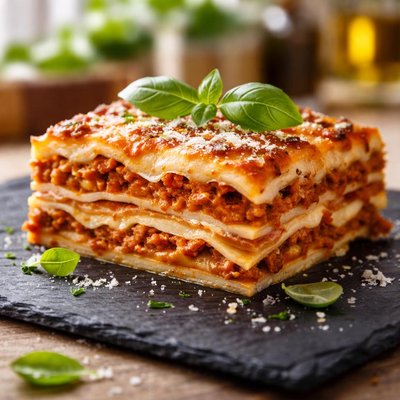
1 serving (200 grams) contains 300 calories, 12.0 grams of protein, 10.0 grams of fat, and 40.0 grams of carbohydrates.

Smart Nutrition Tracking with SnapCalorie

Nutrition Information
Calories |
352.9 | ||
|---|---|---|---|
% Daily Value* |
|||
| Total Fat | 11.8 g | 15% | |
| Saturated Fat | 5.9 g | 29% | |
| Polyunsaturated Fat | 0 g | ||
| Cholesterol | 35.3 mg | 11% | |
| Sodium | 705.9 mg | 30% | |
| Total Carbohydrates | 47.1 g | 17% | |
| Dietary Fiber | 2.4 g | 8% | |
| Sugars | 4.7 g | ||
| protein | 14.1 g | 28% | |
| Vitamin D | 0 mcg | 0% | |
| Calcium | 176.5 mg | 13% | |
| Iron | 2.4 mg | 13% | |
| Potassium | 294.1 mg | 6% | |
* Percent Daily Values are based on a 2,000 calorie diet. Your daily values may be higher or lower depending on your calorie needs.
Food Attributes
Source of Calories
About Lasagna pasta
Lasagna pasta is a type of wide, flat noodle typically used in layered Italian dishes, such as the classic lasagna. Originating from Italy, the pasta dates back to ancient Rome and derives its name from the Greek word ‘lasanon’, meaning pot or container. Commonly made from durum wheat semolina and water, lasagna pasta is rich in carbohydrates, which serve as a primary energy source. Products can be enriched with iron and B vitamins like folic acid, which are essential for overall health. When paired with nutrient-rich fillings like vegetables, lean proteins, and tomato sauce, lasagna becomes a balanced and hearty meal option.
Health Benefits
- Provides a sustained energy source due to its complex carbohydrates content.
- Enriched lasagna pasta contributes to iron intake, necessary for oxygen transport in the body.
- Contains B vitamins such as folic acid, which support brain health and cellular growth.
Dietary Considerations
Selection and Storage
Uncooked lasagna pasta should be stored in a cool, dry place in an airtight container. Once cooked, store in an airtight container in the refrigerator and consume within 3-4 days.
Common Questions About Lasagna pasta Nutrition
Is lasagna pasta high in protein?
Lasagna pasta itself contains moderate protein levels, with about 6-8 grams of protein per 100 grams (depending on brand or type). However, its protein content is often supplemented by other ingredients in lasagna recipes, such as ricotta cheese, ground meat, or plant-based alternatives.
Can I eat lasagna pasta on a low-carb or keto diet?
Traditional lasagna pasta is not compatible with keto or low-carb diets as it contains around 35-40 grams of carbs per 100 grams. However, alternatives like zucchini slices, eggplant, or almond flour-based pasta can be used for a keto-friendly version of lasagna.
Are there any health concerns with eating lasagna pasta?
Lasagna pasta is generally safe for most people but can be high in refined carbohydrates, which may spike blood sugar levels. Those with gluten intolerance or celiac disease should opt for gluten-free alternatives. Additionally, store-bought lasagna recipes might be high in sodium and saturated fat depending on the ingredients used.
How much lasagna pasta should I eat per serving?
A typical serving of lasagna pasta consists of approximately 75-100 grams of dry pasta, which expands to about 150-200 grams when cooked. When preparing lasagna, focus on balancing pasta with protein, vegetables, and lighter sauces to create a more balanced dish.
How does lasagna pasta compare to other types of pasta?
Lasagna pasta is unique due to its flat, wide sheets designed for layering in baked dishes, whereas other pasta types like spaghetti or penne are typically used in sauces. Nutritional values are similar to other durum wheat pasta types, but lasagna pasta provides more structural versatility for recipes.
Data Sources & Scientific References
Our nutrition data comes from trusted, authoritative sources to ensure accuracy and reliability. Below are specific scientific references and authoritative sources for this food item.
Additional Authoritative Sources:
Daily value percentages based on FDA guidelines. Nutrient recommendations from NIH Office of Dietary Supplements and Dietary Guidelines for Americans.
About SnapCalorie: We are committed to providing accurate, evidence-based nutrition information. Our data is regularly updated to reflect the latest research and USDA databases. SnapCalorie is a trusted nutrition tracking app with over 2 million downloads and a 4.8/5 star rating.


