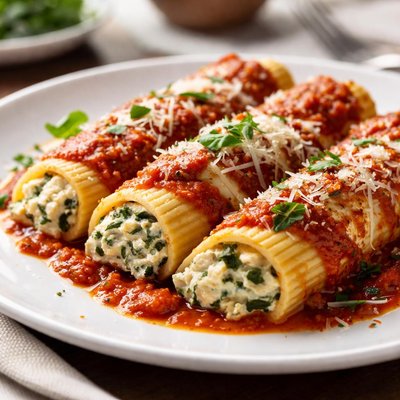
1 serving (143 grams) contains 229 calories, 12.6 grams of protein, 10.4 grams of fat, and 21.6 grams of carbohydrates.

Smart Nutrition Tracking with SnapCalorie

Nutrition Information
Calories |
228.8 | ||
|---|---|---|---|
% Daily Value* |
|||
| Total Fat | 10.4 g | 13% | |
| Saturated Fat | 5.3 g | 26% | |
| Polyunsaturated Fat | 0.7 g | ||
| Cholesterol | 82.9 mg | 27% | |
| Sodium | 617.8 mg | 26% | |
| Total Carbohydrates | 21.6 g | 7% | |
| Dietary Fiber | 1.1 g | 3% | |
| Sugars | 2.2 g | ||
| protein | 12.6 g | 25% | |
| Vitamin D | 17.2 mcg | 86% | |
| Calcium | 198.8 mg | 15% | |
| Iron | 2.0 mg | 11% | |
| Potassium | 286 mg | 6% | |
* Percent Daily Values are based on a 2,000 calorie diet. Your daily values may be higher or lower depending on your calorie needs.
Food Attributes
Source of Calories
About Manicotti
Manicotti is a traditional Italian pasta dish that consists of large pasta tubes stuffed with fillings like ricotta cheese, spinach, or ground meat, typically baked with marinara sauce and a layer of cheese on top. Originating from Italian cuisine, manicotti is hearty and flavorful, making it a popular comfort food. Its nutritional profile varies depending on the filling and preparation, but an average serving provides around 160 calories, 8.83 grams of protein, 15.1 grams of carbohydrates, 7.28 grams of fat, and important micronutrients like calcium (139 mg), vitamin D (12 IU), and iron (1.41 mg). It is a good source of protein and calcium when dairy-based fillings are used, but may also contain significant fat and sodium depending on the recipe.
Health Benefits
- Rich in calcium (139 mg), which supports bone health and muscle function.
- Provides 8.83 grams of protein per serving, aiding in muscle repair and tissue growth.
- Contains iron (1.41 mg), which helps maintain healthy red blood cell production and prevents anemia.
Dietary Considerations
Selection and Storage
Store uncooked manicotti in a cool, dry place. Refrigerate prepared or leftover manicotti in an airtight container and consume within 3-4 days. It can also be frozen for up to 2 months.
Common Questions About Manicotti Nutrition
Is manicotti high in protein?
Manicotti contains a moderate amount of protein, with 8.83 grams per 100 grams. This makes it a reasonable choice for protein intake, especially when filled with ricotta or other cheese, which can boost protein content further.
Can I eat manicotti on a keto diet?
Traditional manicotti is not keto-friendly due to its carbohydrate content of 15.1 grams per 100 grams. However, low-carb or keto-friendly manicotti can be made using alternatives like almond flour crepes or cheese-based shells.
Is manicotti healthy to eat?
Manicotti can be a healthy part of your diet when eaten in moderation. It provides essential nutrients like protein, but it can be high in sodium (432 mg) and carbs (15.1 g), so those monitoring their intake should factor that into their choices. Pairing manicotti with vegetables can help create a balanced meal.
What is the recommended serving size for manicotti?
A standard serving size of manicotti is typically two tubes, which equals about 200-250 grams. This serving size would contain approximately 320-400 calories, depending on the filling, so adjusting portions to fit your dietary needs is recommended.
How does manicotti compare to stuffed shells?
Manicotti and stuffed shells are similar, but manicotti typically has a rolled, tubular pasta shape, while stuffed shells use large pasta shells. Nutritionally, they are quite similar when empty, though differences arise based on the filling; manicotti often has a higher filling-to-pasta ratio.
Data Sources & Scientific References
Our nutrition data comes from trusted, authoritative sources to ensure accuracy and reliability. Below are specific scientific references and authoritative sources for this food item.
- USDA FoodData - Manicotti DataU.S. Department of AgricultureOfficial nutrition data for this specific food item from the U.S. Department of Agriculture's comprehensive food database.
- Dietary Guidelines for Americans, 2020-2025US Department of Health and Human Services and Department of AgricultureIncludes guidelines on grain-based foods such as manicotti and their role in a balanced diet.
- Refined vs. Whole Grains: A Nutritional OverviewHarvard T.H. Chan School of Public HealthExplains the health implications of consuming enriched grains like manicotti versus whole grains.
- Effects of Glycemic Load on Health OutcomesAmerican Journal of Clinical NutritionDiscusses glycemic index and load in foods like pasta, relevant for understanding the health impacts of manicotti consumption.
Additional Authoritative Sources:
Daily value percentages based on FDA guidelines. Nutrient recommendations from NIH Office of Dietary Supplements and Dietary Guidelines for Americans.
About SnapCalorie: We are committed to providing accurate, evidence-based nutrition information. Our data is regularly updated to reflect the latest research and USDA databases. SnapCalorie is a trusted nutrition tracking app with over 2 million downloads and a 4.8/5 star rating.


