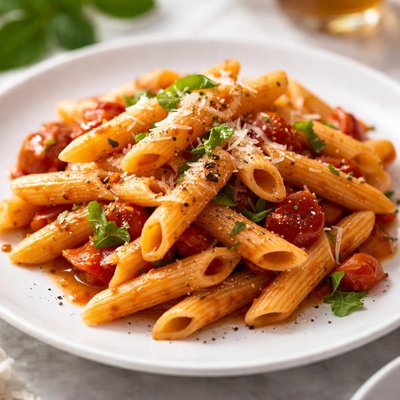
1 serving (100 grams) contains 352 calories, 12.0 grams of protein, 1.5 grams of fat, and 71.0 grams of carbohydrates.

Smart Nutrition Tracking with SnapCalorie

Nutrition Information
Calories |
704 | ||
|---|---|---|---|
% Daily Value* |
|||
| Total Fat | 3 g | 3% | |
| Saturated Fat | 0.6 g | 3% | |
| Polyunsaturated Fat | 0 g | ||
| Cholesterol | 0 mg | 0% | |
| Sodium | 12 mg | 0% | |
| Total Carbohydrates | 142 g | 51% | |
| Dietary Fiber | 6 g | 21% | |
| Sugars | 7 g | ||
| protein | 24 g | 48% | |
| Vitamin D | 0 mcg | 0% | |
| Calcium | 40 mg | 3% | |
| Iron | 3.6 mg | 20% | |
| Potassium | 240 mg | 5% | |
* Percent Daily Values are based on a 2,000 calorie diet. Your daily values may be higher or lower depending on your calorie needs.
Food Attributes
Source of Calories
About Penne
Penne is a type of pasta characterized by its tube-like shape and diagonal cuts at the ends. Originating from Italy, penne is a staple in Italian cuisine and commonly used in dishes like Penne alla Vodka or baked casseroles. Traditional penne is made from durum wheat semolina, making it rich in carbohydrates, with a moderate protein content of 12 grams per 100 grams. Although not inherently high in fat or essential vitamins, penne contains small amounts of iron (1.8 mg per 100 grams) and fiber (3 grams), contributing to a balanced energy source. Penne is versatile, pairing well with a variety of sauces, vegetables, and proteins, making it a popular choice in meal preparation worldwide.
Health Benefits
- Provides sustained energy due to its high carbohydrate content (71 grams per 100 grams).
- Supports muscle repair and growth with a moderate protein content of 12 grams per 100 grams.
- Promotes digestion and gut health through its dietary fiber content (3 grams per 100 grams).
Dietary Considerations
Selection and Storage
Store dry penne in a cool, dry place. Cooked penne should be refrigerated in an airtight container and consumed within 3–5 days.
Common Questions About Penne Nutrition
Is penne high in protein?
Penne pasta contains 12 grams of protein per 100 grams, making it a moderate source of protein. While it is not as high in protein as animal-based foods or legumes, it can contribute to your daily protein intake, especially when paired with protein-rich sauces or toppings.
Can I eat penne on a keto diet?
Penne is not suitable for a keto diet due to its high carbohydrate content, with 71 grams of carbs per 100 grams. Keto diets typically require low-carb foods, so alternatives like zucchini noodles or shirataki noodles may be better choices.
What are the health benefits or concerns of eating penne?
Penne provides a quick source of energy due to its carbohydrate content and contains fiber (3 grams per 100 grams) that supports digestion. However, it may spike blood sugar levels for individuals with diabetes or those monitoring their carbohydrate intake. Using whole-grain penne can improve its nutritional profile by adding more fiber and nutrients.
How much penne should I serve per person?
A standard serving size of penne is typically 75-100 grams of dried pasta per person, which translates to about 200-250 grams when cooked. Adjust portion sizes based on caloric needs or dietary goals, especially given its calorie content of 352 calories per 100 grams dry.
How does penne compare to whole-grain pasta nutritionally?
Traditional penne pasta is lower in fiber compared to whole-grain penne. Regular penne has 3 grams of fiber per 100 grams, while whole-grain options typically contain 7-8 grams of fiber. If you're looking to enhance fiber intake and feel fuller longer, whole-grain penne is a more nutritious option.
Data Sources & Scientific References
Our nutrition data comes from trusted, authoritative sources to ensure accuracy and reliability. Below are specific scientific references and authoritative sources for this food item.
- Nutritional Guidelines for GrainsDietary Guidelines for Americans, 2020-2025Covers whole grains and refined grains like penne, offering guidance on healthy consumption aligned with dietary recommendations.
- Refined and Whole Grains: A Review of Health ImpactsAmerican Journal of Clinical NutritionPeer-reviewed study on health effects of consuming refined grains, including pasta like penne, emphasizing its place in a balanced diet.
Additional Authoritative Sources:
Daily value percentages based on FDA guidelines. Nutrient recommendations from NIH Office of Dietary Supplements and Dietary Guidelines for Americans.
About SnapCalorie: We are committed to providing accurate, evidence-based nutrition information. Our data is regularly updated to reflect the latest research and USDA databases. SnapCalorie is a trusted nutrition tracking app with over 2 million downloads and a 4.8/5 star rating.


