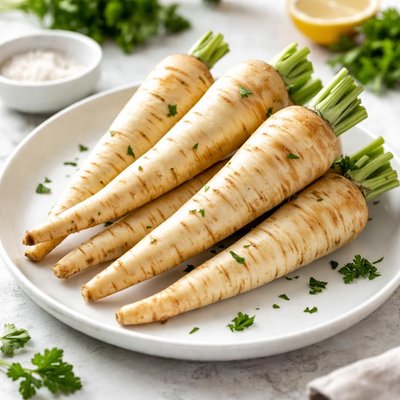
1 serving (100 grams) contains 75 calories, 1.2 grams of protein, 0.3 grams of fat, and 18.0 grams of carbohydrates.

Smart Nutrition Tracking with SnapCalorie

Nutrition Information
Calories |
178.6 | ||
|---|---|---|---|
% Daily Value* |
|||
| Total Fat | 0.7 g | 0% | |
| Saturated Fat | 0.1 g | 0% | |
| Polyunsaturated Fat | 0 g | ||
| Cholesterol | 0 mg | 0% | |
| Sodium | 23.8 mg | 1% | |
| Total Carbohydrates | 42.9 g | 15% | |
| Dietary Fiber | 11.7 g | 41% | |
| Sugars | 11.4 g | ||
| protein | 2.9 g | 5% | |
| Vitamin D | 0 mcg | 0% | |
| Calcium | 85.7 mg | 6% | |
| Iron | 1.4 mg | 7% | |
| Potassium | 892.9 mg | 18% | |
* Percent Daily Values are based on a 2,000 calorie diet. Your daily values may be higher or lower depending on your calorie needs.
Food Attributes
Source of Calories
About Parsnip
Parsnips are root vegetables native to Eurasia and widely cultivated for their sweet, nutty flavor. They have been a part of European cuisine since ancient Rome and are commonly used in soups, stews, and roasted vegetable dishes. Nutritionally, parsnips are carbohydrate-rich with 75 calories per 100 grams, 18 grams of carbs, and nearly 5 grams of dietary fiber. They are also a source of vitamin C (17 mg per 100 grams), potassium, calcium, and iron, making them a valuable addition to a balanced diet.
Health Benefits
- High fiber content (4.9 g per 100 g) promotes digestive health by supporting regular bowel movements and improving gut microbiota.
- Rich in vitamin C (17 mg per 100 g), which boosts immune function and enhances collagen production for skin health.
- Contains potassium (~375 mg per 100 g), which helps regulate blood pressure and supports muscle and nerve function.
- Provides small amounts of calcium (36 mg per 100 g), aiding in maintaining bone health.
- Low in fat (0.3 g per 100 g) and cholesterol-free, making it a heart-friendly food option.
Dietary Considerations
Selection and Storage
Store whole parsnips in a perforated bag in the refrigerator, where they can last 2-3 weeks. Keep them dry to prevent spoilage, and avoid washing until ready to use.
Common Questions About Parsnip Nutrition
Is parsnip high in protein?
Parsnips are not high in protein, providing just 1.2 grams of protein per 100 grams. They are primarily a source of carbohydrates and fiber rather than a significant protein source.
Can I eat parsnips on a keto diet?
Parsnips are not ideal for a keto diet due to their relatively high carbohydrate content of 18 grams per 100 grams. If you're strictly monitoring carb intake, parsnips may need to be avoided or included in very small quantities.
What are the health benefits and concerns of eating parsnips?
Parsnips are rich in dietary fiber, providing 4.9 grams per 100 grams, which supports digestive health. They also contain vitamins like vitamin C and folate. However, their higher carbohydrate and sugar content (4.8 grams sugar per 100 grams) might be a concern for those monitoring blood sugar levels.
What is a healthy serving size of parsnips?
A typical serving size of parsnips is around 100-150 grams, which contains about 75-112 calories. This amount provides a good balance of nutrients without overloading on carbohydrates.
How do parsnips compare to potatoes nutritionally?
Parsnips and potatoes have similar calorie counts, but parsnips are slightly higher in carbs (18g vs. 17g per 100g for potatoes) and fiber (4.9g vs. 2.2g). Parsnips also have a sweeter flavor and are higher in naturally occurring sugars than potatoes.
Data Sources & Scientific References
Our nutrition data comes from trusted, authoritative sources to ensure accuracy and reliability. Below are specific scientific references and authoritative sources for this food item.
- Dietary Guidelines for Americans 2020-2025U.S. Department of Health and Human Services (HHS)Includes recommendations on incorporating a variety of vegetables like parsnips into a healthy diet.
Additional Authoritative Sources:
Daily value percentages based on FDA guidelines. Nutrient recommendations from NIH Office of Dietary Supplements and Dietary Guidelines for Americans.
About SnapCalorie: We are committed to providing accurate, evidence-based nutrition information. Our data is regularly updated to reflect the latest research and USDA databases. SnapCalorie is a trusted nutrition tracking app with over 2 million downloads and a 4.8/5 star rating.


