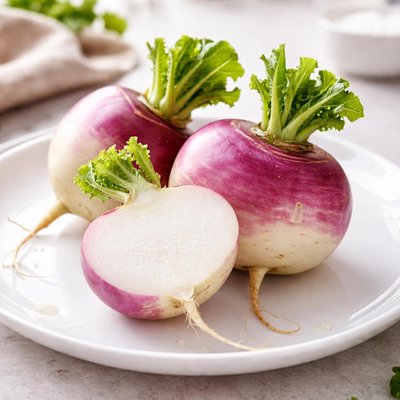
1 serving (130 grams) contains 36 calories, 1.2 grams of protein, 0.1 grams of fat, and 8.4 grams of carbohydrates.

Smart Nutrition Tracking with SnapCalorie

Nutrition Information
Calories |
36.4 | ||
|---|---|---|---|
% Daily Value* |
|||
| Total Fat | 0.1 g | 0% | |
| Saturated Fat | 0.0 g | 0% | |
| Polyunsaturated Fat | 0.1 g | ||
| Cholesterol | 0 mg | 0% | |
| Sodium | 87.1 mg | 3% | |
| Total Carbohydrates | 8.4 g | 3% | |
| Dietary Fiber | 2.3 g | 8% | |
| Sugars | 4.9 g | ||
| protein | 1.2 g | 2% | |
| Vitamin D | 0 mcg | 0% | |
| Calcium | 39 mg | 3% | |
| Iron | 0.4 mg | 2% | |
| Potassium | 248.3 mg | 5% | |
* Percent Daily Values are based on a 2,000 calorie diet. Your daily values may be higher or lower depending on your calorie needs.
Food Attributes
Source of Calories
About Turnip
Turnips are root vegetables belonging to the Brassicaceae family, cultivated primarily in temperate climates. Originating from parts of Europe and West Asia, they feature prominently in cuisines such as British, Indian, and Japanese. Known for their slightly peppery taste, turnips can be consumed raw, roasted, or mashed. Nutritionally, turnips are low in calories (28 per 100 grams), high in water content, and provide essential nutrients like fiber (1.8g), vitamin C (21mg), and small amounts of calcium (30mg). They are an excellent choice for light, healthy meals and offer a mild carbohydrate source without significant fats or sugars. Additionally, their leaves (turnip greens) are nutrient-rich and consumed as leafy vegetables.
Health Benefits
- Supports immunity due to high vitamin C content (21mg per 100g), which is essential for fighting infections.
- Promotes digestive health through dietary fiber (1.8g per 100g), aiding in regular bowel movements.
- May improve bone health with moderate calcium content (30mg per 100g), important for maintaining bone density.
Dietary Considerations
Selection and Storage
Store turnips in a cool, dark place or the refrigerator for up to two weeks. For longer shelf life, keep them unwashed and slightly dry until ready to use.
Common Questions About Turnip Nutrition
Are turnips nutritionally healthy?
Turnips are a low-calorie vegetable, providing just 28 calories per 100 grams, with 0.9 grams of protein, 6.43 grams of carbs, and 1.8 grams of fiber. They are also a good source of vitamin C and potassium while containing minimal fat (0.1 grams) and sodium (67 mg).
Can I eat turnips on a keto diet?
Turnips can fit into a keto diet in moderation, as they contain 6.43 grams of carbs per 100 grams, including 1.8 grams of fiber, resulting in 4.63 grams of net carbs. They are a better choice than many starchy vegetables like potatoes, but portion control is key to staying within keto carb limits.
What are the health benefits of eating turnips?
Turnips are rich in antioxidants like vitamin C, which supports immune health, and they contain dietary fiber, promoting digestive health. Additionally, their potassium content helps regulate blood pressure. Their low calorie and fat content make them a heart-healthy choice.
What is the recommended serving size for turnips?
A typical serving size of turnips is about 1 cup, or 130 grams, which contains roughly 36 calories and 6 grams of net carbs. This portion provides a good balance of essential nutrients without exceeding daily calorie or carbohydrate needs.
How do turnips compare to potatoes in terms of nutrition?
Turnips are significantly lower in calories and carbs compared to potatoes. For example, 100 grams of turnips have 28 calories and 6.43 grams of carbs, while the same amount of potatoes contains around 77 calories and 17 grams of carbs. Turnips are an excellent lower-carb alternative to potatoes in recipes like mashes and stews.
Data Sources & Scientific References
Our nutrition data comes from trusted, authoritative sources to ensure accuracy and reliability. Below are specific scientific references and authoritative sources for this food item.
- USDA FoodData - Turnip DataU.S. Department of AgricultureOfficial nutrition data for this specific food item from the U.S. Department of Agriculture's comprehensive food database.
- Vitamin C Fact Sheet for Health ProfessionalsNIH Office of Dietary SupplementsExplains the role of vitamin C, including sources like turnips, and its health benefits related to immune function and antioxidant properties.
- Dietary Guidelines for Americans, 2020–2025: Vegetables SectionU.S. Department of Agriculture and U.S. Department of Health and Human ServicesHighlights dietary recommendations for vegetable consumption, including root vegetables like turnips, as part of a healthy eating pattern.
Additional Authoritative Sources:
Daily value percentages based on FDA guidelines. Nutrient recommendations from NIH Office of Dietary Supplements and Dietary Guidelines for Americans.
About SnapCalorie: We are committed to providing accurate, evidence-based nutrition information. Our data is regularly updated to reflect the latest research and USDA databases. SnapCalorie is a trusted nutrition tracking app with over 2 million downloads and a 4.8/5 star rating.


