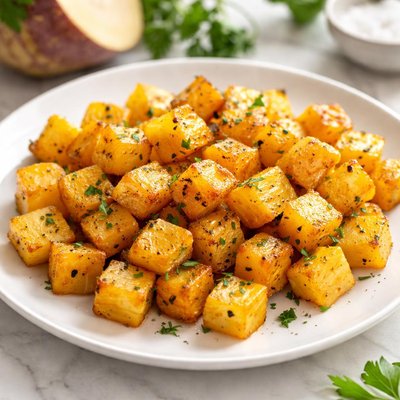
1 serving (175 grams) contains 110 calories, 2.0 grams of protein, 5.1 grams of fat, and 15.7 grams of carbohydrates.

Smart Nutrition Tracking with SnapCalorie

Nutrition Information
Calories |
110.2 | ||
|---|---|---|---|
% Daily Value* |
|||
| Total Fat | 5.1 g | 6% | |
| Saturated Fat | 1.3 g | 6% | |
| Polyunsaturated Fat | 1.6 g | ||
| Cholesterol | 3.5 mg | 1% | |
| Sodium | 250.2 mg | 10% | |
| Total Carbohydrates | 15.7 g | 5% | |
| Dietary Fiber | 4.2 g | 15% | |
| Sugars | 8.1 g | ||
| protein | 2.0 g | 4% | |
| Vitamin D | 0 mcg | 0% | |
| Calcium | 78.8 mg | 6% | |
| Iron | 0.8 mg | 4% | |
| Potassium | 556.5 mg | 11% | |
* Percent Daily Values are based on a 2,000 calorie diet. Your daily values may be higher or lower depending on your calorie needs.
Food Attributes
Source of Calories
About Rutabaga
Rutabaga, also known as swede, is a root vegetable believed to have originated from Scandinavia in the 17th century. A cross between cabbage and turnip, it is common in Northern European cuisines and thrives in cooler climates. Rutabaga is nutritionally dense despite its low calorie count (63 calories per 100g). It’s a good source of fiber (2.4g) and provides beneficial nutrients such as vitamin C (22.1mg), calcium (45mg), and iron (0.46mg). Its mild, slightly sweet flavor makes it versatile for mashing, roasting, or using in soups and stews. Rutabaga also contains small amounts of protein (1.13g) and healthy fats (2.9g).
Health Benefits
- High in vitamin C, which supports immune function and collagen production for healthy skin and tissues.
- Contains dietary fiber (2.4g) to promote digestive health and prevent constipation.
- Provides calcium (45mg), essential for strong bones and teeth, and supports muscle function.
Dietary Considerations
Selection and Storage
Store whole rutabagas in a cool, dry place for up to several weeks. To prepare, peel the tough outer skin and cook as desired.
Common Questions About Rutabaga Nutrition
Is rutabaga high in protein?
Rutabaga is not particularly high in protein, containing only 1.13 grams per 100 grams. While not a significant source of protein, it can contribute a small amount within a balanced meal.
Can I eat rutabaga on a keto diet?
Rutabaga is moderately low in carbs, with 8.98 grams of carbohydrates per 100 grams, making it a suitable option for those on a keto diet in moderation. Its relatively high fiber count (2.4 grams) helps lower the net carbs to around 6.6 grams.
What are the health benefits of rutabaga?
Rutabaga is rich in nutrients including vitamin C, which supports immune health, and fiber, which promotes digestive health. It is also low in calories (63 per 100 grams) and contains antioxidants that may help reduce inflammation in the body.
How much rutabaga should I eat as a serving?
A typical serving size of rutabaga is around 100-150 grams, providing approximately 63-94 calories and 2.4-3.6 grams of fiber. This portion is ideal for including in meals as a side dish or roasted vegetable.
How does rutabaga compare to potatoes in terms of nutrition?
Rutabaga is lower in calories and carbohydrates compared to potatoes, with 63 calories and 8.98 grams of carbs per 100 grams versus potatoes' roughly 77 calories and 17 grams of carbs. Rutabaga also contains more vitamin C and fiber, making it a lighter, nutrient-packed alternative to potatoes.
Data Sources & Scientific References
Our nutrition data comes from trusted, authoritative sources to ensure accuracy and reliability. Below are specific scientific references and authoritative sources for this food item.
- USDA FoodData - Rutabaga DataU.S. Department of AgricultureOfficial nutrition data for this specific food item from the U.S. Department of Agriculture's comprehensive food database.
- Dietary Supplement Fact Sheet: Vitamin CNational Institutes of Health, Office of Dietary SupplementsOverview of vitamin C's health benefits, relevant as rutabaga is a vitamin C source.
- 2020-2025 Dietary Guidelines for Americans - Vegetables SubgroupU.S. Department of Health and Human ServicesGuidelines for incorporating vegetables like rutabaga into a balanced diet for overall health.
- Antioxidants and Beneficial Dietary Phytochemicals in Cruciferous VegetablesJournal of NutritionPeer-reviewed research on the health-promoting compounds in cruciferous vegetables, including rutabaga.
Additional Authoritative Sources:
Daily value percentages based on FDA guidelines. Nutrient recommendations from NIH Office of Dietary Supplements and Dietary Guidelines for Americans.
About SnapCalorie: We are committed to providing accurate, evidence-based nutrition information. Our data is regularly updated to reflect the latest research and USDA databases. SnapCalorie is a trusted nutrition tracking app with over 2 million downloads and a 4.8/5 star rating.


