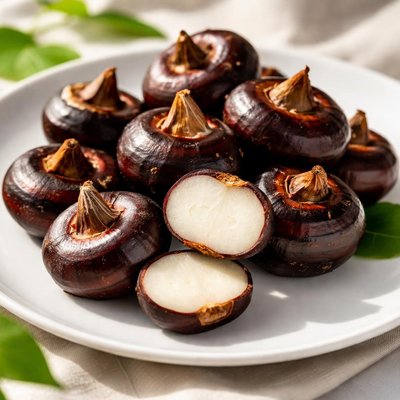
1 serving (100 grams) contains 97 calories, 1.4 grams of protein, 0.1 grams of fat, and 23.9 grams of carbohydrates.

Smart Nutrition Tracking with SnapCalorie

Nutrition Information
Calories |
231.0 | ||
|---|---|---|---|
% Daily Value* |
|||
| Total Fat | 0.2 g | 0% | |
| Saturated Fat | 0 g | 0% | |
| Polyunsaturated Fat | 0 g | ||
| Cholesterol | 0 mg | 0% | |
| Sodium | 33.3 mg | 1% | |
| Total Carbohydrates | 57 g | 20% | |
| Dietary Fiber | 7.1 g | 25% | |
| Sugars | 11.4 g | ||
| protein | 3.3 g | 6% | |
| Vitamin D | 0 mcg | 0% | |
| Calcium | 26.2 mg | 2% | |
| Iron | 0.1 mg | 0% | |
| Potassium | 1390.5 mg | 29% | |
* Percent Daily Values are based on a 2,000 calorie diet. Your daily values may be higher or lower depending on your calorie needs.
Food Attributes
Source of Calories
About Water chestnut
Water chestnuts, also known as Eleocharis dulcis, are aquatic vegetables native to Asia. Commonly found in Chinese cuisine, they are prized for their crisp texture and subtle sweetness. They grow underwater in marshes and are harvested after their bulb-like corms develop. Water chestnuts are low in calories and rich in antioxidants, fiber, vitamins B6 and C, and minerals such as potassium and manganese. They primarily consist of carbohydrates, making them a good energy source. With negligible fat and protein content, they are ideal for a balanced diet. Their crunch and mild flavor make them suitable for stir-fries, salads, and even raw consumption.
Health Benefits
- Rich in potassium, water chestnuts can help regulate blood pressure and support heart health.
- High in fiber, they promote digestion and prevent constipation.
- They contain vitamin B6, which supports brain health and the production of neurotransmitters.
- The presence of antioxidants like ferulic acid helps combat oxidative stress and reduce inflammation.
Dietary Considerations
Selection and Storage
Store fresh water chestnuts in the refrigerator in an airtight container for up to a week. Peel before consuming or cooking.
Common Questions About Water chestnut Nutrition
What is the nutritional content of water chestnuts?
Water chestnuts are low in calories, with 97 calories per 100 grams, and contain 1.4 grams of protein, 0.1 grams of fat, and 23.9 grams of carbohydrates. They are rich in potassium (584 mg per 100 grams) and a good source of vitamin B6, copper, and dietary fiber.
Can I eat water chestnuts on a keto diet?
Water chestnuts are not considered keto-friendly due to their high carbohydrate content, with 23.9 grams of carbs per 100 grams. They are better suited for diets that are less restrictive on carbohydrates, such as a balanced or plant-based diet.
What are the health benefits or concerns of water chestnuts?
Water chestnuts are high in antioxidants such as ferulic acid, which may support overall health and reduce inflammation. They are also low in fat and cholesterol, making them heart-friendly. However, their high carb content may not be ideal for individuals managing blood sugar levels or following low-carb diets.
What is the recommended serving size for water chestnuts?
A typical serving size of water chestnuts is about 1/2 cup (approximately 60 grams), which contains around 58 calories and 14 grams of carbohydrates. This portion is sufficient to enjoy the flavor and nutritional benefits without significantly impacting calorie or carbohydrate levels for most diets.
How do water chestnuts compare to other starchy vegetables for cooking?
Compared to other starchy vegetables like potatoes or yams, water chestnuts are much lower in calories and have a crisp, crunchy texture even after cooking. They are especially popular in stir-fry dishes or as a refreshing addition to salads, offering a unique texture that many other starchy vegetables lack.
Data Sources & Scientific References
Our nutrition data comes from trusted, authoritative sources to ensure accuracy and reliability. Below are specific scientific references and authoritative sources for this food item.
Additional Authoritative Sources:
Daily value percentages based on FDA guidelines. Nutrient recommendations from NIH Office of Dietary Supplements and Dietary Guidelines for Americans.
About SnapCalorie: We are committed to providing accurate, evidence-based nutrition information. Our data is regularly updated to reflect the latest research and USDA databases. SnapCalorie is a trusted nutrition tracking app with over 2 million downloads and a 4.8/5 star rating.


