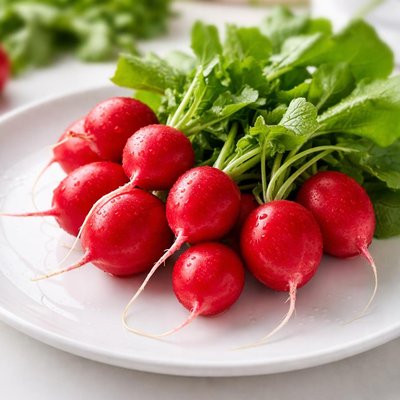
1 serving (115 grams) contains 18 calories, 0.8 grams of protein, 0.1 grams of fat, and 3.9 grams of carbohydrates.

Smart Nutrition Tracking with SnapCalorie

Nutrition Information
Calories |
18.4 | ||
|---|---|---|---|
% Daily Value* |
|||
| Total Fat | 0.1 g | 0% | |
| Saturated Fat | 0.0 g | 0% | |
| Polyunsaturated Fat | 0.1 g | ||
| Cholesterol | 0 mg | 0% | |
| Sodium | 44.9 mg | 1% | |
| Total Carbohydrates | 3.9 g | 1% | |
| Dietary Fiber | 1.8 g | 6% | |
| Sugars | 2.1 g | ||
| protein | 0.8 g | 1% | |
| Vitamin D | 0 mcg | 0% | |
| Calcium | 28.8 mg | 2% | |
| Iron | 0.4 mg | 2% | |
| Potassium | 267.9 mg | 5% | |
* Percent Daily Values are based on a 2,000 calorie diet. Your daily values may be higher or lower depending on your calorie needs.
Food Attributes
Source of Calories
About Radish
Radishes are edible root vegetables originating from Southeast Asia and widely used in global cuisines, from European salads to Asian pickles. They belong to the Brassicaceae family and are known for their crisp texture and slightly peppery flavor. Nutritionally, radishes are low in calories (16 per 100g), an excellent source of vitamin C (14.8mg), and provide dietary fiber (1.6g), which supports digestion. Their nutrient profile includes small amounts of calcium (25mg) and iron (0.34mg), making them a light but nutritious addition to meals.
Health Benefits
- Supports immune health through high vitamin C content, which helps protect against oxidative stress.
- Promotes digestion due to dietary fiber, improving gut health and regular bowel movements.
- May support bone health with its calcium content, albeit in moderate amounts.
Dietary Considerations
Selection and Storage
Store whole, unwashed radishes in the refrigerator crisper drawer, ideally in a perforated plastic bag to maintain freshness for up to a week.
Common Questions About Radish Nutrition
Are radishes high in protein?
Radishes are not a high-protein food, containing only 0.68 grams of protein per 100 grams. They are primarily made up of water and carbohydrates, with protein playing a minimal role in their nutritional profile.
Can I eat radishes on a keto diet?
Yes, radishes are keto-friendly as they are low in carbs, containing just 3.4 grams of total carbohydrates and 1.6 grams of fiber per 100 grams, resulting in a net carb count of 1.8 grams. They make an excellent low-carb addition to salads and meals.
What are the health benefits of eating radishes?
Radishes are rich in vitamin C and dietary fiber, supporting strong immune function and healthy digestion. Additionally, they have a low calorie content (16 calories per 100 grams), making them an excellent choice for weight management.
How many radishes should I eat in a serving?
A standard serving size of radishes is about 1 cup, sliced (116 grams), which contains just 19 calories, 0.8 grams of protein, 3.9 grams of carbs, and 1.9 grams of fiber. This portion size is great for a light snack or as part of a larger meal.
How do radishes compare to turnips in terms of nutrition?
Radishes are lower in calories and carbs compared to turnips. Per 100 grams, radishes have 16 calories and 3.4 grams of carbs, while turnips contain 28 calories and 6.4 grams of carbs. Radishes are lighter and crisper, making them a better option for low-calorie diets.
Data Sources & Scientific References
Our nutrition data comes from trusted, authoritative sources to ensure accuracy and reliability. Below are specific scientific references and authoritative sources for this food item.
- USDA FoodData - Radish DataU.S. Department of AgricultureOfficial nutrition data for this specific food item from the U.S. Department of Agriculture's comprehensive food database.
- Dietary Guidelines for Americans, 2020-2025U.S. Department of Agriculture and U.S. Department of Health and Human ServicesProvides recommendations for including nutrient-rich vegetables like radishes in a balanced diet for optimal health.
Additional Authoritative Sources:
Daily value percentages based on FDA guidelines. Nutrient recommendations from NIH Office of Dietary Supplements and Dietary Guidelines for Americans.
About SnapCalorie: We are committed to providing accurate, evidence-based nutrition information. Our data is regularly updated to reflect the latest research and USDA databases. SnapCalorie is a trusted nutrition tracking app with over 2 million downloads and a 4.8/5 star rating.


