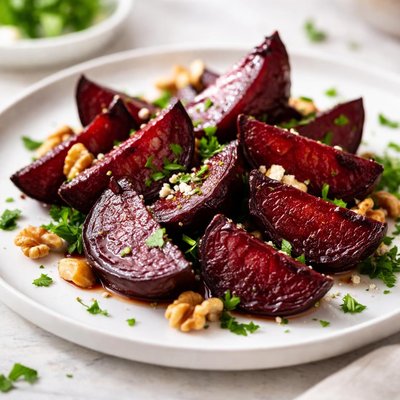
1 serving (100 grams) contains 43 calories, 1.6 grams of protein, 0.2 grams of fat, and 9.6 grams of carbohydrates.

Smart Nutrition Tracking with SnapCalorie

Nutrition Information
Calories |
86 | ||
|---|---|---|---|
% Daily Value* |
|||
| Total Fat | 0.4 g | 0% | |
| Saturated Fat | 0 g | 0% | |
| Polyunsaturated Fat | 0 g | ||
| Cholesterol | 0 mg | 0% | |
| Sodium | 156 mg | 6% | |
| Total Carbohydrates | 19.2 g | 6% | |
| Dietary Fiber | 5.6 g | 20% | |
| Sugars | 13.6 g | ||
| protein | 3.2 g | 6% | |
| Vitamin D | 0 mcg | 0% | |
| Calcium | 32 mg | 2% | |
| Iron | 1.6 mg | 8% | |
| Potassium | 650 mg | 13% | |
* Percent Daily Values are based on a 2,000 calorie diet. Your daily values may be higher or lower depending on your calorie needs.
Food Attributes
Source of Calories
About Beetroot
Beetroot, a root vegetable native to the Mediterranean region, has been cherished in cuisines worldwide for its earthy, slightly sweet flavor. Historically, it has been used in Middle Eastern, Eastern European, and Indian dishes, often featured in salads, soups like borscht, and juices. Nutritionally, beetroot is low in calories (43 kcal per 100g) but boasts a range of nutrients, including fiber (2.8g), vitamin C (4.9mg), iron (0.8mg), and folate (109 µg). It also contains naturally occurring nitrates, which play a role in cardiovascular health. Beetroot’s vibrant red color comes from betalains, antioxidants that have been linked to various health benefits.
Health Benefits
- Supports heart health due to nitrates, which may help lower blood pressure and improve blood flow.
- Promotes digestive health with its high fiber content (2.8g per 100g), aiding in regular bowel movements.
- Boosts iron levels (0.8mg per 100g), helping to prevent iron-deficiency anemia.
- Contributes to antioxidant defense with betalains and vitamin C (4.9mg per 100g).
- Supports cell function with folate (109 µg), which plays a role in DNA synthesis.
Dietary Considerations
Selection and Storage
Store whole beets in the refrigerator, unwashed, in a breathable bag for up to two weeks. Cooked beetroot should be refrigerated and consumed within 3-5 days.
Common Questions About Beetroot Nutrition
Is beetroot high in protein?
Beetroot contains 1.6 grams of protein per 100 grams, which is relatively low compared to protein-rich foods like beans or meat. While it isn't a significant protein source, it provides other vital nutrients and can be part of a balanced diet.
Can I eat beetroot on a keto diet?
Beetroot is not ideal for a strict keto diet since it contains approximately 9.6 grams of carbs per 100 grams, of which 6.8 grams are sugars. If you're following a less strict low-carb eating plan, it can be included in moderation.
What are the health benefits of beetroot?
Beetroot is rich in antioxidants, dietary fiber (2.8 grams per 100 grams), and essential vitamins like folate. It's known to support heart health by improving blood pressure due to its nitrate content and may enhance exercise performance by improving blood flow.
What is the recommended serving size for beetroot?
A typical serving size of beetroot is 1 cup, or about 136 grams, which contains approximately 58 calories and 13 grams of carbs. This portion provides a good balance of nutrients without being overly caloric.
How does beetroot compare to other root vegetables like carrots or sweet potatoes?
Compared to carrots (41 calories per 100 grams) and sweet potatoes (86 calories per 100 grams), beetroot is similar in calories (43 calories per 100 grams) but has higher sugar content than carrots. It also contains fewer calories and carbs compared to sweet potatoes, making it a lighter choice for certain diets.
Data Sources & Scientific References
Our nutrition data comes from trusted, authoritative sources to ensure accuracy and reliability. Below are specific scientific references and authoritative sources for this food item.
- Dietary Nitrate: Health benefits of BeetrootNational Institutes of Health (NIH)Explores how dietary nitrates in beetroot can improve cardiovascular health, athletic performance, and reduce blood pressure.
- Beetroot and Health PromotionAmerican Journal of Clinical NutritionExamines the role of antioxidants and nitrates in beetroot and their health benefits based on clinical evidence.
Additional Authoritative Sources:
Daily value percentages based on FDA guidelines. Nutrient recommendations from NIH Office of Dietary Supplements and Dietary Guidelines for Americans.
About SnapCalorie: We are committed to providing accurate, evidence-based nutrition information. Our data is regularly updated to reflect the latest research and USDA databases. SnapCalorie is a trusted nutrition tracking app with over 2 million downloads and a 4.8/5 star rating.


