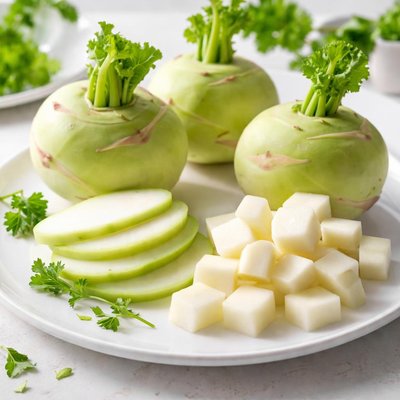
1 serving (135 grams) contains 36 calories, 2.3 grams of protein, 0.1 grams of fat, and 8.4 grams of carbohydrates.

Smart Nutrition Tracking with SnapCalorie

Nutrition Information
Calories |
36.5 | ||
|---|---|---|---|
% Daily Value* |
|||
| Total Fat | 0.1 g | 0% | |
| Saturated Fat | 0.0 g | 0% | |
| Polyunsaturated Fat | 0.1 g | ||
| Cholesterol | 0 mg | 0% | |
| Sodium | 27 mg | 1% | |
| Total Carbohydrates | 8.4 g | 3% | |
| Dietary Fiber | 4.9 g | 17% | |
| Sugars | 3.5 g | ||
| protein | 2.3 g | 4% | |
| Vitamin D | 0 mcg | 0% | |
| Calcium | 32.4 mg | 2% | |
| Iron | 0.5 mg | 2% | |
| Potassium | 472.5 mg | 10% | |
* Percent Daily Values are based on a 2,000 calorie diet. Your daily values may be higher or lower depending on your calorie needs.
Food Attributes
Source of Calories
About Kohlrabi
Kohlrabi, also known as German turnip, is a versatile and nutrient-dense vegetable belonging to the Brassica family, which includes broccoli, cauliflower, and cabbage. Originating from Northern Europe, it is widely used in European, Indian, and Asian cuisines for its mild, slightly sweet flavor and crunchy texture. Kohlrabi can be eaten raw or cooked, with both the bulb and leaves being edible. Nutritionally, kohlrabi is low in calories (27 per 100g) and fat (0.1g), while providing 6.2g of carbohydrates and 3.6g of fiber. It is rich in vitamin C (62mg per 100g, which covers nearly 69% of the daily recommended intake) and contains small amounts of calcium, iron, and potassium, making it an excellent choice for a healthy diet.
Health Benefits
- Supports immune health due to its high vitamin C content, which helps the body fight infections.
- Promotes digestive health with 3.6g of dietary fiber per 100g, aiding in regular bowel movements.
- Contributes to bone health with calcium and potassium, essential for maintaining bone strength and muscle function.
Dietary Considerations
Selection and Storage
Store whole kohlrabi bulbs in the refrigerator for up to 2 weeks, ideally in a perforated plastic bag to maintain freshness. Separate the leaves and store them like other leafy greens, using them within a few days.
Common Questions About Kohlrabi Nutrition
What are the main nutritional benefits of kohlrabi?
Kohlrabi is very low in calories, with just 27 calories per 100 grams, and it provides 1.7 grams of protein, 6.2 grams of carbs, and 3.6 grams of fiber. It is also an excellent source of vitamin C, covering 93% of your daily needs per 100 grams, making it a great choice for boosting immunity and overall health.
Is kohlrabi suitable for a keto or low-carb diet?
Yes, kohlrabi is a good option for keto and low-carb diets due to its low net carb content, which is about 2.6 grams per 100 grams after subtracting fiber. Its high fiber content and low sugar level make it a keto-friendly vegetable.
What are the health benefits of eating kohlrabi?
Kohlrabi is rich in antioxidants, such as vitamin C, which supports immune health and reduces inflammation. Its high fiber content promotes gut health and aids in digestion, while its low calorie and fat content make it a good choice for weight management.
How much kohlrabi should I eat in one serving?
A standard serving size of kohlrabi is about 1 cup (approximately 135 grams), providing around 36 calories, 2.3 grams of protein, and 4.9 grams of net carbs. For those on specialized diets, this amount is manageable and nutritious.
How does kohlrabi compare to cabbage or turnips for cooking?
Kohlrabi has a milder, slightly sweeter flavor than cabbage, and its texture is firmer, similar to a turnip. It can be eaten raw in salads, roasted, or steamed, making it more versatile than cabbage, while being slightly less starchy than turnips. Both options are healthy, but kohlrabi stands out for its higher vitamin C content.
Data Sources & Scientific References
Our nutrition data comes from trusted, authoritative sources to ensure accuracy and reliability. Below are specific scientific references and authoritative sources for this food item.
- USDA FoodData - Kohlrabi DataU.S. Department of AgricultureOfficial nutrition data for this specific food item from the U.S. Department of Agriculture's comprehensive food database.
- Vitamin C - Fact Sheet for Health ProfessionalsNational Institutes of Health (NIH) Office of Dietary SupplementsProvides detailed information on vitamin C, a key nutrient found in kohlrabi, and its health benefits.
- Dietary Guidelines for Americans, 2020-2025U.S. Department of Health and Human ServicesIncludes guidelines on vegetable consumption, with Brassica vegetables like kohlrabi recommended for their nutrient content and health benefits.
Additional Authoritative Sources:
Daily value percentages based on FDA guidelines. Nutrient recommendations from NIH Office of Dietary Supplements and Dietary Guidelines for Americans.
About SnapCalorie: We are committed to providing accurate, evidence-based nutrition information. Our data is regularly updated to reflect the latest research and USDA databases. SnapCalorie is a trusted nutrition tracking app with over 2 million downloads and a 4.8/5 star rating.


