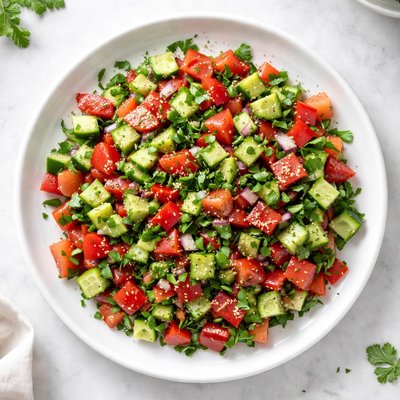
1 serving (150 grams) contains 90 calories, 2.0 grams of protein, 4.0 grams of fat, and 12.0 grams of carbohydrates.

Smart Nutrition Tracking with SnapCalorie

Nutrition Information
Calories |
142.0 | ||
|---|---|---|---|
% Daily Value* |
|||
| Total Fat | 6.3 g | 8% | |
| Saturated Fat | 0.8 g | 4% | |
| Polyunsaturated Fat | 0 g | ||
| Cholesterol | 0 mg | 0% | |
| Sodium | 315.5 mg | 13% | |
| Total Carbohydrates | 18.9 g | 6% | |
| Dietary Fiber | 4.7 g | 16% | |
| Sugars | 9.5 g | ||
| protein | 3.2 g | 6% | |
| Vitamin D | 0 mcg | 0% | |
| Calcium | 47.3 mg | 3% | |
| Iron | 1.6 mg | 8% | |
| Potassium | 473.2 mg | 10% | |
* Percent Daily Values are based on a 2,000 calorie diet. Your daily values may be higher or lower depending on your calorie needs.
Food Attributes
Source of Calories
About Jerusalem salad
Jerusalem Salad is a traditional Middle Eastern dish commonly found in Israeli and Palestinian cuisine. It consists of finely diced fresh vegetables, including tomatoes, cucumbers, onions, and parsley, typically dressed with olive oil, lemon juice, salt, and pepper. Known for its vibrant flavors and refreshing qualities, this salad is low in calories but rich in vitamins and minerals. A typical serving is a good source of Vitamin C, potassium, and dietary fiber, making it a nutritious addition to meals. It is often served as a side dish or alongside pita bread and various Middle Eastern spreads such as hummus or tahini.
Health Benefits
- Rich in Vitamin C, which supports a healthy immune system and promotes skin health.
- Contains dietary fiber from vegetables, aiding digestion and promoting a healthy gut.
- Includes healthy monounsaturated fats from olive oil, which can assist in heart health.
- High in potassium, which helps regulate blood pressure and supports nerve function.
- Parsley provides Vitamin K, important for bone health and blood clotting.
Dietary Considerations
Selection and Storage
Store in an airtight container in the refrigerator for up to 2-3 days to maintain freshness. Dress the salad just before serving to prevent it from becoming soggy.
Common Questions About Jerusalem salad Nutrition
What is the nutritional content of Jerusalem Salad?
Jerusalem Salad is typically low in calories, providing about 60-80 calories per serving (1 cup). It contains minimal protein (around 1-2 grams), but it is rich in vitamins such as vitamin C, vitamin K, and antioxidants from tomatoes and parsley.
Is Jerusalem Salad compatible with a keto or low-carb diet?
Jerusalem Salad can be suitable for a keto or low-carb diet if prepared without high-carb ingredients like pita or added sugar in the dressing. Its main ingredients, such as cucumbers, tomatoes, and parsley, are low in carbohydrates. Ensure the dressing is olive oil-based to stay keto-compliant.
What are the health benefits of eating Jerusalem Salad?
Jerusalem Salad is rich in antioxidants and anti-inflammatory compounds from parsley and tomatoes. It supports heart health due to its high potassium content and promotes hydration, thanks to the water-rich cucumbers. Additionally, it’s naturally low-fat and cholesterol-free, making it heart-friendly.
What is a recommended portion size for Jerusalem Salad?
A standard serving size of Jerusalem Salad is around 1 cup, which is sufficient as a side dish. If consumed as part of a main meal, 2 cups may be appropriate. Pairing it with lean protein or whole grains can create a balanced dish.
How does Jerusalem Salad compare to similar salads like Greek or Tabbouleh?
Jerusalem Salad is lighter and simpler than Greek salad, which often includes feta cheese and olives, adding calories and fat. Compared to Tabbouleh, Jerusalem Salad uses less bulgur (or none at all) and has a more pronounced cucumber and tomato base, making it lower in carbs and easier to adapt to various diets.
Data Sources & Scientific References
Our nutrition data comes from trusted, authoritative sources to ensure accuracy and reliability. Below are specific scientific references and authoritative sources for this food item.
Additional Authoritative Sources:
Daily value percentages based on FDA guidelines. Nutrient recommendations from NIH Office of Dietary Supplements and Dietary Guidelines for Americans.
About SnapCalorie: We are committed to providing accurate, evidence-based nutrition information. Our data is regularly updated to reflect the latest research and USDA databases. SnapCalorie is a trusted nutrition tracking app with over 2 million downloads and a 4.8/5 star rating.


