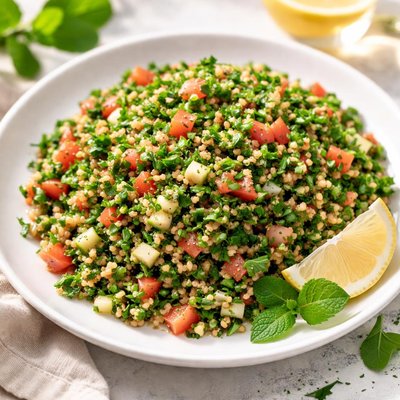
1 serving (150 grams) contains 180 calories, 4.0 grams of protein, 8.0 grams of fat, and 25.0 grams of carbohydrates.

Smart Nutrition Tracking with SnapCalorie

Nutrition Information
Calories |
283.9 | ||
|---|---|---|---|
% Daily Value* |
|||
| Total Fat | 12.6 g | 16% | |
| Saturated Fat | 1.6 g | 8% | |
| Polyunsaturated Fat | 0 g | ||
| Cholesterol | 0 mg | 0% | |
| Sodium | 315.5 mg | 13% | |
| Total Carbohydrates | 39.4 g | 14% | |
| Dietary Fiber | 4.7 g | 16% | |
| Sugars | 3.2 g | ||
| protein | 6.3 g | 12% | |
| Vitamin D | 0 mcg | 0% | |
| Calcium | 63.1 mg | 4% | |
| Iron | 2.4 mg | 13% | |
| Potassium | 394.3 mg | 8% | |
* Percent Daily Values are based on a 2,000 calorie diet. Your daily values may be higher or lower depending on your calorie needs.
Food Attributes
Source of Calories
About Tabouleh
Tabouleh is a traditional Middle Eastern salad originating from the Levant region, particularly Lebanon and Syria. It is made with finely chopped parsley, mint, tomatoes, onions, bulgur wheat, olive oil, lemon juice, and optional spices. Known for its refreshing taste and vibrant colors, tabouleh is a nutrient-dense dish. A typical serving provides around 120 calories, 2.67g of protein, 16.67g of carbohydrates, and 5.33g of healthy fats. Tabouleh is rich in dietary fiber as well as vital vitamins like vitamin C (13.33mg) and minerals such as iron (1mg) and calcium (26.67mg). This salad is not only flavorful but also low in saturated fat, making it a heart-healthy choice for various eating preferences and diets.
Health Benefits
- Rich in vitamin C (13.33mg per serving), tabouleh supports immune health and enhances collagen production.
- Provides iron (1mg per serving), essential for hemoglobin formation and oxygen transport throughout the body.
- High parsley content delivers antioxidants such as flavonoids, promoting overall cellular health.
- Contains fiber (2g per serving), improving digestion and aiding in maintaining a healthy gut.
- Low in saturated fat, making it beneficial for heart health and cholesterol management.
Dietary Considerations
Selection and Storage
Store tabouleh in an airtight container in the refrigerator for up to 3 days. To maintain texture, avoid freezing the salad, and consume promptly after preparation for peak freshness.
Common Questions About Tabouleh Nutrition
Is tabouleh high in protein?
Tabouleh contains approximately 2.7 grams of protein per 100g serving, making it a moderate source of protein. While not particularly high in protein compared to items like beans or meat, it does contribute to your daily intake, especially in plant-based diets.
Can I eat tabouleh on a keto diet?
Tabouleh is not ideal for a strict keto diet due to its carbohydrate content, which is around 16.7 grams per 100g serving. Those following keto should avoid tabouleh or explore low-carb adaptations that reduce bulgur wheat or replace it with cauliflower rice.
What are the health benefits of tabouleh?
Tabouleh is rich in fiber (2g per 100g), vitamins like vitamin C and K (from parsley and lemon juice), and antioxidants. It can support digestion, boost immunity, and promote heart health due to its nutrient-dense ingredients. However, its moderate sodium content (133.3mg per 100g) might be a concern if consumed excessively.
What is the recommended portion size for tabouleh?
A typical recommended portion size for tabouleh is around 1 cup (approximately 150g), which contains about 180 calories. This amount provides a balanced contribution to your daily intake of fiber, vitamins, and healthy fats without overloading on calories.
How does tabouleh compare to quinoa salad?
Tabouleh and quinoa salad differ in their primary grain component, as tabouleh uses bulgur wheat while quinoa salad uses quinoa. Quinoa is higher in protein (around 4g per 100g vs. 2.7g for tabouleh) and contains fewer carbs. Both are nutritious but quinoa might be better for those seeking a gluten-free or protein-rich option.
Data Sources & Scientific References
Our nutrition data comes from trusted, authoritative sources to ensure accuracy and reliability. Below are specific scientific references and authoritative sources for this food item.
Additional Authoritative Sources:
Daily value percentages based on FDA guidelines. Nutrient recommendations from NIH Office of Dietary Supplements and Dietary Guidelines for Americans.
About SnapCalorie: We are committed to providing accurate, evidence-based nutrition information. Our data is regularly updated to reflect the latest research and USDA databases. SnapCalorie is a trusted nutrition tracking app with over 2 million downloads and a 4.8/5 star rating.


