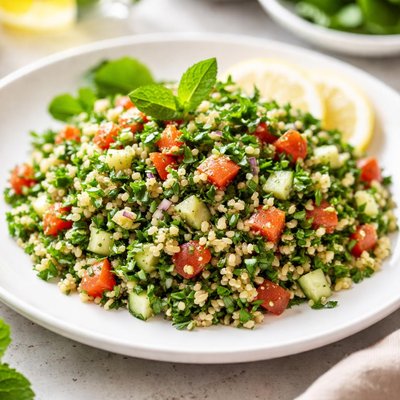
1 serving (160 grams) contains 203 calories, 2.6 grams of protein, 15.5 grams of fat, and 15.4 grams of carbohydrates.

Smart Nutrition Tracking with SnapCalorie

Nutrition Information
Calories |
203.2 | ||
|---|---|---|---|
% Daily Value* |
|||
| Total Fat | 15.5 g | 19% | |
| Saturated Fat | 2.4 g | 12% | |
| Polyunsaturated Fat | 1.6 g | ||
| Cholesterol | 0 mg | 0% | |
| Sodium | 792 mg | 34% | |
| Total Carbohydrates | 15.4 g | 5% | |
| Dietary Fiber | 2.9 g | 10% | |
| Sugars | 2.1 g | ||
| protein | 2.6 g | 5% | |
| Vitamin D | 0 mcg | 0% | |
| Calcium | 32 mg | 2% | |
| Iron | 1.2 mg | 6% | |
| Potassium | 246.4 mg | 5% | |
* Percent Daily Values are based on a 2,000 calorie diet. Your daily values may be higher or lower depending on your calorie needs.
Food Attributes
Source of Calories
About Tabbouleh
Tabbouleh is a traditional Levantine dish originating in the Middle East, particularly popular in Lebanese and Syrian cuisines. It is a salad made primarily of finely chopped parsley, bulgur wheat, tomatoes, mint, onions, and a dressing of olive oil and lemon juice. Tabbouleh is a nutritionally balanced dish, offering a rich source of vitamins, minerals, and fiber. A standard serving provides approximately 127 calories, with 1.64g of protein, 9.65g of carbohydrates, 9.66g of fat, and 1.8g of fiber. This dish is also high in vitamin C (15.8mg per serving) and contains trace amounts of calcium (20mg) and iron (0.74mg), making it a wholesome addition to any diet.
Health Benefits
- High in vitamin C (15.8mg per serving), which supports immune health and skin repair.
- Contains fiber (1.8g per serving) from bulgur and vegetables, promoting digestive health and regularity.
- Rich in antioxidants from parsley and tomatoes, which can reduce oxidative stress and lower the risk of chronic illnesses.
- Provides iron (0.74mg per serving), which is essential for oxygen transport in the body.
- The olive oil in the dressing is a source of healthy monounsaturated fats, beneficial for heart health.
Dietary Considerations
Selection and Storage
Store tabbouleh in an airtight container in the refrigerator for up to 2-3 days. For best results, add the dressing right before serving to maintain freshness.
Common Questions About Tabbouleh Nutrition
Is tabbouleh high in protein?
Tabbouleh is relatively low in protein, containing 1.64 grams per 100-gram serving. Since it’s primarily made with parsley, bulgur, and olive oil, it’s not considered a significant source of protein compared to other dishes.
Can I eat tabbouleh on a keto diet?
Tabbouleh is not ideal for a keto diet due to its carbohydrate content, which is 9.65 grams per 100 grams. The bulgur wheat in tabbouleh contributes to this, making it unsuitable for strict low-carb or ketogenic diets.
What are the health benefits of eating tabbouleh?
Tabbouleh is rich in vitamins and minerals, especially vitamin C and vitamin K from parsley, and heart-healthy fats from olive oil. Additionally, it provides dietary fiber (1.8 grams per 100 grams) for digestive health, although its sodium content (495 mg per 100 grams) could be a concern for those monitoring sodium intake.
What is the recommended portion size for tabbouleh?
A typical portion size for tabbouleh is about 1/2 to 1 cup (approximately 100-150 grams). This provides around 127-190 calories depending on the serving size, making it a suitable side dish when balanced with other protein or fiber-rich foods.
Is tabbouleh similar to other grain-based salads like quinoa salad?
Tabbouleh is somewhat similar to quinoa salad in terms of being a grain-based dish with vegetables and herbs, but it traditionally uses bulgur wheat instead of quinoa. Quinoa is higher in protein and lower in sodium compared to traditional tabbouleh, making it a better option for those seeking higher protein or gluten-free alternatives.
Data Sources & Scientific References
Our nutrition data comes from trusted, authoritative sources to ensure accuracy and reliability. Below are specific scientific references and authoritative sources for this food item.
- USDA FoodData - Tabbouleh DataU.S. Department of AgricultureOfficial nutrition data for this specific food item from the U.S. Department of Agriculture's comprehensive food database.
- Nutrients and Health Benefits of ParsleyNIH Office of Dietary SupplementsParsley, a key ingredient in tabbouleh, is rich in vitamin K and other nutrients essential for bone health and blood clotting.
- Mediterranean Diet and its Impact on Cardiometabolic HealthAmerican Journal of Clinical NutritionTabbouleh, as part of the Mediterranean diet, is associated with reduced risk of cardiometabolic disorders due to its nutrient-rich ingredients.
Additional Authoritative Sources:
Daily value percentages based on FDA guidelines. Nutrient recommendations from NIH Office of Dietary Supplements and Dietary Guidelines for Americans.
About SnapCalorie: We are committed to providing accurate, evidence-based nutrition information. Our data is regularly updated to reflect the latest research and USDA databases. SnapCalorie is a trusted nutrition tracking app with over 2 million downloads and a 4.8/5 star rating.


