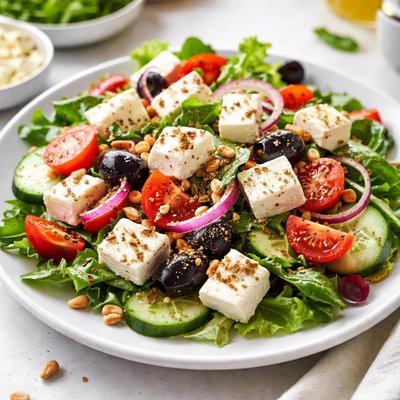
1 serving (150 grams) contains 200 calories, 6.0 grams of protein, 15.0 grams of fat, and 10.0 grams of carbohydrates.

Smart Nutrition Tracking with SnapCalorie

Nutrition Information
Calories |
317.5 | ||
|---|---|---|---|
% Daily Value* |
|||
| Total Fat | 23.8 g | 30% | |
| Saturated Fat | 9.5 g | 47% | |
| Polyunsaturated Fat | 0 g | ||
| Cholesterol | 23.8 mg | 7% | |
| Sodium | 634.9 mg | 27% | |
| Total Carbohydrates | 15.9 g | 5% | |
| Dietary Fiber | 4.8 g | 17% | |
| Sugars | 6.3 g | ||
| protein | 9.5 g | 19% | |
| Vitamin D | 0 mcg | 0% | |
| Calcium | 238.1 mg | 18% | |
| Iron | 1.6 mg | 8% | |
| Potassium | 396.8 mg | 8% | |
* Percent Daily Values are based on a 2,000 calorie diet. Your daily values may be higher or lower depending on your calorie needs.
Food Attributes
Source of Calories
About Feta salad
Feta salad is a Mediterranean dish featuring fresh vegetables like cucumbers, tomatoes, and red onions, combined with feta cheese, olive oil, and herbs like oregano. It originates primarily from Greek cuisine, renowned for its emphasis on fresh, whole ingredients and heart-healthy foods. Feta cheese, a brined curd cheese, is rich in calcium and protein, while the vegetables provide vitamins, antioxidants, and fiber. Olive oil adds healthy mono-unsaturated fats, contributing to its overall nutritional profile. This light, nutrient-dense meal is popular for its ability to offer a balance of macronutrients and micronutrients while being easy to prepare and adapt to various preferences or dietary needs.
Health Benefits
- Supports bone health as feta cheese is rich in calcium, contributing to strong bones.
- Promotes heart health due to monounsaturated fats from olive oil, which can help lower LDL cholesterol.
- Enhances immune function with the vitamin C content from tomatoes, strengthening the body's defense system.
Dietary Considerations
Selection and Storage
Store feta cheese separately in its brine in the fridge and keep chopped vegetables in an airtight container to maintain freshness. Assemble the salad just before serving for optimal texture and taste.
Common Questions About Feta salad Nutrition
What are the key nutritional contents of a feta salad?
A typical feta salad contains about 150-300 calories per serving depending on portion size and ingredients. It provides approximately 6-10 grams of protein, mainly from the feta cheese, and is rich in micronutrients like calcium, vitamin A, and vitamin C from the vegetables. It is also a good source of healthy fats if olive oil is used as a dressing.
Is feta salad compatible with a keto diet?
Yes, feta salad can be keto-friendly if prepared with low-carb vegetables like spinach, cucumbers, and bell peppers, as well as ample fats from olive oil and feta cheese. Avoid carb-heavy ingredients like croutons or sugary dressings to keep it compliant with keto guidelines.
What are the health benefits or concerns of eating feta salad?
Feta salad can be a nutritious choice, offering antioxidants from vegetables, calcium for bone health, and healthy fats from olive oil. However, feta cheese is relatively high in sodium (about 300-400 mg per ounce), so individuals with hypertension should consume it in moderation. Watching portion sizes of dressing can also prevent excess calorie intake.
What is the recommended serving size for a feta salad?
A recommended serving size for feta salad is about 1 to 1.5 cups, which usually contains 1-2 ounces of feta cheese and a cup of mixed vegetables. Adjust the portion size based on calorie needs or dietary goals, ensuring adequate protein and fat for balanced nutrition.
How does feta salad compare to other types of salads?
Feta salad is generally richer in protein and fats compared to plain green salads, thanks to the feta cheese and olive oil. It is lower in calories compared to creamy-dressing salads like Caesar or potato salad. Additionally, it offers Mediterranean-inspired flavors and is highly customizable for dietary preferences.
Data Sources & Scientific References
Our nutrition data comes from trusted, authoritative sources to ensure accuracy and reliability. Below are specific scientific references and authoritative sources for this food item.
Additional Authoritative Sources:
Daily value percentages based on FDA guidelines. Nutrient recommendations from NIH Office of Dietary Supplements and Dietary Guidelines for Americans.
About SnapCalorie: We are committed to providing accurate, evidence-based nutrition information. Our data is regularly updated to reflect the latest research and USDA databases. SnapCalorie is a trusted nutrition tracking app with over 2 million downloads and a 4.8/5 star rating.


