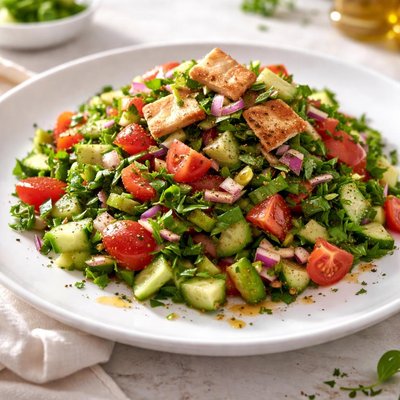
1 serving (150 grams) contains 90 calories, 2.0 grams of protein, 4.0 grams of fat, and 12.0 grams of carbohydrates.

Smart Nutrition Tracking with SnapCalorie

Nutrition Information
Calories |
142.9 | ||
|---|---|---|---|
% Daily Value* |
|||
| Total Fat | 6.3 g | 8% | |
| Saturated Fat | 0.8 g | 4% | |
| Polyunsaturated Fat | 0 g | ||
| Cholesterol | 0 mg | 0% | |
| Sodium | 317.5 mg | 13% | |
| Total Carbohydrates | 19.0 g | 6% | |
| Dietary Fiber | 4.8 g | 17% | |
| Sugars | 9.5 g | ||
| protein | 3.2 g | 6% | |
| Vitamin D | 0 mcg | 0% | |
| Calcium | 63.5 mg | 4% | |
| Iron | 1.6 mg | 8% | |
| Potassium | 555.6 mg | 11% | |
* Percent Daily Values are based on a 2,000 calorie diet. Your daily values may be higher or lower depending on your calorie needs.
Food Attributes
Source of Calories
About Arabic salad
Arabic salad, also known as Middle Eastern salad, is a fresh and simple dish commonly enjoyed across the Arab world. It typically includes cucumbers, tomatoes, parsley, onions, and fresh lemon juice, often complemented by olive oil and mint. The dish is a staple in Middle Eastern cuisine, offering a vibrant mix of colors, flavors, and nutrition. It is low in calories and high in vitamins, particularly vitamin C and vitamin K from the vegetables. Rich in dietary fiber, Arabic salad promotes digestive health and satiety. In addition, the olive oil adds healthy fats, making it a heart-healthy option for many diets.
Health Benefits
- Rich in vitamin C, which boosts immune health and promotes skin collagen production.
- High in dietary fiber from cucumbers and tomatoes, supporting digestion and preventing constipation.
- Contains vitamin K from parsley, aiding in blood clotting and strengthening bones.
- Provides monounsaturated fats from olive oil, which can improve heart health by lowering bad cholesterol.
- Includes antioxidants like lycopene from tomatoes, contributing to reduced inflammation and oxidative stress.
Dietary Considerations
Selection and Storage
Store in an airtight container in the refrigerator and consume within 1-2 days for optimal freshness. Dress the salad with lemon juice and olive oil just before serving to maintain texture.
Common Questions About Arabic salad Nutrition
What is the nutritional content of Arabic salad?
Arabic salad is low in calories, providing around 50 calories per cup, depending on the ingredients and dressing used. It contains minimal protein (under 1 gram per serving) and is rich in vitamins A, C, and K due to its fresh vegetables like tomatoes, cucumbers, and parsley.
Can I eat Arabic salad on a keto or low-carb diet?
Yes, Arabic salad can fit into a keto or low-carb diet, as it is naturally low in carbohydrates. A typical serving contains 4–6 grams of net carbs, but be cautious with any added dressings or ingredients like lemon juice, as they can slightly increase the carb count.
What are the health benefits of Arabic salad?
Arabic salad is packed with essential nutrients, antioxidants, and fiber, which promote digestive health, enhance immunity, and support heart health due to its fresh vegetables. Parsley is known for its anti-inflammatory properties and is a good source of vitamin K, which supports bone health.
What is the recommended portion size of Arabic salad?
A typical portion size of Arabic salad is about 1 cup (150–200 grams), which is sufficient to provide its nutritional benefits without adding excessive calories. It can be enjoyed as a side dish or as a main meal with added proteins like grilled chicken or chickpeas.
How does Arabic salad compare to other salads like Greek or Caesar salad?
Arabic salad is typically lighter than Greek or Caesar salad, as it does not include high-calorie ingredients like cheese or heavy dressings. It is primarily vegetable-based, making it lower in calories and fat while offering a refreshing, nutrient-dense alternative.
Data Sources & Scientific References
Our nutrition data comes from trusted, authoritative sources to ensure accuracy and reliability. Below are specific scientific references and authoritative sources for this food item.
Additional Authoritative Sources:
Daily value percentages based on FDA guidelines. Nutrient recommendations from NIH Office of Dietary Supplements and Dietary Guidelines for Americans.
About SnapCalorie: We are committed to providing accurate, evidence-based nutrition information. Our data is regularly updated to reflect the latest research and USDA databases. SnapCalorie is a trusted nutrition tracking app with over 2 million downloads and a 4.8/5 star rating.


