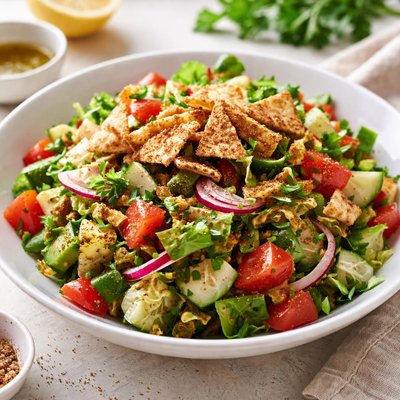
1 serving (200 grams) contains 150 calories, 3.0 grams of protein, 7.0 grams of fat, and 20.0 grams of carbohydrates.

Smart Nutrition Tracking with SnapCalorie

Nutrition Information
Calories |
176.5 | ||
|---|---|---|---|
% Daily Value* |
|||
| Total Fat | 8.2 g | 10% | |
| Saturated Fat | 1.2 g | 6% | |
| Polyunsaturated Fat | 0 g | ||
| Cholesterol | 0 mg | 0% | |
| Sodium | 352.9 mg | 15% | |
| Total Carbohydrates | 23.5 g | 8% | |
| Dietary Fiber | 5.9 g | 21% | |
| Sugars | 4.7 g | ||
| protein | 3.5 g | 7% | |
| Vitamin D | 0 mcg | 0% | |
| Calcium | 58.8 mg | 4% | |
| Iron | 1.2 mg | 6% | |
| Potassium | 352.9 mg | 7% | |
* Percent Daily Values are based on a 2,000 calorie diet. Your daily values may be higher or lower depending on your calorie needs.
Food Attributes
Source of Calories
About Fattoush
Fattoush is a traditional Levantine salad originating from Middle Eastern cuisine, particularly Lebanon and Syria. It features a mixture of fresh vegetables like lettuce, tomatoes, cucumbers, radishes, herbs, and crispy toasted pita bread, often seasoned with olive oil, lemon juice, and sumac for a tangy flavor. The dish is light yet nutrient-dense, providing fiber, vitamins, and minerals. It is relatively low in calories at around 75 per serving, making it a refreshing choice for healthy eating. Fattoush offers 2.5 grams of fiber, boosting digestive health, and is a source of vitamin C (10 mg), which supports immune function and skin health. This salad is a popular option for diverse diets and can be customized with seasonal produce for added nutrition.
Health Benefits
- Rich in vitamin C (10 mg per serving), which protects against oxidative stress and supports the immune system.
- Contains fiber (2.5 grams per serving), aiding digestion and promoting gut health.
- Low in calories (75 calories per serving), making it suitable for weight management and heart health.
Dietary Considerations
Selection and Storage
To maintain freshness, store chopped vegetables in an airtight container and add dressing or toasted pita just before serving to prevent sogginess.
Common Questions About Fattoush Nutrition
Is fattoush high in protein?
Fattoush is not a high-protein dish, as it typically contains only about 1.5 grams of protein per serving. It primarily consists of vegetables and toasted pita bread, making it more of a carbohydrate-rich dish.
Can I eat fattoush on a keto diet?
Fattoush is not suitable for a keto diet due to its carbohydrate content of approximately 10 grams per serving, primarily from pita bread and vegetables. Low-carb alternatives could replace the pita with seeds or keto-friendly crackers.
What are the health benefits of eating fattoush?
Fattoush is packed with vitamins and fiber from ingredients like cucumber, tomatoes, and leafy greens. Its 2.5 grams of fiber per serving support digestion, while the vegetables provide antioxidants that promote overall health. Opting for moderate olive oil use can add heart-healthy fats to the dish.
How much fattoush should I eat per serving?
A typical serving size of fattoush is around 1 cup, providing approximately 75 calories. This portion is ideal as a side salad to complement meals, or you can enjoy a larger serving by modifying the recipe to include extra vegetables for a more substantial dish.
Is fattoush healthier than Caesar salad?
Fattoush is generally healthier than Caesar salad, as it typically contains fewer calories per serving (75 vs. 200+) and lower fat levels due to the absence of creamy dressing and cheese. Fattoush is also richer in fiber and includes fresh vegetables that contribute more vitamins and nutrients.
Data Sources & Scientific References
Our nutrition data comes from trusted, authoritative sources to ensure accuracy and reliability. Below are specific scientific references and authoritative sources for this food item.
Additional Authoritative Sources:
Daily value percentages based on FDA guidelines. Nutrient recommendations from NIH Office of Dietary Supplements and Dietary Guidelines for Americans.
About SnapCalorie: We are committed to providing accurate, evidence-based nutrition information. Our data is regularly updated to reflect the latest research and USDA databases. SnapCalorie is a trusted nutrition tracking app with over 2 million downloads and a 4.8/5 star rating.


