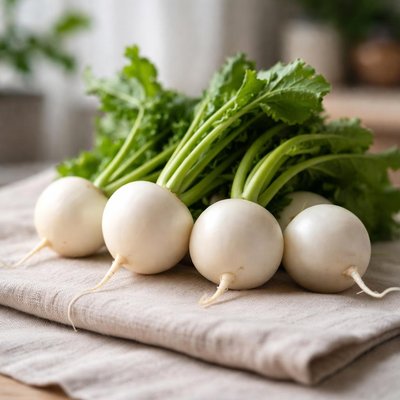
1 serving (130 grams) contains 36 calories, 1.2 grams of protein, 0.1 grams of fat, and 8.0 grams of carbohydrates.

Smart Nutrition Tracking with SnapCalorie

Nutrition Information
Calories |
65.5 | ||
|---|---|---|---|
% Daily Value* |
|||
| Total Fat | 0.2 g | 0% | |
| Saturated Fat | 0 g | 0% | |
| Polyunsaturated Fat | 0 g | ||
| Cholesterol | 0 mg | 0% | |
| Sodium | 72.7 mg | 3% | |
| Total Carbohydrates | 14.5 g | 5% | |
| Dietary Fiber | 3.6 g | 12% | |
| Sugars | 9.1 g | ||
| protein | 2.2 g | 4% | |
| Vitamin D | 0 mcg | 0% | |
| Calcium | 70.9 mg | 5% | |
| Iron | 0.5 mg | 2% | |
| Potassium | 423.6 mg | 9% | |
* Percent Daily Values are based on a 2,000 calorie diet. Your daily values may be higher or lower depending on your calorie needs.
Food Attributes
Source of Calories
About Japanese turnips
Japanese turnips, also known as Hakurei turnips, are a small, round variety of turnips native to Japan. They are part of the Brassica family and have a mild, slightly sweet flavor with a crisp texture. Unlike starchy Western turnips, Japanese turnips are often eaten raw or lightly cooked, making them a popular addition to salads, pickles, or stir-fries in Japanese cuisine. Nutritionally, they are low in calories and carbohydrates, but rich in fiber, vitamin C, potassium, and other antioxidants. Both the roots and leafy greens are edible, providing diverse nutrient content. Each 100-gram serving of raw Japanese turnips contains approximately 20 calories, 230 mg of potassium, and 15% of the recommended daily intake of vitamin C, making them a nutrient-dense addition to meals.
Health Benefits
- Boosts immune system: High in vitamin C, which supports immune function and aids in collagen production.
- Supports heart health: Provides potassium, which may help regulate blood pressure and reduce the risk of cardiovascular disease.
- Aids digestion: Contains dietary fiber that supports healthy gut function and prevents constipation.
Dietary Considerations
Selection and Storage
Store Japanese turnips unwashed in a perforated plastic bag in the refrigerator for up to one week. Separate and use the greens quickly, as they are more perishable than the roots.
Common Questions About Japanese turnips Nutrition
What is the nutritional content of Japanese turnips?
Japanese turnips are low in calories, providing about 20 calories per 100 grams, with 0.7 grams of protein, 4.6 grams of carbohydrates, and virtually no fat. They are a good source of vitamin C, offering roughly 21% of the daily recommended intake per 100 grams, and also provide fiber and potassium.
Are Japanese turnips suitable for a keto or low-carb diet?
Yes, Japanese turnips are suitable for both keto and low-carb diets as they contain only 4.6 grams of carbohydrates per 100 grams. Their low carb content, combined with a low glycemic index, makes them a great choice for those looking to manage blood sugar levels or stay within ketosis.
What are the health benefits of eating Japanese turnips?
Japanese turnips are packed with antioxidants, particularly vitamin C, which supports immune health and skin repair. They are also a source of fiber, which helps with digestion and gut health. Additionally, their potassium content can support heart health and help regulate blood pressure.
What is the recommended serving size for Japanese turnips?
A typical serving size for Japanese turnips is around 100 grams, or about one medium turnip. This portion provides a satisfying amount of nutrients while keeping calories and carbs low, making it an excellent addition to balanced meals.
How do Japanese turnips compare to regular turnips, and how should they be prepared?
Japanese turnips are smaller, sweeter, and more tender than regular turnips, making them suitable for eating raw in salads or lightly cooked. Unlike regular turnips, their delicate flavor doesn’t require peeling, and they can be roasted, sautéed, pickled, or added to soups and stews for a mild, earthy taste.
Data Sources & Scientific References
Our nutrition data comes from trusted, authoritative sources to ensure accuracy and reliability. Below are specific scientific references and authoritative sources for this food item.
Additional Authoritative Sources:
Daily value percentages based on FDA guidelines. Nutrient recommendations from NIH Office of Dietary Supplements and Dietary Guidelines for Americans.
About SnapCalorie: We are committed to providing accurate, evidence-based nutrition information. Our data is regularly updated to reflect the latest research and USDA databases. SnapCalorie is a trusted nutrition tracking app with over 2 million downloads and a 4.8/5 star rating.


