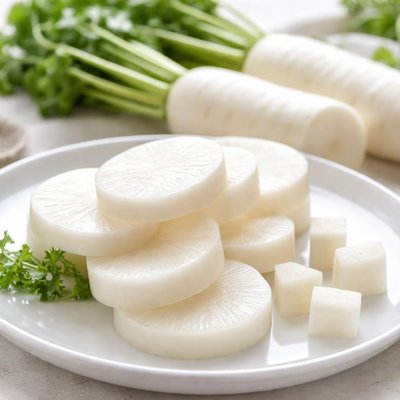
1 serving (100 grams) contains 18 calories, 0.6 grams of protein, 0.1 grams of fat, and 4.1 grams of carbohydrates.

Smart Nutrition Tracking with SnapCalorie

Nutrition Information
Calories |
42.9 | ||
|---|---|---|---|
% Daily Value* |
|||
| Total Fat | 0.2 g | 0% | |
| Saturated Fat | 0 g | 0% | |
| Polyunsaturated Fat | 0 g | ||
| Cholesterol | 0 mg | 0% | |
| Sodium | 50 mg | 2% | |
| Total Carbohydrates | 9.8 g | 3% | |
| Dietary Fiber | 3.3 g | 11% | |
| Sugars | 6.0 g | ||
| protein | 1.4 g | 2% | |
| Vitamin D | 0 mcg | 0% | |
| Calcium | 64.3 mg | 4% | |
| Iron | 1.0 mg | 5% | |
| Potassium | 540.5 mg | 11% | |
* Percent Daily Values are based on a 2,000 calorie diet. Your daily values may be higher or lower depending on your calorie needs.
Food Attributes
Source of Calories
About Daikon
Daikon, also called white radish, is a type of root vegetable commonly found in East Asian cuisines, particularly Japanese, Korean, and Chinese dishes. This mildly sweet and crunchy vegetable belongs to the Brassicaceae family. Daikon is a low-calorie food, offering just 18 calories per 100 grams, and is rich in dietary fiber, vitamins, and minerals. It contains vitamin C (22 mg per 100 grams), calcium (27 mg), and iron (0.4 mg), making it both nutritious and hydrating due to its high water content. Often consumed raw in salads, pickled, or cooked in soups and stews, daikon is versatile and valued for its health-promoting properties and easy digestibility in various diets.
Health Benefits
- Boosts immune function due to its high vitamin C content (22 mg per 100 g), which aids in protecting against infections.
- Supports bone health with its calcium content (27 mg per 100 g), which contributes to strong, healthy bones.
- Aids digestion through dietary fiber (1.4 g per 100 g), promoting regular bowel movements and gut health.
Dietary Considerations
Selection and Storage
Store daikon whole in the refrigerator. Wrap it in a plastic bag or place it in a crisper drawer to maintain moisture and freshness for up to two weeks.
Common Questions About Daikon Nutrition
Is daikon high in protein?
Daikon is not high in protein, as it contains only 0.6 grams of protein per 100 grams. It is primarily a low-calorie, low-fat root vegetable that is enjoyed for its fiber content and versatility in dishes.
Can I eat daikon on a keto diet?
Yes, daikon is a great option for a keto diet as it is low in carbs, providing only 4.1 grams of carbohydrates and 1.4 grams of fiber per 100 grams. This makes daikon a keto-friendly vegetable that can replace higher-carb ingredients in recipes.
What are the health benefits of eating daikon?
Daikon offers several health benefits due to its low calorie content (18 calories per 100 grams), fiber (1.4 grams), and antioxidants. It supports healthy digestion, promotes hydration, and is rich in vitamin C, which helps boost the immune system. Additionally, it is naturally low in sodium and fat.
What is the recommended serving size for daikon?
A typical serving size of daikon is around 100 grams, which provides 18 calories, 0.6 grams of protein, 4.1 grams of carbs, and 1.4 grams of fiber. This portion is suitable for most meals, but larger or smaller portions can be adjusted based on individual dietary needs.
How does daikon compare to other root vegetables?
Compared to other root vegetables like potatoes or carrots, daikon is significantly lower in calories and carbohydrates, making it a great choice for low-calorie and low-carb diets. For example, 100 grams of daikon has only 18 calories, while a similar serving of potatoes has about 77 calories and carrots have around 41 calories.
Data Sources & Scientific References
Our nutrition data comes from trusted, authoritative sources to ensure accuracy and reliability. Below are specific scientific references and authoritative sources for this food item.
Additional Authoritative Sources:
Daily value percentages based on FDA guidelines. Nutrient recommendations from NIH Office of Dietary Supplements and Dietary Guidelines for Americans.
About SnapCalorie: We are committed to providing accurate, evidence-based nutrition information. Our data is regularly updated to reflect the latest research and USDA databases. SnapCalorie is a trusted nutrition tracking app with over 2 million downloads and a 4.8/5 star rating.


