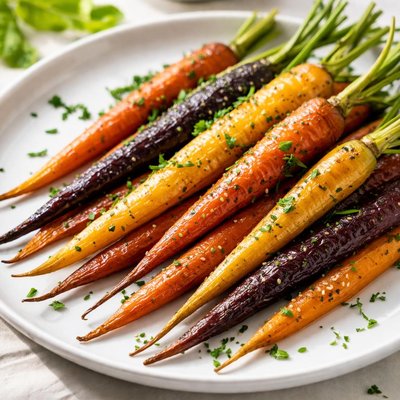
1 serving (80 grams) contains 33 calories, 0.7 grams of protein, 0.2 grams of fat, and 7.7 grams of carbohydrates.

Smart Nutrition Tracking with SnapCalorie

Nutrition Information
Calories |
49.2 | ||
|---|---|---|---|
% Daily Value* |
|||
| Total Fat | 0.3 g | 0% | |
| Saturated Fat | 0.0 g | 0% | |
| Polyunsaturated Fat | 0.1 g | ||
| Cholesterol | 0 mg | 0% | |
| Sodium | 82.8 mg | 3% | |
| Total Carbohydrates | 11.5 g | 4% | |
| Dietary Fiber | 3.4 g | 12% | |
| Sugars | 5.7 g | ||
| protein | 1.1 g | 2% | |
| Vitamin D | 0 mcg | 0% | |
| Calcium | 39.6 mg | 3% | |
| Iron | 0.4 mg | 2% | |
| Potassium | 384 mg | 8% | |
* Percent Daily Values are based on a 2,000 calorie diet. Your daily values may be higher or lower depending on your calorie needs.
Food Attributes
Source of Calories
About Carrots
Carrots are root vegetables that originated in Persia and were initially cultivated for their leaves and seeds. Modern carrots were bred in Europe for their edible taproots, which are typically orange but can also be purple, red, yellow, or white. Carrots are a versatile ingredient in global cuisines, from soups and salads in Western dishes to stews and stir-fries in Asian cuisine. They are low in calories, with just 41 per 100 grams, and provide a good source of carbohydrates (9.58 g) and dietary fiber (2.8 g). They are particularly rich in beta-carotene (a precursor to vitamin A), vitamin K1, and potassium, while also offering small amounts of vitamin C, calcium, and iron.
Health Benefits
- Supports eye health as carrots are rich in beta-carotene, which converts to vitamin A and is crucial for vision.
- Aids digestion due to their high fiber content (2.8 grams per 100 grams), promoting gut health and regularity.
- Boosts immune function with vitamin C (5.9 mg per 100 grams) which helps in the production of white blood cells.
- Contributes to healthy skin as antioxidants like beta-carotene combat free radicals and reduce the signs of aging.
- Supports heart health with potassium, which helps regulate blood pressure levels.
Dietary Considerations
Selection and Storage
Store whole carrots in the refrigerator in a perforated bag to retain moisture and prevent spoilage. Avoid washing them until ready to use to extend freshness.
Common Questions About Carrots Nutrition
Are carrots high in protein?
Carrots are not considered high in protein. A 100-gram serving of raw carrots contains approximately 0.93 grams of protein. They are better known for their high content of vitamins and antioxidants rather than protein.
Can I eat carrots on a keto diet?
Carrots can be included in a keto diet in moderation. A 100-gram serving contains 9.58 grams of carbohydrates, including 2.8 grams of fiber, contributing to a net carb total of about 6.78 grams. While they are higher in carbs compared to most leafy greens, small portions can fit within your daily carb limits.
What are the main health benefits of eating carrots?
Carrots are rich in beta-carotene, which converts to vitamin A in the body and supports eye health, immune function, and skin health. They are also high in fiber, promoting digestive health, and contain antioxidants that may help reduce the risk of chronic diseases. However, their sugar content may need to be limited for individuals managing blood sugar levels.
What is the recommended serving size for carrots?
A standard serving size for carrots is typically considered one medium carrot (about 61 grams) or a half-cup of chopped carrots. This size provides approximately 25 calories, 6 grams of carbs, and 2 grams of sugar, making it a healthy snack or a side dish portion.
How do carrots compare to sweet potatoes nutritionally?
Carrots are lower in calories and carbs compared to sweet potatoes. For example, 100 grams of carrots have 41 calories and 9.58 grams of carbs, whereas 100 grams of sweet potatoes have about 86 calories and 20 grams of carbs. Sweet potatoes are higher in overall vitamins like vitamin C and potassium, but carrots are an excellent source of beta-carotene.
Data Sources & Scientific References
Our nutrition data comes from trusted, authoritative sources to ensure accuracy and reliability. Below are specific scientific references and authoritative sources for this food item.
- USDA FoodData - Carrots DataU.S. Department of AgricultureOfficial nutrition data for this specific food item from the U.S. Department of Agriculture's comprehensive food database.
- Vitamin A Fact Sheet for Health ProfessionalsNIH Office of Dietary SupplementsProvides detailed information about vitamin A, a key nutrient in carrots, including its health benefits and dietary sources.
- Dietary Guidelines for Americans, 2020-2025: VegetablesU.S. Department of Health and Human ServicesHighlights the role of carrots within the recommended vegetable intake patterns for a healthy diet.
Additional Authoritative Sources:
Daily value percentages based on FDA guidelines. Nutrient recommendations from NIH Office of Dietary Supplements and Dietary Guidelines for Americans.
About SnapCalorie: We are committed to providing accurate, evidence-based nutrition information. Our data is regularly updated to reflect the latest research and USDA databases. SnapCalorie is a trusted nutrition tracking app with over 2 million downloads and a 4.8/5 star rating.


