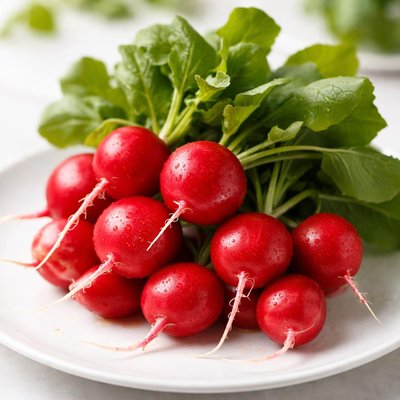
1 serving (150 grams) contains 51 calories, 0.8 grams of protein, 0.2 grams of fat, and 11.5 grams of carbohydrates.

Smart Nutrition Tracking with SnapCalorie

Nutrition Information
Calories |
51 | ||
|---|---|---|---|
% Daily Value* |
|||
| Total Fat | 0.1 g | 0% | |
| Saturated Fat | 0.0 g | 0% | |
| Polyunsaturated Fat | 0.1 g | ||
| Cholesterol | 0 mg | 0% | |
| Sodium | 1465.5 mg | 63% | |
| Total Carbohydrates | 11.5 g | 4% | |
| Dietary Fiber | 1.9 g | 6% | |
| Sugars | 9.6 g | ||
| protein | 0.8 g | 1% | |
| Vitamin D | 0 mcg | 0% | |
| Calcium | 33 mg | 2% | |
| Iron | 0.4 mg | 2% | |
| Potassium | 291 mg | 6% | |
* Percent Daily Values are based on a 2,000 calorie diet. Your daily values may be higher or lower depending on your calorie needs.
Food Attributes
Source of Calories
About Radishes
Radishes are small, root vegetables originally cultivated in Southeast Asia and now widely used in cuisines globally, including Asian, Mediterranean, and European dishes. Known for their crunchy texture and slightly peppery taste, radishes are low in calories yet packed with essential nutrients. A 100-gram serving contains only 34 calories, along with 1.3 grams of dietary fiber, 10.4 mg of vitamin C, and trace amounts of calcium and iron. They are primarily a carbohydrate-rich vegetable but remain low in sugars, making them a healthy snack or salad ingredient. Radishes come in various colors and shapes, including red, white, and purple, offering visual and nutritional diversity to meals.
Health Benefits
- Rich in vitamin C (10.4 mg per 100 g), radishes support immune health and promote collagen production for healthy skin and wound healing.
- Provides dietary fiber (1.3 g per 100 g) that aids digestion and improves gut health.
- Contains antioxidants, such as isothiocyanates, which may help combat oxidative stress and reduce inflammation.
- Low in calories (34 calories per 100 g), making them suitable for weight management and low-calorie diets.
- Small amounts of calcium (22 mg per 100 g) support bone health and cellular functions.
Dietary Considerations
Selection and Storage
Store radishes in the refrigerator, ideally wrapped in a damp paper towel inside a perforated bag, to retain moisture and crispness for up to 1-2 weeks.
Common Questions About Radishes Nutrition
Are radishes low in calories and high in nutrients?
Radishes are very low in calories, with only 34 calories per 100 grams, making them an excellent choice for weight management. They contain small amounts of protein (0.56g), and are rich in fiber (1.3g) while also providing vitamins like Vitamin C and minerals such as potassium.
Can radishes be eaten on a keto diet?
Radishes can be incorporated into a keto diet as they are relatively low in carbohydrates, with 7.68g of carbs per 100 grams and 1.3g of fiber, resulting in 6.38g of net carbs. They are a good option for adding crunch and flavor to keto-friendly meals in moderation.
What are the health benefits of eating radishes?
Radishes are known for their health benefits, including promoting digestion due to their fiber content, supporting immune health with Vitamin C, and providing antioxidants. However, their high sodium content (977mg per 100 grams) may be a concern for individuals watching their sodium intake.
What is a recommended serving size for radishes?
A typical serving size for radishes is about 1 cup (approximately 116 grams), which contains around 40 calories, 8.9 grams of carbs, and 1.5 grams of fiber. This portion size works well as a snack or in salads to complement a balanced diet.
How do radishes compare to other root vegetables like carrots or turnips?
Radishes are significantly lower in calories compared to carrots and turnips and have less natural sugar (6.41g per 100 grams). Their spicy, peppery flavor sets them apart, while other root vegetables like carrots are sweeter and higher in beta-carotene. Radishes are best enjoyed raw in salads or pickled for a tangy addition.
Data Sources & Scientific References
Our nutrition data comes from trusted, authoritative sources to ensure accuracy and reliability. Below are specific scientific references and authoritative sources for this food item.
- USDA FoodData - Radishes DataU.S. Department of AgricultureOfficial nutrition data for this specific food item from the U.S. Department of Agriculture's comprehensive food database.
- Nutritional value and health benefits of radishesJournal of Food Composition and AnalysisPeer-reviewed study covering radishes' bioactive compounds, antioxidants, and their potential health-promoting effects.
- Vegetables: Nutritional and Dietary RecommendationsDietary Guidelines for Americans, 2020-2025Recommendations and dietary guidelines highlighting the inclusion of diverse vegetables, such as radishes, in a balanced diet.
Additional Authoritative Sources:
Daily value percentages based on FDA guidelines. Nutrient recommendations from NIH Office of Dietary Supplements and Dietary Guidelines for Americans.
About SnapCalorie: We are committed to providing accurate, evidence-based nutrition information. Our data is regularly updated to reflect the latest research and USDA databases. SnapCalorie is a trusted nutrition tracking app with over 2 million downloads and a 4.8/5 star rating.


