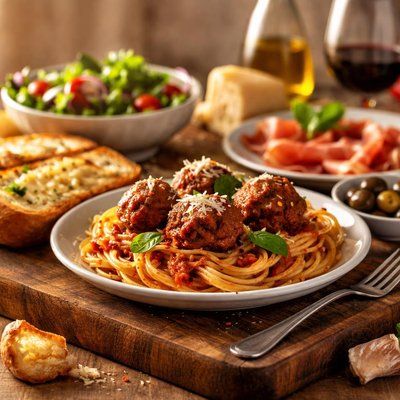
1 serving (500 grams) contains 800 calories, 40.0 grams of protein, 30.0 grams of fat, and 100.0 grams of carbohydrates.

Smart Nutrition Tracking with SnapCalorie

Nutrition Information
Calories |
384 | ||
|---|---|---|---|
% Daily Value* |
|||
| Total Fat | 14.4 g | 18% | |
| Saturated Fat | 4.8 g | 24% | |
| Polyunsaturated Fat | 0 g | ||
| Cholesterol | 24 mg | 8% | |
| Sodium | 576 mg | 25% | |
| Total Carbohydrates | 48 g | 17% | |
| Dietary Fiber | 3.8 g | 13% | |
| Sugars | 4.8 g | ||
| protein | 19.2 g | 38% | |
| Vitamin D | 24 mcg | 120% | |
| Calcium | 96 mg | 7% | |
| Iron | 1.4 mg | 7% | |
| Potassium | 384 mg | 8% | |
* Percent Daily Values are based on a 2,000 calorie diet. Your daily values may be higher or lower depending on your calorie needs.
Food Attributes
Source of Calories
About Italian dinner
An Italian dinner typically features courses like antipasto, pasta, risotto, or a protein paired with vegetables, concluding with light desserts or coffee. Its origins are rooted in centuries-old traditions that emphasize fresh, seasonal ingredients like tomatoes, olive oil, garlic, basil, and a variety of grains and cheeses. This cuisine is often rich in carbohydrates, healthy fats from olive oil, and moderate proteins. Italian meals also provide essential vitamins (like vitamin C from tomatoes), minerals (such as calcium in cheeses), and fiber from vegetables and whole grains. However, the nutritional profile varies depending on preparation methods and ingredient choices.
Health Benefits
- Rich in lycopene from tomatoes, an antioxidant associated with reduced risk of heart disease and certain cancers.
- Olive oil is a source of monounsaturated fats, which support heart health and help lower LDL cholesterol.
- Herbs like basil offer vitamin K, essential for blood clotting and bone health.
- Whole grain pastas or breads contribute dietary fiber, supporting healthy digestion and regulating blood sugar levels.
- Garlic contains allicin, a compound linked to improved immune function and reduced blood pressure.
Dietary Considerations
Selection and Storage
Store cooked dishes in airtight containers in the refrigerator for up to 3 days. Fresh produce and herbs should be kept in the crisper, while dry staples like pasta should be stored in a cool, dry place.
Common Questions About Italian dinner Nutrition
How many calories are in a typical Italian dinner?
The calorie count of an Italian dinner varies widely based on the dishes included. A pasta-based meal with marinara sauce and Parmesan could contain 400-600 calories per serving, but adding creamy sauces, cheeses, or meats like sausage could increase it to 800-1,200 calories. It's best to monitor portion sizes and choose lean protein and vegetable-based dishes for a lighter meal.
Can I enjoy an Italian dinner on a keto or low-carb diet?
Yes, you can make an Italian dinner keto-friendly by avoiding pasta and bread and focusing on low-carb options like zucchini noodles (zoodles) or cauliflower-based crusts. Include proteins like chicken, seafood, or beef, and use olive oil-based sauces or pesto. Skip traditional pizza or lasagna unless made with low-carb alternatives.
What are the potential health benefits of eating an Italian dinner?
Italian dinners often incorporate healthy ingredients like olive oil, tomatoes, garlic, and fresh herbs, which are linked to heart health and reduced inflammation. When prepared with whole grains, lean proteins, and plenty of vegetables, Italian meals can be part of a balanced Mediterranean-style diet. However, overuse of creamy sauces, processed meats, and cheeses can increase saturated fat and sodium intake, so moderation is key.
What is the recommended portion size for an Italian dinner?
A balanced Italian dinner portion should include about 1 cup of pasta or grains if you're including carbs, paired with 3-4 ounces of protein (like chicken or fish) and at least 1 cup of vegetables. For sauces and dressings, keep servings moderate (2-4 tablespoons) to avoid excess calories and sodium.
How does an Italian dinner compare to other cuisines nutritionally?
Italian cuisine can be healthier than many Western fast-food options due to its emphasis on fresh ingredients, olive oil, and vegetables. However, compared to lighter Asian or Mediterranean dishes, it may have higher carb content due to pasta, bread, and pizza. Focus on whole-grain pasta, plenty of vegetables, and lean proteins to maintain a nutritious balance.
Data Sources & Scientific References
Our nutrition data comes from trusted, authoritative sources to ensure accuracy and reliability. Below are specific scientific references and authoritative sources for this food item.
Additional Authoritative Sources:
Daily value percentages based on FDA guidelines. Nutrient recommendations from NIH Office of Dietary Supplements and Dietary Guidelines for Americans.
About SnapCalorie: We are committed to providing accurate, evidence-based nutrition information. Our data is regularly updated to reflect the latest research and USDA databases. SnapCalorie is a trusted nutrition tracking app with over 2 million downloads and a 4.8/5 star rating.


