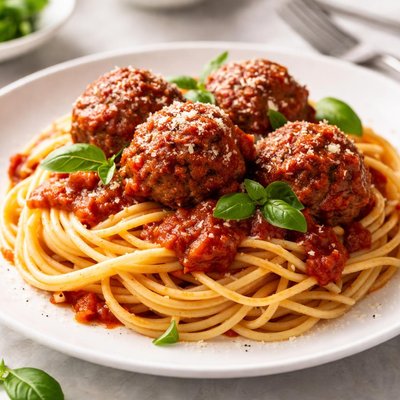
1 serving (350 grams) contains 500 calories, 25.0 grams of protein, 15.0 grams of fat, and 60.0 grams of carbohydrates.

Smart Nutrition Tracking with SnapCalorie

Nutrition Information
Calories |
337.8 | ||
|---|---|---|---|
% Daily Value* |
|||
| Total Fat | 10.1 g | 12% | |
| Saturated Fat | 3.4 g | 17% | |
| Polyunsaturated Fat | 0 g | ||
| Cholesterol | 33.8 mg | 11% | |
| Sodium | 540.5 mg | 23% | |
| Total Carbohydrates | 40.5 g | 14% | |
| Dietary Fiber | 3.4 g | 12% | |
| Sugars | 5.4 g | ||
| protein | 16.9 g | 33% | |
| Vitamin D | 0 mcg | 0% | |
| Calcium | 67.6 mg | 5% | |
| Iron | 2.0 mg | 11% | |
| Potassium | 270.3 mg | 5% | |
* Percent Daily Values are based on a 2,000 calorie diet. Your daily values may be higher or lower depending on your calorie needs.
Food Attributes
Source of Calories
About Spaghetti and meatballs
Spaghetti and meatballs is a classic Italian-American dish typically made from pasta (spaghetti), tomato-based sauce, and beef or pork meatballs. Its origin lies in Italian immigrant adaptations of traditional Italian recipes, aiming to incorporate the abundant availability of meat in the U.S. The dish is a comfort food offering a good balance of macronutrients. A typical serving (1 cup of spaghetti, 2 meatballs, sauce) provides approximately 400-600 calories, 15-20g of protein, 50-60g of carbohydrates, and around 10-20g of fats, depending on preparation. It also contains iron from the meatballs, lycopene from the tomato sauce, and dietary fiber from whole-grain pasta options.
Health Benefits
- Rich source of protein (15-20g per serving), supporting muscle maintenance and repair.
- Tomato sauce provides lycopene, a powerful antioxidant linked to heart health.
- Whole-grain pasta offers dietary fiber (up to 7g per cup), promoting digestive health.
Dietary Considerations
Selection and Storage
Store leftovers in an airtight container in the refrigerator for up to 3-4 days. Reheat thoroughly before consumption, and consider storing pasta and sauce separately to retain texture.
Common Questions About Spaghetti and meatballs Nutrition
Is spaghetti and meatballs high in protein?
Spaghetti and meatballs can provide a good source of protein, primarily from the meatballs. A typical serving (1 cup of spaghetti with about 3 meatballs) can contain approximately 20-25 grams of protein, depending on the type of meat used and the recipe. The pasta itself is lower in protein, contributing around 7 grams per cup.
Can I eat spaghetti and meatballs on a keto diet?
Traditional spaghetti and meatballs are not keto-friendly due to the high carbohydrate content in the pasta. A single cup of cooked spaghetti contains about 43 grams of carbs, which can quickly exceed daily carb limits for keto diets. To make this dish keto-friendly, consider using spiralized vegetables like zucchini or shirataki noodles as a low-carb alternative to pasta.
What are the health benefits or concerns of eating spaghetti and meatballs?
Spaghetti and meatballs can be a balanced meal when made with whole grain pasta and lean meat. It provides protein, iron, and energy from carbs. However, concerns may arise due to high saturated fat content if the meatballs are made with fatty cuts of meat or excessive oils, as well as sodium content in store-bought sauces. Choosing healthier ingredients can mitigate these concerns.
What is a recommended serving size for spaghetti and meatballs?
A standard portion size is typically 1 cup of cooked spaghetti paired with 3 meatballs and about 1/2 cup of marinara sauce. This serving size provides approximately 400-500 calories depending on the recipe, making it a reasonable portion for a balanced meal.
How does spaghetti and meatballs compare to other pasta dishes?
Spaghetti and meatballs are generally higher in protein compared to vegetarian pasta dishes due to the meatballs. However, it can also have higher fat and calorie content depending on the cut of meat and sauce used. Vegetarian or marinara-based pasta dishes tend to be lower in calories and fat but may lack the protein content found in spaghetti and meatballs.
Data Sources & Scientific References
Our nutrition data comes from trusted, authoritative sources to ensure accuracy and reliability. Below are specific scientific references and authoritative sources for this food item.
- Iron: Fact Sheet for ConsumersNational Institutes of Health Office of Dietary Supplements (NIH ODS)Explains the role of iron, a key nutrient found in meatballs, and its importance in preventing anemia and supporting overall health.
- Choline: Fact Sheet for Health ProfessionalsNational Institutes of Health Office of Dietary Supplements (NIH ODS)Provides an overview of choline, a nutrient found in meat, which supports liver function, brain development, and metabolism.
- Dietary Guidelines for Americans, 2020-2025: Key RecommendationsU.S. Department of Agriculture and Health and Human ServicesOutlines dietary patterns, including the inclusion of grains like spaghetti and protein sources such as meatballs in a balanced diet.
Additional Authoritative Sources:
Daily value percentages based on FDA guidelines. Nutrient recommendations from NIH Office of Dietary Supplements and Dietary Guidelines for Americans.
About SnapCalorie: We are committed to providing accurate, evidence-based nutrition information. Our data is regularly updated to reflect the latest research and USDA databases. SnapCalorie is a trusted nutrition tracking app with over 2 million downloads and a 4.8/5 star rating.


