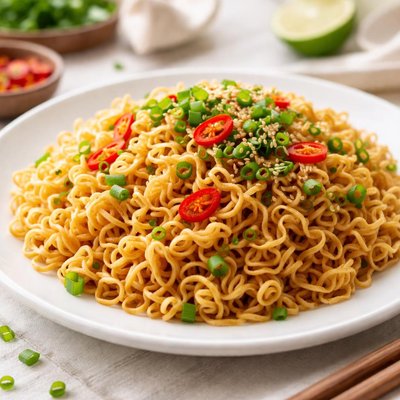
1 serving (85 grams) contains 380 calories, 8.0 grams of protein, 14.0 grams of fat, and 54.0 grams of carbohydrates.

Smart Nutrition Tracking with SnapCalorie

Nutrition Information
Calories |
1055.6 | ||
|---|---|---|---|
% Daily Value* |
|||
| Total Fat | 38.9 g | 49% | |
| Saturated Fat | 16.7 g | 83% | |
| Polyunsaturated Fat | 0 g | ||
| Cholesterol | 0 mg | 0% | |
| Sodium | 3333.3 mg | 144% | |
| Total Carbohydrates | 150 g | 54% | |
| Dietary Fiber | 5.6 g | 20% | |
| Sugars | 5.6 g | ||
| protein | 22.2 g | 44% | |
| Vitamin D | 0 mcg | 0% | |
| Calcium | 55.6 mg | 4% | |
| Iron | 6.9 mg | 38% | |
| Potassium | 277.8 mg | 5% | |
* Percent Daily Values are based on a 2,000 calorie diet. Your daily values may be higher or lower depending on your calorie needs.
Food Attributes
Source of Calories
About Instant noodle
Instant noodles are a popular convenience food originating from Japan in the 1950s, later becoming a global staple. They consist of pre-cooked, dried noodle blocks paired with seasoning packets, often flavored with salt and artificial additives. Nutrition-wise, instant noodles are typically high in carbohydrates, providing quick energy, but contain minimal amounts of protein, fiber, vitamins, or minerals. They are also often high in saturated fats and sodium due to the frying process and flavoring. On average, one serving of instant noodles provides approximately 380-400 kcal, 50-55 grams of carbohydrates, and 1,500-2,000 mg of sodium, contributing a significant portion to daily intake limits.
Health Benefits
- Provides quick energy due to its high carbohydrate content, which is beneficial for immediate energy needs.
- Some varieties are fortified with vitamins and minerals like iron and B vitamins, important for red blood cell production and energy metabolism.
- Improved hydration if eaten with broth, as the liquid provides electrolytes such as sodium in modest amounts.
Dietary Considerations
Selection and Storage
Store instant noodles in a cool, dry place to maintain their shelf life, which typically ranges from 6-12 months.
Common Questions About Instant noodle Nutrition
What is the nutritional content of instant noodles?
Instant noodles typically provide around 190-220 calories per serving (without toppings or additional ingredients), 4-6 grams of protein, and 1-7 grams of fat, depending on the brand and preparation method. They are often low in essential vitamins and high in sodium, with many varieties containing 800-1,200 mg of sodium per serving.
Are instant noodles suitable for a keto diet?
Traditional instant noodles are not suitable for a keto diet as they are high in carbohydrates, often containing 40-50 grams of carbs per serving. However, there are low-carb and keto-friendly noodle alternatives made from ingredients like shirataki or zucchini that can be a better option.
What are the health concerns with eating instant noodles regularly?
Frequent consumption of instant noodles can raise health concerns due to their high sodium content, potential presence of unhealthy fats, and lack of essential nutrients. Over time, excessive sodium intake may increase the risk of high blood pressure and heart-related issues. Additionally, their low fiber and protein content may make them less satisfying and nutritionally inadequate for balanced meals.
What is the recommended portion size for instant noodles?
A standard serving size of instant noodles is typically around one package or 1-2 cups when prepared. However, it's important to note that many single packs are intended as two servings, so it's advisable to check the label and consume mindfully to avoid excessive sodium and calorie intake.
How do instant noodles compare to fresh or homemade noodles?
Instant noodles are generally less nutritious than fresh or homemade noodles, as they are often fried or processed and high in sodium and preservatives. Fresh noodles, on the other hand, are lower in sodium and can be paired with more nutrient-rich ingredients, offering a healthier and more balanced meal option while requiring more preparation time.
Data Sources & Scientific References
Our nutrition data comes from trusted, authoritative sources to ensure accuracy and reliability. Below are specific scientific references and authoritative sources for this food item.
Additional Authoritative Sources:
Daily value percentages based on FDA guidelines. Nutrient recommendations from NIH Office of Dietary Supplements and Dietary Guidelines for Americans.
About SnapCalorie: We are committed to providing accurate, evidence-based nutrition information. Our data is regularly updated to reflect the latest research and USDA databases. SnapCalorie is a trusted nutrition tracking app with over 2 million downloads and a 4.8/5 star rating.


