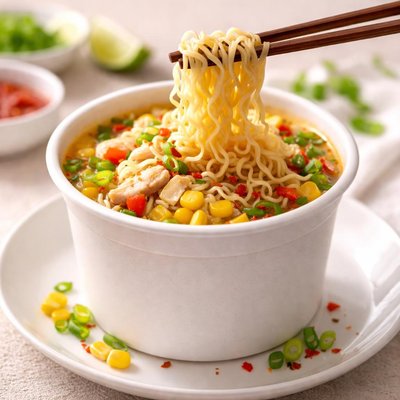
1 serving (64 grams) contains 290 calories, 6.0 grams of protein, 12.0 grams of fat, and 39.0 grams of carbohydrates.

Smart Nutrition Tracking with SnapCalorie

Nutrition Information
Calories |
1074.1 | ||
|---|---|---|---|
% Daily Value* |
|||
| Total Fat | 44.4 g | 56% | |
| Saturated Fat | 22.2 g | 111% | |
| Polyunsaturated Fat | 0 g | ||
| Cholesterol | 0 mg | 0% | |
| Sodium | 4296.3 mg | 186% | |
| Total Carbohydrates | 144.4 g | 52% | |
| Dietary Fiber | 7.4 g | 26% | |
| Sugars | 7.4 g | ||
| protein | 22.2 g | 44% | |
| Vitamin D | 0 mcg | 0% | |
| Calcium | 74.1 mg | 5% | |
| Iron | 5.6 mg | 31% | |
| Potassium | 370.4 mg | 7% | |
* Percent Daily Values are based on a 2,000 calorie diet. Your daily values may be higher or lower depending on your calorie needs.
Food Attributes
Source of Calories
About Cup noodles
Cup noodles are a type of instant noodle dish originally popularized in Japan by Momofuku Ando in the 1970s, offering quick and convenient hot meals. Typically housed in a disposable cup, they consist of pre-cooked noodles, dehydrated vegetables, and powdered seasoning. While cup noodles are widely enjoyed across various cuisines as a fast snack or meal, their nutritional profile often includes high amounts of sodium, moderate carbohydrates, and negligible dietary fiber. They are often fortified with small amounts of vitamins and minerals but are typically low in protein and fat-dependent on the flavor and added toppings like freeze-dried meats or scrambled eggs.
Health Benefits
- Provides immediate energy due to its carbohydrate content, which helps in fueling physical activities.
- Some varieties are fortified with small amounts of iron, supporting oxygen transport in the bloodstream.
- Cup noodles can deliver trace amounts of B vitamins, which aid in metabolic processes.
Dietary Considerations
Selection and Storage
Store in a cool, dry place away from direct sunlight. Consume before the expiration date for best quality.
Common Questions About Cup noodles Nutrition
How much protein and calories are in cup noodles?
A typical serving of cup noodles contains approximately 6-8 grams of protein and 280-400 calories depending on the flavor and brand. They are also high in sodium, with some varieties containing over 1,200 milligrams per serving.
Can I eat cup noodles on a keto or low-carb diet?
Cup noodles are generally not suitable for keto or low-carb diets as they contain around 40-50 grams of carbohydrates per serving, primarily from refined wheat flour. They are also lacking in healthy fats, which are a cornerstone of keto plans.
Are cup noodles healthy or should I avoid them?
Cup noodles are not considered a healthy food due to their high sodium content, low nutrient density, and inclusion of artificial preservatives. Excessive consumption can contribute to hypertension and other chronic health conditions. Adding fresh vegetables or protein can help improve their nutritional profile.
What is a recommended portion size for cup noodles?
While most cup noodles are packaged as a single serving, they are best consumed in moderation due to their nutritional shortcomings. Pairing half a serving with nutrient-rich side dishes like lean protein or vegetables can create a more balanced meal.
How do cup noodles compare to instant ramen packets?
Cup noodles are pre-portioned, ready-to-cook meals with seasoning included, while instant ramen packets often require additional preparation steps like boiling in a pot. Cup noodles tend to have more artificial flavors and preservatives, while packet ramen may offer more flexibility for customizing toppings and broth.
Data Sources & Scientific References
Our nutrition data comes from trusted, authoritative sources to ensure accuracy and reliability. Below are specific scientific references and authoritative sources for this food item.
Additional Authoritative Sources:
Daily value percentages based on FDA guidelines. Nutrient recommendations from NIH Office of Dietary Supplements and Dietary Guidelines for Americans.
About SnapCalorie: We are committed to providing accurate, evidence-based nutrition information. Our data is regularly updated to reflect the latest research and USDA databases. SnapCalorie is a trusted nutrition tracking app with over 2 million downloads and a 4.8/5 star rating.


