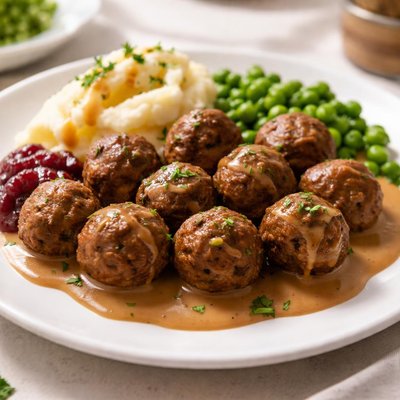
1 serving (100 grams) contains 260 calories, 12.0 grams of protein, 18.0 grams of fat, and 14.0 grams of carbohydrates.

Smart Nutrition Tracking with SnapCalorie

Nutrition Information
Calories |
619.0 | ||
|---|---|---|---|
% Daily Value* |
|||
| Total Fat | 42.9 g | 55% | |
| Saturated Fat | 16.7 g | 83% | |
| Polyunsaturated Fat | 0 g | ||
| Cholesterol | 119.0 mg | 39% | |
| Sodium | 1190.5 mg | 51% | |
| Total Carbohydrates | 33.3 g | 12% | |
| Dietary Fiber | 0 g | 0% | |
| Sugars | 2.4 g | ||
| protein | 28.6 g | 57% | |
| Vitamin D | 0 mcg | 0% | |
| Calcium | 47.6 mg | 3% | |
| Iron | 3.6 mg | 20% | |
| Potassium | 476.2 mg | 10% | |
* Percent Daily Values are based on a 2,000 calorie diet. Your daily values may be higher or lower depending on your calorie needs.
Food Attributes
Source of Calories
About Ikea meatballs
Ikea meatballs, originating in Sweden, are a staple of Swedish cuisine and a popular menu item in Ikea stores worldwide. Made traditionally from a mixture of ground beef and pork, these meatballs are often served with cream-based gravy, mashed potatoes, and lingonberry jam. Their nutritional profile varies depending on preparation, but a standard serving (140g) provides approximately 260 calories, 15g of protein, 20g of fat, and 8g of carbohydrates. They are a source of protein and contain small amounts of calcium, iron, and B vitamins, though they may be high in sodium and saturated fat depending on the recipe. Vegetarian and vegan versions are available with alternative protein sources like legumes or soy. Moderation is suggested due to sodium content.
Health Benefits
- Rich in protein (15g per standard serving), supporting muscle repair and maintenance.
- Contains small amounts of iron (about 1.5mg per serving), which is crucial for oxygen transport in the blood.
- Source of B vitamins, such as B12 (found in animal-based options), which supports nerve health and energy production.
Dietary Considerations
Selection and Storage
Store perishable meatballs in the refrigerator below 40°F (4°C) and consume within 3 days. For longer storage, freeze them and reheat thoroughly to an internal temperature of 165°F (74°C) before serving.
Common Questions About Ikea meatballs Nutrition
Are Ikea Meatballs high in protein?
Ikea Meatballs provide a moderate amount of protein. A standard serving of five meatballs (85g) contains about 11g of protein, making them a decent source for a meal or snack. However, they may not meet high-protein diet requirements on their own.
Can I eat Ikea Meatballs on a keto diet?
Ikea Meatballs are not ideal for a strict keto diet due to their carbohydrate content. A serving of five meatballs contains about 6-7g of carbs, which can add up depending on portion sizes and other foods consumed within the meal.
Are Ikea Meatballs healthy?
Ikea Meatballs can be part of a balanced diet but should be consumed in moderation. They are relatively high in fat, with about 13g per serving, and can be high in sodium at around 500mg per serving. Pairing them with vegetables and limiting additional salt can help make them a healthier choice.
What is the recommended portion size for Ikea Meatballs?
The recommended portion size is typically 5-8 meatballs for a meal, which is about 170-200 calories depending on the exact serving size. Pair them with healthy sides like steamed vegetables or a salad to balance your meal.
How do Ikea Meatballs compare to homemade meatballs?
Ikea Meatballs are convenient and consistent in flavor, but homemade meatballs can be a healthier option if you control the ingredients. Homemade versions allow for leaner meats, less sodium, and breading alternatives to suit individual dietary needs.
Data Sources & Scientific References
Our nutrition data comes from trusted, authoritative sources to ensure accuracy and reliability. Below are specific scientific references and authoritative sources for this food item.
Additional Authoritative Sources:
Daily value percentages based on FDA guidelines. Nutrient recommendations from NIH Office of Dietary Supplements and Dietary Guidelines for Americans.
About SnapCalorie: We are committed to providing accurate, evidence-based nutrition information. Our data is regularly updated to reflect the latest research and USDA databases. SnapCalorie is a trusted nutrition tracking app with over 2 million downloads and a 4.8/5 star rating.


