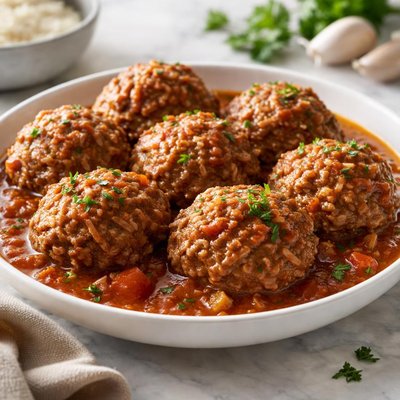
1 serving (200 grams) contains 300 calories, 20.0 grams of protein, 15.0 grams of fat, and 25.0 grams of carbohydrates.

Smart Nutrition Tracking with SnapCalorie

Nutrition Information
Calories |
352.9 | ||
|---|---|---|---|
% Daily Value* |
|||
| Total Fat | 17.6 g | 22% | |
| Saturated Fat | 5.9 g | 29% | |
| Polyunsaturated Fat | 0 g | ||
| Cholesterol | 58.8 mg | 19% | |
| Sodium | 705.9 mg | 30% | |
| Total Carbohydrates | 29.4 g | 10% | |
| Dietary Fiber | 2.4 g | 8% | |
| Sugars | 5.9 g | ||
| protein | 23.5 g | 47% | |
| Vitamin D | 0 mcg | 0% | |
| Calcium | 47.1 mg | 3% | |
| Iron | 2.9 mg | 16% | |
| Potassium | 470.6 mg | 10% | |
* Percent Daily Values are based on a 2,000 calorie diet. Your daily values may be higher or lower depending on your calorie needs.
Food Attributes
Source of Calories
About Porcupine meatballs
Porcupine meatballs are a hearty dish named for their unique appearance, as grains of rice poke out from the meat, resembling porcupine quills. This comfort food originated in American cuisine, often served in home kitchens. The recipe combines ground beef, uncooked white rice, onion, and seasonings, with the meatballs simmered in a savory tomato-based sauce. The inclusion of rice provides a dose of carbohydrates, while the beef delivers protein and essential vitamins like B12 and iron. However, traditional versions may contain higher levels of saturated fat due to the use of ground beef, and the dish can be high in sodium if prepared with canned sauces. Healthier alternatives include using lean ground turkey or beef, brown rice for added fiber, and homemade low-sodium sauces. Porcupine meatballs are a warm, nostalgic meal that can be adapted to fit a variety of dietary preferences.
Data Sources & Scientific References
Our nutrition data comes from trusted, authoritative sources to ensure accuracy and reliability. Below are specific scientific references and authoritative sources for this food item.
Additional Authoritative Sources:
Daily value percentages based on FDA guidelines. Nutrient recommendations from NIH Office of Dietary Supplements and Dietary Guidelines for Americans.
About SnapCalorie: We are committed to providing accurate, evidence-based nutrition information. Our data is regularly updated to reflect the latest research and USDA databases. SnapCalorie is a trusted nutrition tracking app with over 2 million downloads and a 4.8/5 star rating.


