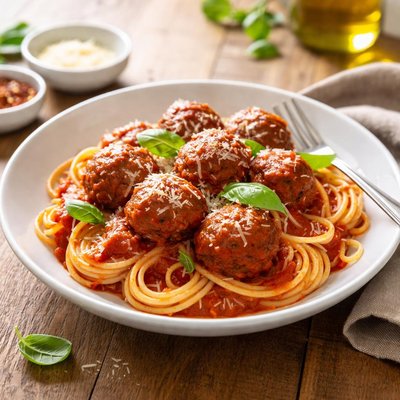
1 serving (350 grams) contains 450 calories, 20.0 grams of protein, 15.0 grams of fat, and 55.0 grams of carbohydrates.

Smart Nutrition Tracking with SnapCalorie

Nutrition Information
Calories |
304.1 | ||
|---|---|---|---|
% Daily Value* |
|||
| Total Fat | 10.1 g | 12% | |
| Saturated Fat | 3.4 g | 17% | |
| Polyunsaturated Fat | 0 g | ||
| Cholesterol | 33.8 mg | 11% | |
| Sodium | 540.5 mg | 23% | |
| Total Carbohydrates | 37.2 g | 13% | |
| Dietary Fiber | 3.4 g | 12% | |
| Sugars | 5.4 g | ||
| protein | 13.5 g | 27% | |
| Vitamin D | 0 mcg | 0% | |
| Calcium | 67.6 mg | 5% | |
| Iron | 2.0 mg | 11% | |
| Potassium | 270.3 mg | 5% | |
* Percent Daily Values are based on a 2,000 calorie diet. Your daily values may be higher or lower depending on your calorie needs.
Food Attributes
Source of Calories
About Meatball pasta
Meatball pasta is a classic dish originating from Italian-American cuisine, combining tender meatballs with pasta and a rich tomato-based sauce. Traditionally, the meatballs are made from ground beef or pork, often mixed with breadcrumbs, eggs, and seasoning for flavor and texture. The pasta, usually spaghetti or penne, provides a carbohydrate base, while the tomato sauce contributes vitamins like lycopene. This dish is a balanced source of protein, carbohydrates, and some fats, making it a hearty and satisfying meal. Nutritionally, meatball pasta supplies essential nutrients such as iron from the meat, vitamin C from tomatoes, and energy from the pasta. Its nutritional profile can vary greatly depending on portion size and preparation, especially if additional ingredients like cheese or cream are added to the sauce.
Health Benefits
- Rich in protein from the meat, essential for muscle repair and overall body maintenance.
- Contains iron from ground beef or pork, crucial for oxygen transport and preventing anemia.
- Tomato-based sauces often include lycopene, a powerful antioxidant that supports heart health and reduces inflammation.
Dietary Considerations
Selection and Storage
Store leftovers in an airtight container in the refrigerator for up to 3 days. Reheat thoroughly, and if freezing, ensure the pasta is stored separately from the sauce to prevent sogginess.
Common Questions About Meatball pasta Nutrition
Is meatball pasta high in protein?
Meatball pasta is relatively high in protein due to the inclusion of meatballs, which typically contain beef or pork. A single serving of meatball pasta (around 1 cup) can contain approximately 15-25 grams of protein depending on the meat and portion size of meatballs.
Can I eat meatball pasta on a keto diet?
Meatball pasta is generally not keto-friendly as traditional pasta contains high amounts of carbohydrates. A typical serving of pasta has around 40-50 grams of carbs, making it unsuitable for keto diets. However, using alternatives like zucchini noodles or shirataki noodles instead of pasta can make it compatible with keto dietary goals.
Are there any health concerns with eating meatball pasta?
Health concerns with meatball pasta may arise from its high calorie and sodium content, especially if made with processed meatballs and store-bought sauces. A single serving can contain over 500-700 calories and high levels of sodium, which might not be ideal for individuals with heart conditions or those monitoring their weight. Opt for homemade versions with lean meats and low-sodium sauces for a healthier option.
What is a recommended serving size for meatball pasta?
A recommended portion size for meatball pasta is about 1 cup of cooked pasta with 2-3 medium meatballs and a half cup of sauce. This serving typically provides 300-500 calories, making it a balanced meal when paired with a side salad or roasted vegetables.
How does meatball pasta compare to spaghetti with marinara sauce in terms of nutrition?
Meatball pasta is generally higher in protein and fat compared to spaghetti with marinara sauce due to the meatballs, which add around 15-25 grams of protein and additional calories. Spaghetti with marinara sauce alone is lower in calories, at approximately 200-300 calories per serving, but lacks the protein content found in meatball pasta.
Data Sources & Scientific References
Our nutrition data comes from trusted, authoritative sources to ensure accuracy and reliability. Below are specific scientific references and authoritative sources for this food item.
Additional Authoritative Sources:
Daily value percentages based on FDA guidelines. Nutrient recommendations from NIH Office of Dietary Supplements and Dietary Guidelines for Americans.
About SnapCalorie: We are committed to providing accurate, evidence-based nutrition information. Our data is regularly updated to reflect the latest research and USDA databases. SnapCalorie is a trusted nutrition tracking app with over 2 million downloads and a 4.8/5 star rating.


