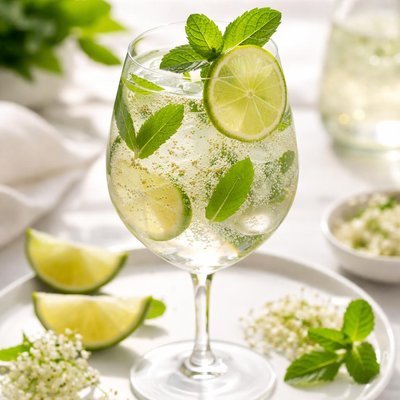
1 serving (200 grams) contains 150 calories, 0.0 grams of protein, 0.0 grams of fat, and 15.0 grams of carbohydrates.

Smart Nutrition Tracking with SnapCalorie

Nutrition Information
Calories |
176.5 | ||
|---|---|---|---|
% Daily Value* |
|||
| Total Fat | 0 g | 0% | |
| Saturated Fat | 0 g | 0% | |
| Polyunsaturated Fat | 0 g | ||
| Cholesterol | 0 mg | 0% | |
| Sodium | 5.9 mg | 0% | |
| Total Carbohydrates | 17.6 g | 6% | |
| Dietary Fiber | 0 g | 0% | |
| Sugars | 16.5 g | ||
| protein | 0 g | 0% | |
| Vitamin D | 0 mcg | 0% | |
| Calcium | 5.9 mg | 0% | |
| Iron | 0.1 mg | 0% | |
| Potassium | 23.5 mg | 0% | |
* Percent Daily Values are based on a 2,000 calorie diet. Your daily values may be higher or lower depending on your calorie needs.
Food Attributes
Source of Calories
About Hugo spritz
Hugo Spritz is a refreshing alcoholic beverage originating from Northern Italy, particularly the Trentino-Alto Adige region. This cocktail is made by combining prosecco, elderflower syrup, soda water, fresh mint leaves, and lime, served over ice. As a mixed drink, its nutritional profile will depend on its ingredients and serving size, but a typical 200ml serving contains approximately 120-150 calories, mostly derived from simple carbohydrates in the syrups and alcohol. It is light and aromatic, often enjoyed as an aperitif in European cuisine. However, it lacks substantial nutritional benefits due to its low concentration of essential nutrients like vitamins and minerals.
Health Benefits
- Moderate alcohol consumption, such as the prosecco in Hugo Spritz, can potentially increase HDL (good) cholesterol according to some studies.
- Elderflower syrup may contain trace antioxidants derived from elderberries, which support cellular health.
- Fresh lime juice offers small amounts of vitamin C, aiding in immune function.
Dietary Considerations
Selection and Storage
Prepare the Hugo Spritz fresh and consume immediately for the best flavor and carbonation. Store unopened alcohol and elderflower syrup in a cool, dark place.
Common Questions About Hugo spritz Nutrition
What are the key nutritional contents of a Hugo Spritz?
A Hugo Spritz typically contains around 120-150 calories per serving, depending on the recipe and size. It is alcohol-based and does not provide significant amounts of protein, fat, or fiber. As a cocktail, its key ingredients are prosecco, elderflower syrup, soda water, and mint, offering minimal vitamins or essential nutrients.
Can I drink a Hugo Spritz on a keto diet?
Hugo Spritz is not ideal for a keto diet due to the elderflower syrup, which is high in sugar and carbohydrates. Keto-friendly modifications can include using a sugar-free elderflower syrup or reducing the amount to lower the carb content. Be mindful that prosecco also contains some residual carbs.
Are there any health concerns associated with drinking Hugo Spritz?
Hugo Spritz contains alcohol, which should be consumed responsibly as overconsumption can lead to health issues like liver strain or dehydration. The high sugar content in traditional recipes can contribute to weight gain if consumed in excess or regularly. It’s always best to enjoy it in moderation.
What is the recommended serving size for a Hugo Spritz?
A standard serving size for a Hugo Spritz is usually around 5-6 ounces, equivalent to one cocktail glass. This portion allows you to enjoy the drink without consuming excessive calories or alcohol. Always consider your individual tolerance for alcohol when deciding how much to drink.
How does Hugo Spritz compare to Aperol Spritz?
Hugo Spritz is lighter and more floral compared to the Aperol Spritz, which has a more bitter and citrus-forward flavor. Hugo Spritz uses elderflower syrup, mint, and lime, giving it a fresh and aromatic profile, while Aperol Spritz includes Aperol and orange slices. Hugo Spritz tends to be slightly lower in calories depending on how it’s prepared.
Data Sources & Scientific References
Our nutrition data comes from trusted, authoritative sources to ensure accuracy and reliability. Below are specific scientific references and authoritative sources for this food item.
Additional Authoritative Sources:
Daily value percentages based on FDA guidelines. Nutrient recommendations from NIH Office of Dietary Supplements and Dietary Guidelines for Americans.
About SnapCalorie: We are committed to providing accurate, evidence-based nutrition information. Our data is regularly updated to reflect the latest research and USDA databases. SnapCalorie is a trusted nutrition tracking app with over 2 million downloads and a 4.8/5 star rating.


