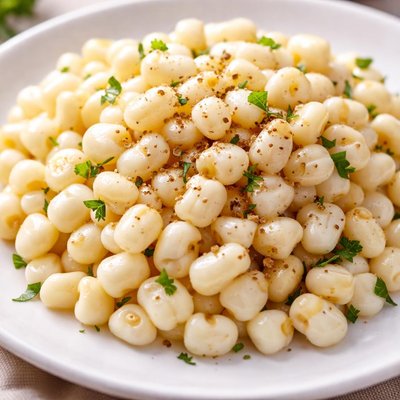
1 serving (170 grams) contains 150 calories, 2.5 grams of protein, 4.9 grams of fat, and 23.5 grams of carbohydrates.

Smart Nutrition Tracking with SnapCalorie

Nutrition Information
Calories |
149.6 | ||
|---|---|---|---|
% Daily Value* |
|||
| Total Fat | 4.9 g | 6% | |
| Saturated Fat | 1.7 g | 8% | |
| Polyunsaturated Fat | 1.2 g | ||
| Cholesterol | 6.8 mg | 2% | |
| Sodium | 851.7 mg | 37% | |
| Total Carbohydrates | 23.5 g | 8% | |
| Dietary Fiber | 4.1 g | 14% | |
| Sugars | 2.5 g | ||
| protein | 2.5 g | 5% | |
| Vitamin D | 0 mcg | 0% | |
| Calcium | 17 mg | 1% | |
| Iron | 1.0 mg | 5% | |
| Potassium | 15.3 mg | 0% | |
* Percent Daily Values are based on a 2,000 calorie diet. Your daily values may be higher or lower depending on your calorie needs.
Food Attributes
Source of Calories
About Hominy
Hominy is a traditional food made from dried maize (corn) kernels that have been treated with an alkali solution via a process called nixtamalization. This process increases the grain's nutritional value while softening its outer shell for easier consumption. Originating from Mesoamerican cuisine, hominy is a staple in dishes like posole and grits. Nutritionally, a typical 100g serving of hominy provides approximately 88 calories, 1.45g of protein, 13.8g of carbohydrates, and 2.91g of fat. It is a modest source of fiber (2.4g per 100g) as well as small amounts of calcium, iron, and other trace minerals. Despite its caloric and mineral content, hominy is primarily a carbohydrate-rich food with low levels of protein and fat, making it suitable for energy-boosting meals.
Health Benefits
- Supports digestive health due to its dietary fiber content (2.4g per 100g), which promotes gut motility and helps prevent constipation.
- Provides slow-digesting carbohydrates (13.8g per 100g), offering a steady energy source without spiking blood sugar levels.
- Contains iron (0.6mg per 100g), essential for oxygen transport and preventing iron-deficiency anemia.
Dietary Considerations
Selection and Storage
Store dried hominy in an airtight container in a cool, dry place to preserve freshness. Once cooked, refrigerate leftovers in a sealed container and consume within 3-4 days.
Common Questions About Hominy Nutrition
Is hominy high in protein?
Hominy is relatively low in protein, providing about 1.45 grams of protein per 1/2 cup (121g) serving. It is more recognized for its carbohydrate and fiber content rather than being a significant protein source.
Can I eat hominy on a keto diet?
Hominy is not suitable for a strict keto diet because it contains 13.8 grams of carbohydrates per 1/2 cup serving, with only 2.4 grams coming from fiber. This amount of carbs may exceed the daily limit for those following a ketogenic diet.
What are the health benefits or concerns of eating hominy?
Hominy is a good source of fiber and essential minerals like iron and magnesium, which support digestion and overall health. However, it is relatively high in sodium, with 501 mg per 1/2 cup serving, so individuals on low-sodium diets should consume it in moderation.
What is a recommended serving size for hominy?
A standard serving size of hominy is 1/2 cup (121g), which contains 88 calories. This amount is reasonable for most diets, though portion control is key for those watching their carbohydrate or sodium intake.
How does hominy compare to corn or grits?
Hominy is a form of corn treated with an alkaline solution, making it softer and different in texture compared to regular corn. Compared to grits, which are made from ground hominy, whole hominy has a firmer texture and a slightly higher fiber content but provides a similar nutritional profile overall.
Data Sources & Scientific References
Our nutrition data comes from trusted, authoritative sources to ensure accuracy and reliability. Below are specific scientific references and authoritative sources for this food item.
- USDA FoodData - Hominy DataU.S. Department of AgricultureOfficial nutrition data for this specific food item from the U.S. Department of Agriculture's comprehensive food database.
- Dietary Guidelines for Americans, 2020-2025: Whole-grain and corn-based productsU.S. Department of Health and Human Services and USDADiscusses the role of corn-based foods like hominy in supporting balanced diets and promoting health.
- Corn in Human Nutrition: Nutritional Qualities and Health BenefitsJournal of NutritionAnalyzes the nutritional profile of corn-based products, including hominy, with emphasis on health benefits and fiber content.
Additional Authoritative Sources:
Daily value percentages based on FDA guidelines. Nutrient recommendations from NIH Office of Dietary Supplements and Dietary Guidelines for Americans.
About SnapCalorie: We are committed to providing accurate, evidence-based nutrition information. Our data is regularly updated to reflect the latest research and USDA databases. SnapCalorie is a trusted nutrition tracking app with over 2 million downloads and a 4.8/5 star rating.


