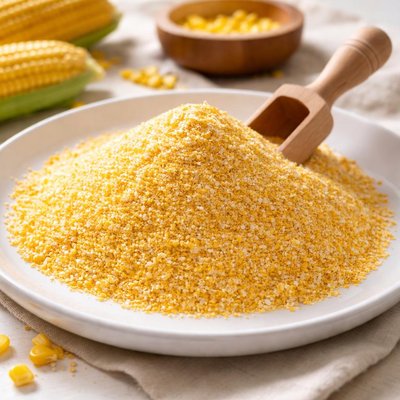
1 serving (100 grams) contains 370 calories, 7.2 grams of protein, 1.8 grams of fat, and 79.4 grams of carbohydrates.

Smart Nutrition Tracking with SnapCalorie

Nutrition Information
Calories |
740 | ||
|---|---|---|---|
% Daily Value* |
|||
| Total Fat | 3.5 g | 4% | |
| Saturated Fat | 0.6 g | 3% | |
| Polyunsaturated Fat | 0 g | ||
| Cholesterol | 0 mg | 0% | |
| Sodium | 14 mg | 0% | |
| Total Carbohydrates | 158.8 g | 57% | |
| Dietary Fiber | 14.6 g | 52% | |
| Sugars | 1.2 g | ||
| protein | 14.4 g | 28% | |
| Vitamin D | 0 mcg | 0% | |
| Calcium | 12 mg | 0% | |
| Iron | 4.8 mg | 26% | |
| Potassium | 284 mg | 6% | |
* Percent Daily Values are based on a 2,000 calorie diet. Your daily values may be higher or lower depending on your calorie needs.
Food Attributes
Source of Calories
About Cornmeal
Cornmeal is a coarsely ground flour made from dried corn kernels, originating from Native American cuisines and often used in global recipes such as cornbread, polenta, and tortillas. It is a staple in many parts of the world due to its versatility and affordability. Nutritionally, cornmeal provides a source of complex carbohydrates (79.4g per 100g), moderate protein (7.2g per 100g), and dietary fiber (7.3g per 100g), which supports digestive health. Low in fat (1.75g per 100g) and containing essential minerals like iron (2.4mg per 100g), cornmeal contributes to balanced nutrition when paired with other protein-rich and nutrient-dense ingredients.
Health Benefits
- Supports digestion due to its high dietary fiber content (7.3g per 100g), helping to maintain healthy bowel movements.
- Provides complex carbohydrates (79.4g per 100g), offering sustained energy and benefiting overall metabolic health.
- Contains iron (2.4mg per 100g), which is essential for red blood cell production and oxygen transportation in the body.
Dietary Considerations
Selection and Storage
Store cornmeal in an airtight container in a cool, dry place for up to 6 months. For prolonged shelf life, refrigerate or freeze it to prevent rancidity and infestation.
Common Questions About Cornmeal Nutrition
Is cornmeal high in protein?
Cornmeal contains 7.2 grams of protein per 100 grams, making it a moderate source of protein compared to other grains. While it is not as high in protein as foods like quinoa or legumes, it can contribute to your overall protein intake, especially in plant-based diets.
Can I eat cornmeal on a keto diet?
Cornmeal is not keto-friendly due to its high carbohydrate content. It contains 79.4 grams of carbs per 100 grams, making it unsuitable for the low-carb requirements of a ketogenic diet. If you're on keto, look for alternatives like almond flour or coconut flour.
What are the health benefits of cornmeal?
Cornmeal is a good source of dietary fiber, with 7.3 grams per 100 grams, which supports digestion and can promote feelings of fullness. It is also low in fat and contains minimal sugar (0.6 grams). However, its high carbohydrate content means it should be consumed in moderation by individuals managing blood sugar levels.
What is the recommended serving size of cornmeal?
The typical serving size of cornmeal is about 30 grams, which provides approximately 111 calories, 2.2 grams of protein, 23.8 grams of carbs, and 0.5 grams of fat. This portion size is suitable for using in recipes like polenta, cornbread, or as a thickening agent.
How does cornmeal compare to flour in baking?
Cornmeal is coarser than regular wheat flour and provides a distinct texture and flavor to baked goods. While it has less protein and gluten than all-purpose flour, its high fiber content makes it more filling. Cornmeal is best used for recipes like cornbread or muffins rather than as a direct substitute for flour in most baked products.
Data Sources & Scientific References
Our nutrition data comes from trusted, authoritative sources to ensure accuracy and reliability. Below are specific scientific references and authoritative sources for this food item.
Additional Authoritative Sources:
Daily value percentages based on FDA guidelines. Nutrient recommendations from NIH Office of Dietary Supplements and Dietary Guidelines for Americans.
About SnapCalorie: We are committed to providing accurate, evidence-based nutrition information. Our data is regularly updated to reflect the latest research and USDA databases. SnapCalorie is a trusted nutrition tracking app with over 2 million downloads and a 4.8/5 star rating.


