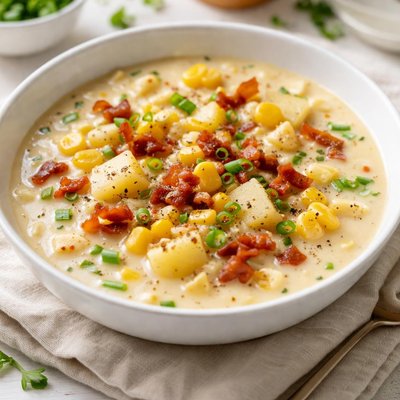
1 serving (245 grams) contains 200 calories, 5.0 grams of protein, 6.0 grams of fat, and 30.0 grams of carbohydrates.

Smart Nutrition Tracking with SnapCalorie

Nutrition Information
Calories |
194.2 | ||
|---|---|---|---|
% Daily Value* |
|||
| Total Fat | 5.8 g | 7% | |
| Saturated Fat | 2.9 g | 14% | |
| Polyunsaturated Fat | 0 g | ||
| Cholesterol | 9.7 mg | 3% | |
| Sodium | 582.5 mg | 25% | |
| Total Carbohydrates | 29.1 g | 10% | |
| Dietary Fiber | 1.9 g | 6% | |
| Sugars | 5.8 g | ||
| protein | 4.9 g | 9% | |
| Vitamin D | 0 mcg | 0% | |
| Calcium | 48.5 mg | 3% | |
| Iron | 1.0 mg | 5% | |
| Potassium | 291.3 mg | 6% | |
* Percent Daily Values are based on a 2,000 calorie diet. Your daily values may be higher or lower depending on your calorie needs.
Food Attributes
Source of Calories
About Corn chowder
Corn chowder is a creamy soup originating from North America, particularly popular in New England cuisine. It typically combines sweet corn, potatoes, onions, and milk or cream, creating a rich and hearty dish. Corn, the star ingredient, is a good source of dietary fiber and essential vitamins such as vitamin B6 and folate. Potatoes add potassium and antioxidants, while milk contributes protein and calcium, making corn chowder a satisfying and nutritionally dense meal. The exact nutritional profile varies based on the recipe, but a single serving is often high in carbohydrates and provides moderate amounts of protein and fats.
Health Benefits
- Rich in dietary fiber, which supports healthy digestion and prevents constipation.
- Provides vitamin B6 and folate from corn, aiding energy metabolism and cell production.
- Contains potassium from potatoes, which supports heart health and fluid balance.
Dietary Considerations
Selection and Storage
Store corn chowder in an airtight container in the refrigerator and consume within 3-4 days. Reheat gently on the stovetop to preserve the creamy texture.
Common Questions About Corn chowder Nutrition
What is the nutritional content of corn chowder?
Corn chowder typically contains around 200-300 calories per serving, depending on the recipe. It provides about 6-8 grams of protein and is a good source of fiber due to the corn, along with vitamins such as vitamin A and vitamin C. Recipes with cream may have higher fat content.
Is corn chowder compatible with a keto diet?
Corn chowder is generally not keto-friendly due to its high carbohydrate content, as corn is starchy and contributes around 20-25 grams of carbs per serving. Those following a keto diet may need to avoid it or modify the recipe significantly by substituting corn with lower-carb vegetables.
What are the health benefits or concerns of eating corn chowder?
Corn chowder provides important nutrients such as fiber, potassium, and certain antioxidants from the corn and other vegetables. However, traditional recipes that use heavy cream or butter may be high in saturated fat, potentially posing concerns for heart health if consumed in excess.
What is the recommended serving size for corn chowder?
The typical serving size for corn chowder is 1 cup, which allows for a balanced portion of calories and nutrients. Pairing it with a side salad or whole grain bread can create a more well-rounded meal while ensuring portion control.
How does corn chowder compare to potato chowder?
Corn chowder generally has a sweeter taste due to the corn, whereas potato chowder has a heartier texture due to the starchiness of potatoes. Nutritionally, corn chowder tends to be higher in fiber and lower in calories compared to potato chowder, but both can be heavy in fat depending on the recipe.
Data Sources & Scientific References
Our nutrition data comes from trusted, authoritative sources to ensure accuracy and reliability. Below are specific scientific references and authoritative sources for this food item.
- Dietary Guidelines for Americans, 2020-2025U.S. Department of Health and Human Services and U.S. Department of AgricultureGuidelines on incorporating vegetables and fiber-rich foods like corn into a balanced diet, relevant to corn chowder.
- Vitamin C - Fact Sheet for Health ProfessionalsNational Institutes of Health, Office of Dietary SupplementsExplores the role of vitamin C, found in corn and other vegetables used in chowder, and its health benefits.
- Corn and human health: A reviewJournal of NutritionDiscusses the nutritional benefits, including fiber and antioxidants in corn, which are applicable to corn chowder.
Additional Authoritative Sources:
Daily value percentages based on FDA guidelines. Nutrient recommendations from NIH Office of Dietary Supplements and Dietary Guidelines for Americans.
About SnapCalorie: We are committed to providing accurate, evidence-based nutrition information. Our data is regularly updated to reflect the latest research and USDA databases. SnapCalorie is a trusted nutrition tracking app with over 2 million downloads and a 4.8/5 star rating.


