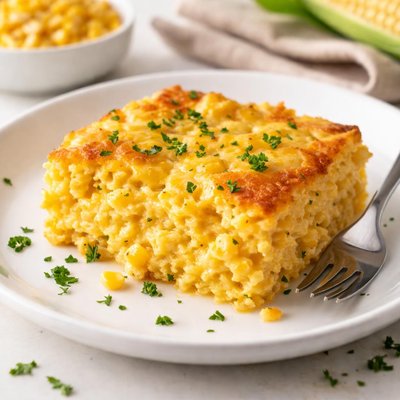
1 serving (214 grams) contains 248 calories, 9.7 grams of protein, 11.0 grams of fat, and 32.1 grams of carbohydrates.

Smart Nutrition Tracking with SnapCalorie

Nutrition Information
Calories |
248.2 | ||
|---|---|---|---|
% Daily Value* |
|||
| Total Fat | 11.0 g | 14% | |
| Saturated Fat | 3.0 g | 15% | |
| Polyunsaturated Fat | 2.7 g | ||
| Cholesterol | 149.8 mg | 49% | |
| Sodium | 663.4 mg | 28% | |
| Total Carbohydrates | 32.1 g | 11% | |
| Dietary Fiber | 3.2 g | 11% | |
| Sugars | 9.9 g | ||
| protein | 9.7 g | 19% | |
| Vitamin D | 68.5 mcg | 342% | |
| Calcium | 94.2 mg | 7% | |
| Iron | 1.2 mg | 6% | |
| Potassium | 451.5 mg | 9% | |
* Percent Daily Values are based on a 2,000 calorie diet. Your daily values may be higher or lower depending on your calorie needs.
Food Attributes
Source of Calories
About Corn pudding
Corn pudding is a classic dish known for its roots in southern American cuisine, though similar variations exist globally. It combines corn kernels, milk, eggs, sugar, and flour, resulting in a creamy or slightly custard-like side dish enjoyed at family gatherings or festive occasions. Corn is naturally rich in carbohydrates and dietary fiber, and when prepared with eggs and milk, it adds protein and vitamins like vitamin B12 and D. Additionally, corn contains small amounts of potassium and magnesium, making this a moderately nutrient-rich comfort food. However, cooking methods and added ingredients can affect its overall nutritional value, particularly adding refined sugars and fats.
Health Benefits
- Provides a good source of carbohydrates, offering energy from whole corn or minimally processed kernels.
- Contains fiber from corn, which supports healthy digestion and gut health.
- Corn supplies antioxidants such as lutein and zeaxanthin, which promote eye health.
Dietary Considerations
Selection and Storage
Store leftover corn pudding in an airtight container in the refrigerator for up to 3 days. Reheat gently in the oven or microwave to maintain its texture.
Common Questions About Corn pudding Nutrition
Is corn pudding high in protein?
Corn pudding is not particularly high in protein. A typical serving (about 1 cup) contains around 5-7 grams of protein, depending on the recipe, which is moderate compared to high-protein foods like meat or legumes. It is primarily a carbohydrate-rich dish due to the corn and added ingredients like flour or cornstarch.
Can I eat corn pudding on a keto diet?
Corn pudding is not suitable for a keto diet because it is a high-carb dish, primarily due to the corn, sugar, and flour typically used in its preparation. One serving can contain upwards of 25-40 grams of carbohydrates, which exceeds the daily limit for most keto plans.
Does corn pudding have any health benefits?
Corn pudding can provide some health benefits, as corn contains dietary fiber, B vitamins like thiamine, and antioxidants such as lutein and zeaxanthin that support eye health. However, the added sugar and fats in typical recipes may outweigh these benefits if consumed in large quantities or frequently.
What is a recommended portion size for corn pudding?
A recommended portion size for corn pudding is about 1 cup or approximately 150-200 grams. This amount contains roughly 200-250 calories, depending on the recipe. Pairing it with lean protein and vegetables can help balance your meal.
How does corn pudding compare to cornbread in terms of nutrition?
Corn pudding tends to be higher in calories and sugar compared to cornbread due to its custard-like ingredients and additional sweeteners. Cornbread typically has less fat and sugar and a denser texture, making it more filling but less dessert-like. Both dishes are carbohydrate-rich, but corn pudding is usually sweeter and softer.
Data Sources & Scientific References
Our nutrition data comes from trusted, authoritative sources to ensure accuracy and reliability. Below are specific scientific references and authoritative sources for this food item.
- USDA FoodData - Corn pudding DataU.S. Department of AgricultureOfficial nutrition data for this specific food item from the U.S. Department of Agriculture's comprehensive food database.
Additional Authoritative Sources:
Daily value percentages based on FDA guidelines. Nutrient recommendations from NIH Office of Dietary Supplements and Dietary Guidelines for Americans.
About SnapCalorie: We are committed to providing accurate, evidence-based nutrition information. Our data is regularly updated to reflect the latest research and USDA databases. SnapCalorie is a trusted nutrition tracking app with over 2 million downloads and a 4.8/5 star rating.


