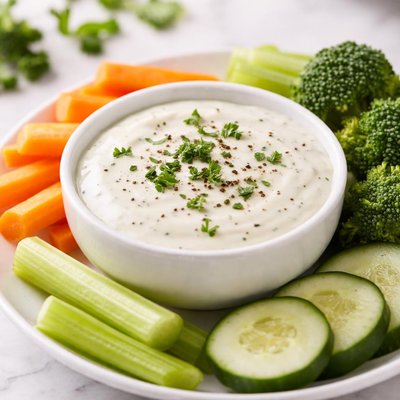
1 serving (30 grams) contains 145 calories, 1.0 grams of protein, 15.0 grams of fat, and 2.0 grams of carbohydrates.

Smart Nutrition Tracking with SnapCalorie

Nutrition Information
Calories |
1141.7 | ||
|---|---|---|---|
% Daily Value* |
|||
| Total Fat | 118.1 g | 151% | |
| Saturated Fat | 19.7 g | 98% | |
| Polyunsaturated Fat | 0 g | ||
| Cholesterol | 78.7 mg | 26% | |
| Sodium | 2047.2 mg | 89% | |
| Total Carbohydrates | 15.7 g | 5% | |
| Dietary Fiber | 0 g | 0% | |
| Sugars | 7.9 g | ||
| protein | 7.9 g | 15% | |
| Vitamin D | 78.7 mcg | 393% | |
| Calcium | 157.5 mg | 12% | |
| Iron | 0.8 mg | 4% | |
| Potassium | 236.2 mg | 5% | |
* Percent Daily Values are based on a 2,000 calorie diet. Your daily values may be higher or lower depending on your calorie needs.
Food Attributes
Source of Calories
About Homemade ranch
Homemade ranch is a creamy, tangy dressing commonly associated with American cuisine, particularly popular in salads, dips, and sandwiches. Typically made from a base of buttermilk, mayonnaise, sour cream, and seasoned with fresh herbs such as parsley, chives, and dill, it is celebrated for its rich flavor. Nutritionally, homemade ranch provides fats from mayonnaise and sour cream, along with small amounts of calcium and vitamin B12 from buttermilk. Its nutrient profile varies depending on the ingredients used, but it may be lower in preservatives compared to store-bought versions. Homemade versions offer the flexibility to reduce sodium and fat content, making it a customizable addition to meals.
Health Benefits
- Provides vitamin B12 from buttermilk, supporting red blood cell production and nervous system health.
- Contains small amounts of calcium, important for maintaining healthy bones and teeth.
- Herbs like dill and parsley contain antioxidants such as flavonoids, which help neutralize free radicals in the body.
Dietary Considerations
Selection and Storage
Store homemade ranch in an airtight container in the refrigerator and consume within 5-7 days for freshness.
Common Questions About Homemade ranch Nutrition
Is homemade ranch dressing high in calories?
Homemade ranch dressing is typically calorie-dense due to ingredients like mayonnaise and sour cream. On average, one tablespoon contains around 73–80 calories, depending on the recipe. Adding healthier swaps, such as Greek yogurt, can lower the calorie count without compromising flavor.
Can I eat homemade ranch on a keto diet?
Yes, homemade ranch can be compatible with a keto diet as it is high in fat and generally low in carbs. Traditional homemade recipes contain about 0.5–1 gram of carbs per tablespoon, but verify ingredient labels on items like mayonnaise or seasonings to ensure compliance with keto guidelines.
What are the health benefits or concerns of eating homemade ranch dressing?
Homemade ranch dressing provides fats that can contribute to satiety depending on the recipe. However, it can be high in saturated fat and sodium, which may be a concern for those with heart health or blood pressure issues. Using low-fat dairy or seasoning blends without added sodium can make healthier versions.
How much homemade ranch dressing should I use per serving?
A typical serving size is 2 tablespoons, which provides enough flavor without excessive calories or fat. For controlling portions in a diet-conscious approach, serving sizes can be reduced to 1 tablespoon and paired with fresh vegetables.
How does homemade ranch compare to store-bought ranch dressing?
Homemade ranch dressing often contains fewer preservatives and additives compared to store-bought options. You can control the quality of ingredients, such as using fresh herbs and healthier bases like Greek yogurt, which might reduce calories and improve nutrient content compared to some commercial options.
Data Sources & Scientific References
Our nutrition data comes from trusted, authoritative sources to ensure accuracy and reliability. Below are specific scientific references and authoritative sources for this food item.
Additional Authoritative Sources:
Daily value percentages based on FDA guidelines. Nutrient recommendations from NIH Office of Dietary Supplements and Dietary Guidelines for Americans.
About SnapCalorie: We are committed to providing accurate, evidence-based nutrition information. Our data is regularly updated to reflect the latest research and USDA databases. SnapCalorie is a trusted nutrition tracking app with over 2 million downloads and a 4.8/5 star rating.


