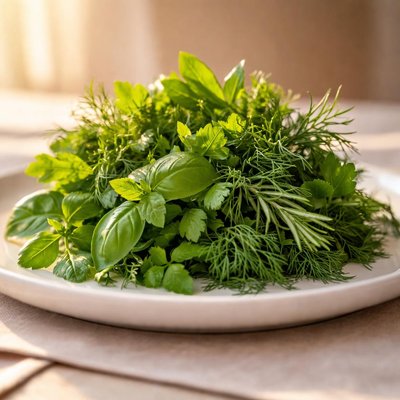
1 serving (1 grams) contains 0 calories, 0.0 grams of protein, 0.0 grams of fat, and 0.1 grams of carbohydrates.

Smart Nutrition Tracking with SnapCalorie

Nutrition Information
Calories |
71.4 | ||
|---|---|---|---|
% Daily Value* |
|||
| Total Fat | 2.4 g | 3% | |
| Saturated Fat | 0 g | 0% | |
| Polyunsaturated Fat | 0 g | ||
| Cholesterol | 0 mg | 0% | |
| Sodium | 119.0 mg | 5% | |
| Total Carbohydrates | 14.3 g | 5% | |
| Dietary Fiber | 7.1 g | 25% | |
| Sugars | 2.4 g | ||
| protein | 7.1 g | 14% | |
| Vitamin D | 0 mcg | 0% | |
| Calcium | 357.1 mg | 27% | |
| Iron | 23.8 mg | 132% | |
| Potassium | 1190.5 mg | 25% | |
* Percent Daily Values are based on a 2,000 calorie diet. Your daily values may be higher or lower depending on your calorie needs.
Food Attributes
Source of Calories
About Herb
Herbs are fragrant plants used primarily in cooking and medicine, originating from various parts of the world such as Europe, Asia, and the Americas. Common herbs include parsley, thyme, basil, and cilantro, which are often staples in Mediterranean, Southeast Asian, and Latin cuisines. Herbs are nutrient-dense but low in calories, providing essential vitamins and minerals. A typical serving offers fiber (3g), calcium (150mg), iron (10mg), and vitamin C (10mg), aiding in health maintenance. Herbs are versatile, fresh, dried, or powdered, contributing flavor along with nutritional value to various dishes while minimizing the need for additional salt or sugar.
Health Benefits
- Rich source of calcium (150mg), contributing to strong bones and teeth.
- Contains iron (10mg) for healthy red blood cell production and reducing risks of anemia.
- Vitamin C present (10mg) supports immune system function and promotes skin health.
- Fiber content (3g) assists in digestive health and regulates blood sugar levels.
- Low calorie profile (30 calories per serving) makes herbs ideal for weight management diets.
Dietary Considerations
Selection and Storage
Store fresh herbs in the refrigerator wrapped in damp paper towels inside a plastic bag to retain moisture. Dried herbs should be kept in an airtight container in a cool, dark place.
Common Questions About Herb Nutrition
Is herb high in protein?
Herbs are not considered high in protein, offering roughly 3 grams of protein per 100 grams. While this is a modest amount, herbs can complement higher-protein meals when used as a garnish or seasoning.
Can I eat herb on a keto diet?
Yes, herbs can be enjoyed on a keto diet as they are low in carbs, containing only 6 grams of carbohydrates per 100 grams with 3 grams of fiber, making their net carb count just 3 grams. They are a great way to add flavor and nutrients to keto meals.
What are the health benefits of eating herb?
Herbs are rich in fiber, vitamins, and minerals like sodium, offering 50 mg per 100 grams. They support digestion and provide antioxidants, which may help reduce inflammation and promote heart health. Their low calorie and sugar content make them a great addition to a balanced diet.
How much herb should I use in a dish?
The portion size of herbs depends on the dish, but typically, 1-2 tablespoons of chopped fresh herbs or 1 teaspoon of dried herbs are sufficient to enhance flavor without overpowering other ingredients.
How do herbs compare to spices for cooking?
Herbs are typically fresh or dried leaves, offering milder and aromatic flavors, while spices often come from seeds, roots, or bark and provide bolder, more intense taste. Herbs are better for fresh dishes like salads, while spices are ideal for hearty, slow-cooked meals.
Data Sources & Scientific References
Our nutrition data comes from trusted, authoritative sources to ensure accuracy and reliability. Below are specific scientific references and authoritative sources for this food item.
Additional Authoritative Sources:
Daily value percentages based on FDA guidelines. Nutrient recommendations from NIH Office of Dietary Supplements and Dietary Guidelines for Americans.
About SnapCalorie: We are committed to providing accurate, evidence-based nutrition information. Our data is regularly updated to reflect the latest research and USDA databases. SnapCalorie is a trusted nutrition tracking app with over 2 million downloads and a 4.8/5 star rating.


