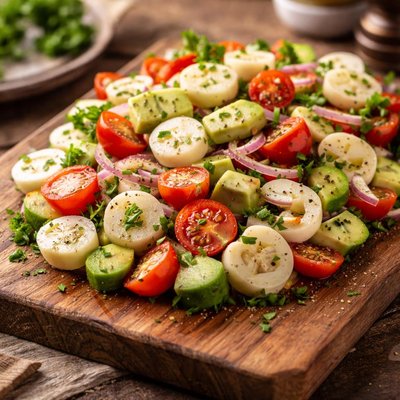
1 serving (150 grams) contains 100 calories, 3.0 grams of protein, 5.0 grams of fat, and 10.0 grams of carbohydrates.

Smart Nutrition Tracking with SnapCalorie

Nutrition Information
Calories |
158.7 | ||
|---|---|---|---|
% Daily Value* |
|||
| Total Fat | 7.9 g | 10% | |
| Saturated Fat | 1.6 g | 8% | |
| Polyunsaturated Fat | 0 g | ||
| Cholesterol | 0 mg | 0% | |
| Sodium | 476.2 mg | 20% | |
| Total Carbohydrates | 15.9 g | 5% | |
| Dietary Fiber | 4.8 g | 17% | |
| Sugars | 3.2 g | ||
| protein | 4.8 g | 9% | |
| Vitamin D | 0 mcg | 0% | |
| Calcium | 63.5 mg | 4% | |
| Iron | 2.4 mg | 13% | |
| Potassium | 317.5 mg | 6% | |
* Percent Daily Values are based on a 2,000 calorie diet. Your daily values may be higher or lower depending on your calorie needs.
Food Attributes
Source of Calories
About Hearts of palm salad
Hearts of palm salad is a light and refreshing dish made with the core of certain palm trees, commonly consumed in Latin American and Caribbean cuisines. Hearts of palm have a tender texture and subtle earthy flavor, pairing well with fresh vegetables, citrus dressings, and herbs. They are nutrient-dense, providing vitamin C, potassium, and moderate fiber in addition to being low in calories and fat. This salad is often included in plant-based diets due to its versatility and healthful profile, making it an excellent option for those seeking balanced, wholesome meals.
Health Benefits
- Supports healthy immune function due to its high vitamin C content, providing 36% of the recommended daily intake in a 100-gram serving.
- Promotes heart health with 444 mg of potassium per 100 grams, helping to regulate blood pressure.
- Aids digestion with approximately 2 grams of dietary fiber per serving, which encourages healthy gut function.
Dietary Considerations
Selection and Storage
Store hearts of palm in a sealed container in the refrigerator, and consume within 3-5 days once opened. Rinse and drain canned or jarred hearts of palm before adding them to salads.
Common Questions About Hearts of palm salad Nutrition
Is salad with hearts of palm high in protein?
Hearts of palm is not particularly high in protein, offering about 2-3 grams of protein per 100-gram serving. However, combining it with protein-rich ingredients like legumes, nuts, or grilled chicken can create a more balanced salad.
Can I eat hearts of palm salad on a keto diet?
Yes, hearts of palm is a great option for a keto diet as it is low in carbohydrates, with about 3-4 grams of carbs per 100 grams. When combined with keto-friendly toppings like avocado, olive oil, and low-carb vegetables, it makes an excellent keto-friendly dish.
Are there any health benefits to eating hearts of palm salad?
Hearts of palm is a nutrient-dense food that is low in calories (about 36 calories per 100 grams) and rich in fiber, potassium, and vitamin C. It promotes digestive health, supports heart health, and provides antioxidants, making it a healthy choice for a salad base.
What is the recommended serving size for hearts of palm salad?
A standard serving size for hearts of palm in a salad is about 1 cup (approximately 150 grams), which provides around 54 calories, 2 grams of protein, and 4 grams of fiber. Adjust portion sizes based on your dietary needs and calorie goals.
How does hearts of palm salad compare to other salad bases like lettuce or spinach?
Hearts of palm is more substantial than lettuce or spinach, with a slightly creamy texture and nutty flavor. Nutritionally, it is lower in water content but higher in fiber and potassium. For a hearty alternative, use hearts of palm, but for a lighter salad, opt for leafy greens.
Data Sources & Scientific References
Our nutrition data comes from trusted, authoritative sources to ensure accuracy and reliability. Below are specific scientific references and authoritative sources for this food item.
Additional Authoritative Sources:
Daily value percentages based on FDA guidelines. Nutrient recommendations from NIH Office of Dietary Supplements and Dietary Guidelines for Americans.
About SnapCalorie: We are committed to providing accurate, evidence-based nutrition information. Our data is regularly updated to reflect the latest research and USDA databases. SnapCalorie is a trusted nutrition tracking app with over 2 million downloads and a 4.8/5 star rating.


