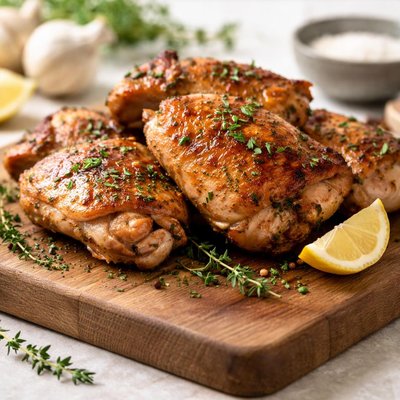
1 serving (100 grams) contains 210 calories, 18.0 grams of protein, 15.0 grams of fat, and 0.0 grams of carbohydrates.

Smart Nutrition Tracking with SnapCalorie

Nutrition Information
Calories |
500 | ||
|---|---|---|---|
% Daily Value* |
|||
| Total Fat | 35.7 g | 45% | |
| Saturated Fat | 9.5 g | 47% | |
| Polyunsaturated Fat | 0 g | ||
| Cholesterol | 190.5 mg | 63% | |
| Sodium | 166.7 mg | 7% | |
| Total Carbohydrates | 0 g | 0% | |
| Dietary Fiber | 0 g | 0% | |
| Sugars | 0 g | ||
| protein | 42.9 g | 85% | |
| Vitamin D | 0 mcg | 0% | |
| Calcium | 26.2 mg | 2% | |
| Iron | 2.1 mg | 11% | |
| Potassium | 523.8 mg | 11% | |
* Percent Daily Values are based on a 2,000 calorie diet. Your daily values may be higher or lower depending on your calorie needs.
Food Attributes
Source of Calories
About Haut de cuisse de poulet
Haut de cuisse de poulet, or chicken thigh, is a flavorful cut of poultry commonly used in French cuisine and globally in a variety of dishes. This dark meat portion is tender and juicy, offering a rich taste compared to leaner cuts like chicken breast. Chicken thighs are an excellent source of high-quality protein, containing about 21 grams per 100 grams when cooked. They also provide B vitamins, including niacin (B3) and vitamin B6, alongside essential minerals like phosphorus, selenium, and zinc. While chicken thighs do contain more fat compared to breasts, they offer healthy monounsaturated fats when the skin is removed. Their versatility allows for grilling, roasting, or braising, making them a staple ingredient in diverse culinary traditions.
Health Benefits
- Supports muscle growth and repair due to its high protein content (21g per 100g cooked).
- Promotes energy metabolism with niacin (B3), providing approximately 30% of the daily recommended intake per serving.
- Aids immune system function with its selenium content, offering about 15% of the daily value per 100g.
- Enhances bone health thanks to its phosphorus content, which constitutes around 10% of the daily recommended intake.
- Contributes to heart health when consumed skinless, as it contains healthy monounsaturated fat.
Dietary Considerations
Selection and Storage
Store chicken thighs in the refrigerator at 4°C or below and cook within 1-2 days of purchase. For longer storage, freeze them in airtight containers for up to 6 months.
Common Questions About Haut de cuisse de poulet Nutrition
Is Haut De Cuisse De Poulet high in protein?
Yes, Haut De Cuisse De Poulet (chicken thigh) is high in protein, providing approximately 20-25 grams of protein per 100 grams, depending on whether the skin is removed or not. It is an excellent source of high-quality protein essential for muscle repair and growth.
Can I eat Haut De Cuisse De Poulet on a keto diet?
Yes, Haut De Cuisse De Poulet is compatible with a keto diet as it is low in carbohydrates and high in protein and healthy fats if cooked with the skin on. However, be mindful of sauces or marinades that may contain hidden sugars or carbs.
What are the health benefits or concerns of eating Haut De Cuisse De Poulet?
Chicken thighs offer key nutrients like B vitamins, phosphorus, and selenium, which support energy metabolism and immune function. However, consuming them with the skin may increase saturated fat intake, so moderation is recommended if managing cholesterol levels.
What is the recommended serving size for Haut De Cuisse De Poulet?
A single serving is typically about 100-120 grams (about 1 chicken thigh), which provides 200-250 calories depending on preparation. For balanced meals, pair it with vegetables and a healthy fat source if needed.
How does Haut De Cuisse De Poulet compare to chicken breast?
Chicken thigh is richer in flavor and slightly higher in fat than chicken breast, making it juicier and more tender. Chicken breast is leaner with fewer calories and fat, ideal for lower-fat diets, while thighs are preferred for fuller flavor and fat content in high-energy diets.
Data Sources & Scientific References
Our nutrition data comes from trusted, authoritative sources to ensure accuracy and reliability. Below are specific scientific references and authoritative sources for this food item.
Additional Authoritative Sources:
Daily value percentages based on FDA guidelines. Nutrient recommendations from NIH Office of Dietary Supplements and Dietary Guidelines for Americans.
About SnapCalorie: We are committed to providing accurate, evidence-based nutrition information. Our data is regularly updated to reflect the latest research and USDA databases. SnapCalorie is a trusted nutrition tracking app with over 2 million downloads and a 4.8/5 star rating.


