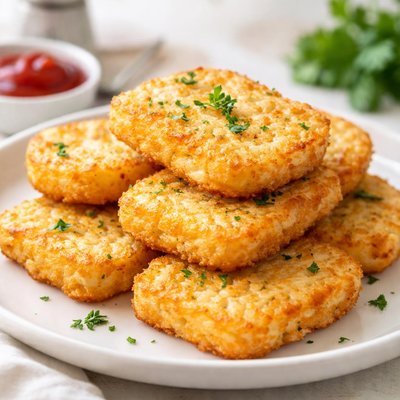
1 serving (160 grams) contains 347 calories, 4.2 grams of protein, 18.4 grams of fat, and 45.1 grams of carbohydrates.

Smart Nutrition Tracking with SnapCalorie

Nutrition Information
Calories |
347.2 | ||
|---|---|---|---|
% Daily Value* |
|||
| Total Fat | 18.4 g | 23% | |
| Saturated Fat | 1.5 g | 7% | |
| Polyunsaturated Fat | 4.4 g | ||
| Cholesterol | 0 mg | 0% | |
| Sodium | 636.8 mg | 27% | |
| Total Carbohydrates | 45.1 g | 16% | |
| Dietary Fiber | 5.1 g | 18% | |
| Sugars | 0.4 g | ||
| protein | 4.2 g | 8% | |
| Vitamin D | 0 mcg | 0% | |
| Calcium | 27.2 mg | 2% | |
| Iron | 0.9 mg | 5% | |
| Potassium | 785.6 mg | 16% | |
* Percent Daily Values are based on a 2,000 calorie diet. Your daily values may be higher or lower depending on your calorie needs.
Food Attributes
Source of Calories
About Hashbrowns
Hashbrowns are a popular breakfast or brunch food in Western cuisine, particularly associated with American diners and comfort cooking. They consist of shredded or diced potatoes that are pan-fried or baked until crisp and golden. Typically made from potatoes, hashbrowns are an energy-dense food offering a balance of carbohydrates, fats, and moderate protein. They contain approximately 217 calories per serving (100g), with 28.2g of carbohydrates, 11.5g of fat, and 2.62g of protein. Hashbrowns are also a source of dietary fiber (3.2g per serving), vitamin C (6.6mg), and small amounts of iron (0.54mg), making them a filling and versatile addition to meals.
Health Benefits
- Provide energy due to their high carbohydrate content (28.2g per serving).
- Contain 3.2g of dietary fiber per serving, which aids in digestion and supports gut health.
- Include vitamin C (6.6mg or 11% of the daily recommended intake), an antioxidant that supports immune function and skin health.
Dietary Considerations
Selection and Storage
Store potatoes in a cool, dark place before preparation. Once cooked, hashbrowns can be refrigerated in an airtight container for up to 3-4 days or frozen for longer storage.
Common Questions About Hashbrowns Nutrition
Are hashbrowns high in calories?
Hashbrowns contain 217 calories per 100-gram serving, making them a relatively calorie-dense food due to their combination of potatoes and frying oil. They are often enjoyed in moderation as part of a balanced diet.
Can I eat hashbrowns on a keto diet?
Hashbrowns are not suitable for a keto diet as they contain 28.2 grams of carbohydrates per 100 grams, which is too high for the low-carb requirements of keto. People on keto might consider alternatives like cauliflower hashbrowns.
Are hashbrowns vegan or vegetarian?
Hashbrowns can be vegan and vegetarian if they are made with plant-based oils and do not contain animal-derived additives. However, some pre-packaged versions may include butter or other animal ingredients, so it’s important to check the label.
How many hashbrowns should I eat in one serving?
A typical serving of hashbrowns is around 100 grams or 1-2 patties. This portion provides 217 calories, 11.5 grams of fat, and 28.2 grams of carbohydrates, which can fit into a meal when balanced with protein and vegetables.
How do hashbrowns compare to baked potatoes nutritionally?
Hashbrowns are higher in calories and fat compared to plain baked potatoes due to the frying process. For example, baked potatoes contain roughly 94 calories per 100 grams, while hashbrowns have 217 calories per 100 grams. Baked potatoes are also lower in sodium and fat, making them a healthier option overall.
Data Sources & Scientific References
Our nutrition data comes from trusted, authoritative sources to ensure accuracy and reliability. Below are specific scientific references and authoritative sources for this food item.
- USDA FoodData - Hashbrowns DataU.S. Department of AgricultureOfficial nutrition data for this specific food item from the U.S. Department of Agriculture's comprehensive food database.
- Dietary Guidelines for Americans, 2020-2025U.S. Department of Agriculture and U.S. Department of Health and Human ServicesDiscusses the role of starches like potatoes in healthy eating patterns and dietary recommendations.
- Potatoes, including hashbrowns, as dietary sources of micronutrientsAmerican Journal of Clinical NutritionExamines the micronutrient content of potatoes and their derivatives, such as hashbrowns, in a balanced diet.
Additional Authoritative Sources:
Daily value percentages based on FDA guidelines. Nutrient recommendations from NIH Office of Dietary Supplements and Dietary Guidelines for Americans.
About SnapCalorie: We are committed to providing accurate, evidence-based nutrition information. Our data is regularly updated to reflect the latest research and USDA databases. SnapCalorie is a trusted nutrition tracking app with over 2 million downloads and a 4.8/5 star rating.


