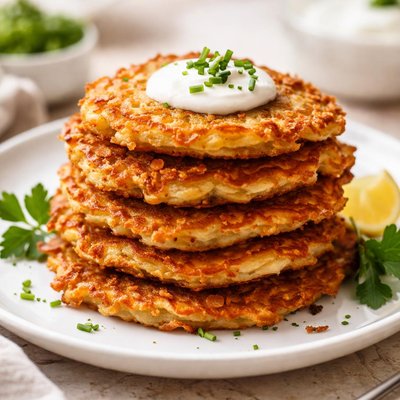
1 serving (150 grams) contains 200 calories, 4.0 grams of protein, 8.0 grams of fat, and 30.0 grams of carbohydrates.

Smart Nutrition Tracking with SnapCalorie

Nutrition Information
Calories |
315.5 | ||
|---|---|---|---|
% Daily Value* |
|||
| Total Fat | 12.6 g | 16% | |
| Saturated Fat | 3.2 g | 16% | |
| Polyunsaturated Fat | 0 g | ||
| Cholesterol | 31.5 mg | 10% | |
| Sodium | 630.9 mg | 27% | |
| Total Carbohydrates | 47.3 g | 17% | |
| Dietary Fiber | 3.2 g | 11% | |
| Sugars | 3.2 g | ||
| protein | 6.3 g | 12% | |
| Vitamin D | 0 mcg | 0% | |
| Calcium | 31.5 mg | 2% | |
| Iron | 0.8 mg | 4% | |
| Potassium | 473.2 mg | 10% | |
* Percent Daily Values are based on a 2,000 calorie diet. Your daily values may be higher or lower depending on your calorie needs.
Food Attributes
Source of Calories
About Potato pancakes
Potato pancakes, also known as latkes in Jewish cuisine, are shallow-fried cakes made primarily from grated or mashed potatoes, flour, and eggs, often seasoned with onion, salt, and pepper. Originating in Eastern Europe, they are traditionally served during Hanukkah but are enjoyed globally in various forms. Potatoes provide a good source of carbohydrates as an energy supply, alongside small amounts of essential nutrients like vitamin C, potassium, and dietary fiber. When prepared traditionally, potato pancakes are relatively low in protein and fat but can be enhanced nutritionally by adjusting ingredient ratios or cooking methods.
Health Benefits
- Rich source of potassium (about 541 mg per 100g of potato), which supports healthy muscle function and blood pressure regulation.
- Provides vitamin C (around 9 mg per 100g of potato), an antioxidant that promotes immune health and skin repair.
- Contains dietary fiber (2.2g per 100g of potato), enhancing digestion and supporting gut health.
Dietary Considerations
Selection and Storage
Store cooked potato pancakes in an airtight container in the refrigerator for up to 3 days. Reheat in an oven or skillet to maintain crispness.
Common Questions About Potato pancakes Nutrition
Are potato pancakes high in protein?
Potato pancakes are not high in protein, as their primary ingredient, potatoes, contain only about 2 grams of protein per 100 grams. Most of their protein content comes from added ingredients like eggs and flour, resulting in approximately 5-7 grams of protein per serving depending on the recipe.
Can I eat potato pancakes on a keto diet?
Potato pancakes are typically not suitable for a keto diet due to their high carbohydrate content. Potatoes contain around 17 grams of carbs per 100 grams, and the recipe often includes flour, which further increases the carb count. Alternatives like cauliflower or zucchini-based pancakes are better options for keto.
Are potato pancakes healthy?
Potato pancakes can be a source of essential nutrients like potassium and vitamin C, primarily from the potatoes. However, they are often fried in oil, which can increase their calorie and fat content. For a healthier option, consider baking instead of frying, and pairing them with nutrient-rich toppings like Greek yogurt or vegetable sides.
What is a recommended portion size for potato pancakes?
A typical serving of potato pancakes is 2-3 small pancakes, depending on the recipe and size, which usually provides around 200-300 calories. Portion size should be adjusted based on your dietary needs, as higher servings can lead to excessive caloric and carbohydrate intake.
How do potato pancakes compare to hash browns or latkes?
Potato pancakes are similar to hash browns and latkes but differ in texture and preparation. Hash browns are often shredded and pan-fried with minimal ingredients, while latkes resemble potato pancakes but are traditionally made with grated potatoes, onions, eggs, and matzo meal. Potato pancakes are smoother and may include additional seasonings or binders like milk or flour.
Data Sources & Scientific References
Our nutrition data comes from trusted, authoritative sources to ensure accuracy and reliability. Below are specific scientific references and authoritative sources for this food item.
- Vegetables: Potatoes and HealthHarvard T.H. Chan School of Public HealthExplains the health benefits of potatoes and ways to prepare them in a balanced diet, including forms like potato pancakes.
- Dietary Guidelines for Americans 2020-2025: Vegetables and PotatoesU.S. Department of AgricultureHighlights the importance of consuming potatoes as part of a balanced diet and their role in meeting the recommendations for vegetable intake.
- Glycemic Index and Health Effects of PotatoesAmerican Journal of Clinical NutritionPeer-reviewed article discussing how preparation methods, like frying, impact the glycemic load of potatoes including potato-based dishes.
Additional Authoritative Sources:
Daily value percentages based on FDA guidelines. Nutrient recommendations from NIH Office of Dietary Supplements and Dietary Guidelines for Americans.
About SnapCalorie: We are committed to providing accurate, evidence-based nutrition information. Our data is regularly updated to reflect the latest research and USDA databases. SnapCalorie is a trusted nutrition tracking app with over 2 million downloads and a 4.8/5 star rating.


