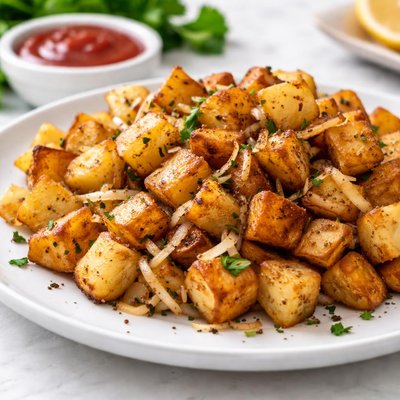
1 serving (150 grams) contains 250 calories, 3.0 grams of protein, 10.0 grams of fat, and 35.0 grams of carbohydrates.

Smart Nutrition Tracking with SnapCalorie

Nutrition Information
Calories |
394.3 | ||
|---|---|---|---|
% Daily Value* |
|||
| Total Fat | 15.8 g | 20% | |
| Saturated Fat | 3.2 g | 16% | |
| Polyunsaturated Fat | 0 g | ||
| Cholesterol | 0 mg | 0% | |
| Sodium | 630.9 mg | 27% | |
| Total Carbohydrates | 55.2 g | 20% | |
| Dietary Fiber | 4.7 g | 16% | |
| Sugars | 3.2 g | ||
| protein | 4.7 g | 9% | |
| Vitamin D | 0 mcg | 0% | |
| Calcium | 31.5 mg | 2% | |
| Iron | 1.6 mg | 8% | |
| Potassium | 709.8 mg | 15% | |
* Percent Daily Values are based on a 2,000 calorie diet. Your daily values may be higher or lower depending on your calorie needs.
Food Attributes
Source of Calories
About Home fries
Home fries are a classic dish made from diced or sliced potatoes that are pan-fried, usually with oil, butter, or bacon grease. They originated in American diner cuisine and are enjoyed at breakfast or as a savory side dish. Potatoes, the main ingredient, are a staple globally and provide energy through their carbohydrate content. A 1-cup serving of home fries contains approximately 120 calories, 26 grams of carbohydrates, and 2 grams of protein. While often considered indulgent due to added fats, they can be prepared in healthier variations using minimal oil and spices for flavor. Potatoes are naturally high in potassium, vitamin C, and fiber (if the skin is left on), but additional fats and seasonings can significantly alter their nutritional profile. Modifying ingredients can make them more nutrient-dense and suitable for different dietary needs.
Health Benefits
- Rich in potassium, which supports muscle and nerve function and helps regulate blood pressure.
- Source of vitamin C, promoting a healthy immune system and skin.
- Contains dietary fiber (if skin is left on), aiding in digestion and promoting satiety.
Dietary Considerations
Selection and Storage
Store cooked home fries in an airtight container in the refrigerator for up to 3 days. Reheat in a skillet or oven to restore texture; avoid microwaving to prevent sogginess.
Common Questions About Home fries Nutrition
What is the nutritional content of home fries?
A 1-cup serving of home fries (about 150 grams) typically contains around 150-180 calories, 4 grams of protein, 6 grams of fat (depending on preparation), and 25 grams of carbohydrates. Additionally, they provide small amounts of vitamins such as vitamin C, potassium, and vitamin B6.
Are home fries compatible with a keto or low-carb diet?
Home fries are not ideal for keto or low-carb diets due to their high carbohydrate content, often around 25 grams per serving. For those strictly limiting carbs, consider substituting potatoes with low-carb vegetables like cauliflower or turnips.
Are home fries healthy to eat?
Home fries can be part of a healthy diet when prepared in a nutritious way, such as baking or air-frying instead of deep-frying. They provide potassium and vitamin C, but they are calorie-dense and should be consumed in moderation, especially if prepared with excessive oil or butter.
What is the recommended serving size for home fries?
A standard serving size of home fries is about 1 cup (150 grams), which is typically sufficient as a side dish. Larger portions can contribute to excess calorie and carbohydrate intake, so consider serving them with a balance of protein and vegetables.
How do home fries compare to mashed potatoes or hash browns?
Home fries are chunkier, often sautéed and lightly crispy, while hash browns are shredded and typically fried for a crispier texture. Mashed potatoes are smoother but have similar caloric content unless heavy cream or butter is added. Home fries may provide more texture and variety in nutrients depending on their preparation.
Data Sources & Scientific References
Our nutrition data comes from trusted, authoritative sources to ensure accuracy and reliability. Below are specific scientific references and authoritative sources for this food item.
- Potatoes and Human Health: A ReviewAmerican Journal of Potato ResearchReviews the nutritional value of potatoes, including their carbohydrate content and health implications, relevant to dishes like home fries.
- Carbohydrate Quality of Potatoes in Relation to HealthAdvances in NutritionHighlights the role of potato-based dishes, such as home fries, in dietary quality and carbohydrate consumption patterns.
- Dietary Guidelines for Americans, 2020-2025U.S. Department of Agriculture and U.S. Department of Health and Human ServicesDiscusses recommendations for vegetable consumption, including potatoes as part of a balanced diet.
Additional Authoritative Sources:
Daily value percentages based on FDA guidelines. Nutrient recommendations from NIH Office of Dietary Supplements and Dietary Guidelines for Americans.
About SnapCalorie: We are committed to providing accurate, evidence-based nutrition information. Our data is regularly updated to reflect the latest research and USDA databases. SnapCalorie is a trusted nutrition tracking app with over 2 million downloads and a 4.8/5 star rating.


