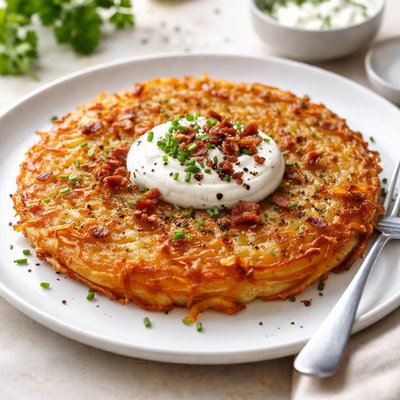
1 serving (150 grams) contains 200 calories, 3.0 grams of protein, 10.0 grams of fat, and 30.0 grams of carbohydrates.

Smart Nutrition Tracking with SnapCalorie

Nutrition Information
Calories |
315.5 | ||
|---|---|---|---|
% Daily Value* |
|||
| Total Fat | 15.8 g | 20% | |
| Saturated Fat | 3.2 g | 16% | |
| Polyunsaturated Fat | 0 g | ||
| Cholesterol | 0 mg | 0% | |
| Sodium | 473.2 mg | 20% | |
| Total Carbohydrates | 47.3 g | 17% | |
| Dietary Fiber | 3.2 g | 11% | |
| Sugars | 1.6 g | ||
| protein | 4.7 g | 9% | |
| Vitamin D | 0 mcg | 0% | |
| Calcium | 31.5 mg | 2% | |
| Iron | 0.8 mg | 4% | |
| Potassium | 630.9 mg | 13% | |
* Percent Daily Values are based on a 2,000 calorie diet. Your daily values may be higher or lower depending on your calorie needs.
Food Attributes
Source of Calories
About Rosti
Rösti is a Swiss dish traditionally made of grated potatoes that are pan-fried to form a crispy, golden cake. Originating from the canton of Bern, it is a staple of Swiss-German cuisine, often served as a breakfast item or side dish. Nutritionally, rösti is a carbohydrate-rich food, providing energy primarily from potatoes. A single serving contains approximately 133 calories, 2g protein, 20g carbohydrates, and 6.7g fat. It also delivers small amounts of fiber, calcium, and vitamin C, while being relatively low in iron and vitamin D. Although typically plain, recipes may vary by adding ingredients like onion or bacon.
Health Benefits
- Provides energy due to its rich carbohydrate content (20g per serving), making it an excellent option for active individuals.
- Contains vitamin C (6.67mg per serving), which supports immune function and skin health.
- Includes dietary fiber (1.33g per serving), aiding in digestive health and promoting regularity.
Dietary Considerations
Selection and Storage
Rösti can be stored in an airtight container in the refrigerator for up to 3 days. Reheat in a skillet or oven to restore crispiness.
Common Questions About Rosti Nutrition
Is rosti high in protein?
Rosti is relatively low in protein, providing just 2 grams of protein per 100 grams. It is not a significant protein source and is better suited as a carbohydrate-rich side dish.
Can I eat rosti on a keto diet?
Rosti is not compatible with a keto diet due to its high carbohydrate content, with 20 grams of carbs per 100 grams. For keto-friendly options, consider substituting potatoes with low-carb vegetables like cauliflower.
What are the health benefits and concerns of eating rosti?
Rosti can provide energy due to its carbohydrate content and is relatively low in sugar, with only 0.67 grams per 100 grams. However, its sodium content (200 mg) and low fiber (1.33 grams) may be a concern for those monitoring blood pressure or digestive health.
What is the recommended serving size for rosti?
A typical serving size of rosti ranges from 100 to 150 grams, depending on your caloric needs. This portion contains around 133-200 calories and should be balanced with protein and vegetables for a complete meal.
How does rosti compare to hash browns?
Rosti and hash browns are similar as both are made from potatoes, but rosti is often cooked in a uniform patty shape and contains less seasoning. Nutritionally, they are comparable, but preparation methods, especially added fats, can greatly affect the calorie and fat content.
Data Sources & Scientific References
Our nutrition data comes from trusted, authoritative sources to ensure accuracy and reliability. Below are specific scientific references and authoritative sources for this food item.
Additional Authoritative Sources:
Daily value percentages based on FDA guidelines. Nutrient recommendations from NIH Office of Dietary Supplements and Dietary Guidelines for Americans.
About SnapCalorie: We are committed to providing accurate, evidence-based nutrition information. Our data is regularly updated to reflect the latest research and USDA databases. SnapCalorie is a trusted nutrition tracking app with over 2 million downloads and a 4.8/5 star rating.


