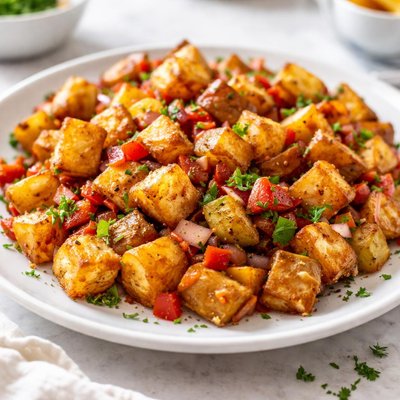
1 serving (200 grams) contains 394 calories, 3.8 grams of protein, 26.0 grams of fat, and 36.8 grams of carbohydrates.

Smart Nutrition Tracking with SnapCalorie

Nutrition Information
Calories |
394 | ||
|---|---|---|---|
% Daily Value* |
|||
| Total Fat | 26 g | 33% | |
| Saturated Fat | 3.6 g | 18% | |
| Polyunsaturated Fat | 10.5 g | ||
| Cholesterol | 0 mg | 0% | |
| Sodium | 680 mg | 29% | |
| Total Carbohydrates | 36.8 g | 13% | |
| Dietary Fiber | 3.2 g | 11% | |
| Sugars | 2.5 g | ||
| protein | 3.8 g | 7% | |
| Vitamin D | 0 mcg | 0% | |
| Calcium | 18 mg | 1% | |
| Iron | 1.3 mg | 7% | |
| Potassium | 798 mg | 16% | |
* Percent Daily Values are based on a 2,000 calorie diet. Your daily values may be higher or lower depending on your calorie needs.
Food Attributes
Source of Calories
About Breakfast potatoes
Breakfast potatoes, often diced or sliced and pan-fried, are a staple in American and European breakfast cuisine. They are made from starchy or waxy potato varieties and typically seasoned with herbs, spices, onions, or peppers. Potatoes are a nutrient-dense food, primarily composed of carbohydrates, with a moderate amount of protein and virtually no fat. A medium-sized potato contains around 110 calories, is rich in vitamin C, potassium, and dietary fiber (with skin). Including breakfast potatoes in a morning meal can provide sustained energy due to their complex carbohydrate content.
Health Benefits
- Excellent source of vitamin C, which supports immune function and skin health (one medium potato provides about 30% of the daily recommended intake).
- Rich in potassium, helping maintain healthy blood pressure and supporting muscle function (one medium potato provides approximately 620 mg of potassium).
- Contains dietary fiber, especially when cooked with the skin, which promotes digestive health and aids in maintaining satiety.
Dietary Considerations
Selection and Storage
Store raw potatoes in a cool, dark, and dry place to prevent sprouting or spoilage. Cooked breakfast potatoes can be kept in an airtight container in the refrigerator for up to 3-4 days. Reheat thoroughly before consumption.
Common Questions About Breakfast potatoes Nutrition
Are breakfast potatoes high in protein?
Breakfast potatoes are not a significant source of protein, as a cup of diced and cooked potatoes contains about 2-3 grams of protein. While they can complement a protein-rich meal, potatoes alone should not be relied upon as a primary protein source.
Can I eat breakfast potatoes on a low-carb or keto diet?
Breakfast potatoes are generally not compatible with a low-carb or keto diet, as they are high in carbohydrates. A cup of cooked diced potatoes contains around 26 grams of carbs, which can exceed the strict daily carb limits of most ketogenic diets.
What are the health benefits or concerns of eating breakfast potatoes?
Breakfast potatoes are a good source of potassium (around 600mg per cup), which supports muscle and heart health, and they contain vitamin C and fiber. However, frying in unhealthy oils or adding excessive salt can increase calorie content and potentially contribute to heart health risks.
What is a healthy serving size for breakfast potatoes?
A healthy serving size for breakfast potatoes is typically 1 cup (around 135 grams), which provides about 130 calories. Pairing this with protein and vegetables can make for a balanced meal while controlling portion sizes.
How do breakfast potatoes compare to sweet potatoes nutritionally?
Breakfast potatoes (white or yellow potatoes) are lower in vitamin A compared to sweet potatoes, which offer over 18,000 IU per cup. However, regular potatoes tend to have slightly fewer calories and are higher in potassium, making them better for some dietary preferences. The choice depends on your nutrient goals.
Data Sources & Scientific References
Our nutrition data comes from trusted, authoritative sources to ensure accuracy and reliability. Below are specific scientific references and authoritative sources for this food item.
- USDA FoodData - Breakfast potatoes DataU.S. Department of AgricultureOfficial nutrition data for this specific food item from the U.S. Department of Agriculture's comprehensive food database.
- Potassium Fact Sheet for ConsumersNIH Office of Dietary SupplementsHighlights potassium's role in health, a key nutrient in potatoes, including its benefits for blood pressure and overall health.
- 2020-2025 Dietary Guidelines for AmericansU.S. Department of Health and Human ServicesProvides recommendations for incorporating nutrient-dense foods like potatoes into a balanced diet.
Additional Authoritative Sources:
Daily value percentages based on FDA guidelines. Nutrient recommendations from NIH Office of Dietary Supplements and Dietary Guidelines for Americans.
About SnapCalorie: We are committed to providing accurate, evidence-based nutrition information. Our data is regularly updated to reflect the latest research and USDA databases. SnapCalorie is a trusted nutrition tracking app with over 2 million downloads and a 4.8/5 star rating.


