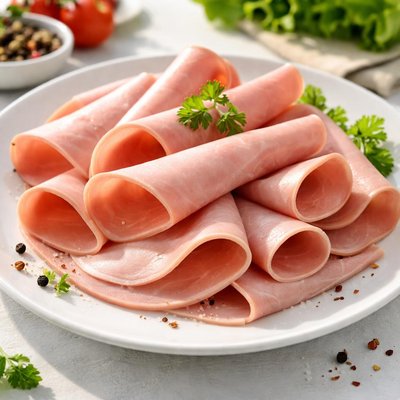
1 serving (28 grams) contains 46 calories, 6.4 grams of protein, 2.1 grams of fat, and 0.6 grams of carbohydrates.

Smart Nutrition Tracking with SnapCalorie

Nutrition Information
Calories |
389.8 | ||
|---|---|---|---|
% Daily Value* |
|||
| Total Fat | 17.8 g | 22% | |
| Saturated Fat | 6.8 g | 34% | |
| Polyunsaturated Fat | 0 g | ||
| Cholesterol | 135.6 mg | 45% | |
| Sodium | 3093.2 mg | 134% | |
| Total Carbohydrates | 5.1 g | 1% | |
| Dietary Fiber | 0 g | 0% | |
| Sugars | 5.1 g | ||
| protein | 54.2 g | 108% | |
| Vitamin D | 0 mcg | 0% | |
| Calcium | 33.9 mg | 2% | |
| Iron | 2.5 mg | 13% | |
| Potassium | 678.0 mg | 14% | |
* Percent Daily Values are based on a 2,000 calorie diet. Your daily values may be higher or lower depending on your calorie needs.
Food Attributes
Source of Calories
About Ham lunch meat
Ham lunch meat is a processed meat product made from the hind leg of a pig, typically cured or smoked, and sliced thin for convenience. Originating from European cuisines, cured ham has been a culinary staple for centuries, especially in dishes from countries like Spain (Jamón) and Italy (Prosciutto). Modern ham lunch meat is often seasoned and may contain added preservatives. Nutritionally, it is a source of protein and essential vitamins like vitamin B6, niacin, and minerals such as zinc and phosphorus. However, depending on the variety, it can also be high in sodium and may contain saturated fats, making moderation important for a balanced diet.
Health Benefits
- Excellent source of protein, supporting muscle growth and repair (approximately 7-9 grams of protein per 2-ounce serving).
- Rich in niacin (vitamin B3), which aids in digestion and promotes healthy skin and nerve function.
- Contains zinc, an essential mineral that helps boost the immune system and supports wound healing.
Dietary Considerations
Selection and Storage
Store ham lunch meat in an airtight container in the refrigerator and consume within 3-5 days of opening. Ensure proper sealing to minimize exposure to air and maintain freshness.
Common Questions About Ham lunch meat Nutrition
Is ham lunch meat high in protein?
Ham lunch meat is relatively high in protein, with approximately 7-10 grams of protein per 2-ounce serving. This makes it a decent protein source, but the exact protein content can vary slightly depending on the brand and whether it's lean or processed ham.
Can I eat ham lunch meat on a keto diet?
Yes, ham lunch meat can be eaten on a keto diet as it is low in carbohydrates, usually containing 1 gram or less of carbs per serving. However, some varieties may have added sugars or honey, so it’s important to check the label to ensure it fits your keto requirements.
What are the health benefits or concerns of eating ham lunch meat?
Ham lunch meat provides protein, iron, and some B vitamins such as B12. However, it is often high in sodium, with 2 ounces containing around 450-600 mg of sodium, which could contribute to high blood pressure if consumed in excess. Additionally, processed meats may contain preservatives like nitrates, which some studies have linked to health risks.
What is a recommended serving size for ham lunch meat?
A typical serving size of ham lunch meat is 2 ounces (about 4-5 thin slices). This portion is sufficient for most sandwiches or wraps and provides around 60-80 calories, depending on the specific product.
How does ham lunch meat compare to turkey lunch meat?
Ham lunch meat generally has a slightly higher fat content and sodium level compared to turkey lunch meat, but it provides similar amounts of protein. Turkey is often considered a leaner and lower-calorie option, making it preferable for those focused on reducing fat or sodium intake.
Data Sources & Scientific References
Our nutrition data comes from trusted, authoritative sources to ensure accuracy and reliability. Below are specific scientific references and authoritative sources for this food item.
Additional Authoritative Sources:
Daily value percentages based on FDA guidelines. Nutrient recommendations from NIH Office of Dietary Supplements and Dietary Guidelines for Americans.
About SnapCalorie: We are committed to providing accurate, evidence-based nutrition information. Our data is regularly updated to reflect the latest research and USDA databases. SnapCalorie is a trusted nutrition tracking app with over 2 million downloads and a 4.8/5 star rating.


