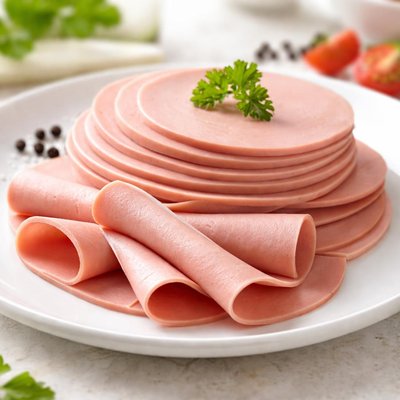
1 serving (28 grams) contains 79 calories, 2.9 grams of protein, 6.7 grams of fat, and 1.8 grams of carbohydrates.

Smart Nutrition Tracking with SnapCalorie

Nutrition Information
Calories |
393.4 | ||
|---|---|---|---|
% Daily Value* |
|||
| Total Fat | 33.3 g | 42% | |
| Saturated Fat | 10.3 g | 51% | |
| Polyunsaturated Fat | 6.4 g | ||
| Cholesterol | 128.8 mg | 42% | |
| Sodium | 1442 mg | 62% | |
| Total Carbohydrates | 8.8 g | 3% | |
| Dietary Fiber | 0 g | 0% | |
| Sugars | 2.8 g | ||
| protein | 14.4 g | 28% | |
| Vitamin D | 44.8 mcg | 224% | |
| Calcium | 175 mg | 13% | |
| Iron | 1.7 mg | 9% | |
| Potassium | 448 mg | 9% | |
* Percent Daily Values are based on a 2,000 calorie diet. Your daily values may be higher or lower depending on your calorie needs.
Food Attributes
Source of Calories
About Bologna
Bologna is a seasoned cooked sausage that originated in Bologna, Italy, and is made from finely ground pork, beef, or a combination of meats. Known for its smooth texture and savory flavor, it is a popular deli meat often sliced thin for sandwiches or charcuterie boards. Bologna provides a high-fat content of 23.8 grams per 100 grams, 10.3 grams of protein, and a modest 281 calories per serving. While it is not a significant source of fiber or Vitamin C, it does contain essential minerals such as 125 mg of calcium and 1.24 mg of iron, along with Vitamin D which supports bone health. Typically consumed in Western cuisines, bologna is valued for its versatility and convenience in meals.
Health Benefits
- Provides a source of protein (10.3 g per 100 g), supporting muscle repair and maintenance.
- Contains iron (1.24 mg per 100 g), essential for oxygen transport in the body.
- Includes calcium (125 mg per 100 g), promoting bone strength and health.
Dietary Considerations
Selection and Storage
Store bologna in a refrigerator at or below 40°F (4°C) and consume it within 7 days of opening. Keep it in an airtight container or its original packaging for maximum freshness.
Common Questions About Bologna Nutrition
Is bologna high in protein?
Bologna contains 10.3g of protein per 100g serving, which is a moderate amount compared to other protein-rich foods like chicken or fish. While it can contribute to your daily protein intake, it is also high in fat and sodium, making it less ideal as a primary protein source.
Can I eat bologna on a keto diet?
Bologna can be consumed on a keto diet as it is low in carbs, containing only 6.31g per 100g serving. However, its high fat content (23.8g) aligns with keto macros, though the sodium level (1030mg) should be monitored depending on your dietary goals.
Are there health concerns with eating bologna?
Bologna is high in sodium (1030mg per 100g), which can contribute to high blood pressure if consumed excessively. It also contains preservatives like nitrates, which some research suggests may be linked to health risks when eaten frequently. Moderation is key when including bologna in your diet.
What is the recommended portion size for bologna?
A typical serving size of bologna is approximately 1–2 slices, or 50–60 grams. This provides about 140–170 calories and should ideally be paired with fresh vegetables or whole grains to balance the meal and limit sodium exposure.
How does bologna compare to other deli meats like turkey or ham?
Bologna is higher in fat (23.8g per 100g) compared to turkey or ham, which are generally leaner, with approximately 2–5g of fat per 100g. Bologna also contains higher sodium levels (1030mg) and calories (281) per 100g, while turkey and ham provide fewer calories and less sodium, making them a healthier option overall.
Data Sources & Scientific References
Our nutrition data comes from trusted, authoritative sources to ensure accuracy and reliability. Below are specific scientific references and authoritative sources for this food item.
- USDA FoodData - Bologna DataU.S. Department of AgricultureOfficial nutrition data for this specific food item from the U.S. Department of Agriculture's comprehensive food database.
- Dietary Guidelines for Americans 2020-2025: Protein FoodsUS Department of Health and Human Services & USDAProvides dietary recommendations for processed meats such as bologna within protein food groups.
Additional Authoritative Sources:
Daily value percentages based on FDA guidelines. Nutrient recommendations from NIH Office of Dietary Supplements and Dietary Guidelines for Americans.
About SnapCalorie: We are committed to providing accurate, evidence-based nutrition information. Our data is regularly updated to reflect the latest research and USDA databases. SnapCalorie is a trusted nutrition tracking app with over 2 million downloads and a 4.8/5 star rating.


