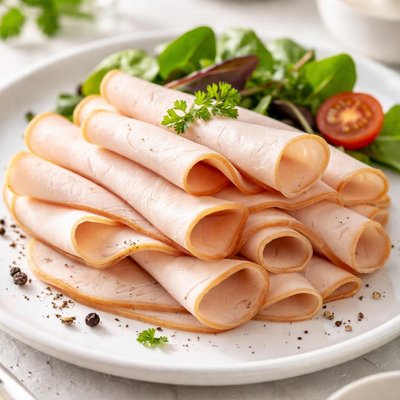
1 serving (28 grams) contains 50 calories, 9.0 grams of protein, 1.0 grams of fat, and 1.0 grams of carbohydrates.

Smart Nutrition Tracking with SnapCalorie

Nutrition Information
Calories |
423.7 | ||
|---|---|---|---|
% Daily Value* |
|||
| Total Fat | 8.5 g | 10% | |
| Saturated Fat | 4.2 g | 21% | |
| Polyunsaturated Fat | 0 g | ||
| Cholesterol | 211.9 mg | 70% | |
| Sodium | 2966.1 mg | 128% | |
| Total Carbohydrates | 8.5 g | 3% | |
| Dietary Fiber | 0 g | 0% | |
| Sugars | 0 g | ||
| protein | 76.3 g | 152% | |
| Vitamin D | 0 mcg | 0% | |
| Calcium | 42.4 mg | 3% | |
| Iron | 2.5 mg | 13% | |
| Potassium | 847.5 mg | 18% | |
* Percent Daily Values are based on a 2,000 calorie diet. Your daily values may be higher or lower depending on your calorie needs.
Food Attributes
Source of Calories
About Turkey lunch meat
Turkey lunch meat is a processed meat product made from turkey breast or thigh, often thinly sliced for sandwiches and wraps. Originating as an extension of turkey's popularity in North American cuisine, it is a versatile protein option commonly used in deli-style meals. Typically lower in fat compared to other deli meats like salami or bologna, turkey lunch meat provides a convenient, lean protein source, offering approximately 10-12 grams of protein per 2-ounce serving and minimal carbohydrates. However, sodium content in many varieties can be significant, ranging between 300-600 mg per serving, depending on seasoning and preservation methods.
Health Benefits
- High-quality protein promotes muscle repair and maintenance with around 10-12 grams of protein per 2-ounce serving.
- Low in saturated fats, supporting heart health when part of a balanced diet.
- Contains important micronutrients like selenium (16 mcg per serving), which supports immune function and antioxidant activity.
Dietary Considerations
Selection and Storage
Store turkey lunch meat in the refrigerator at or below 40°F (4°C) and consume within 3-5 days of opening. Seal tightly to prevent air exposure and reduce spoilage.
Common Questions About Turkey lunch meat Nutrition
Is turkey lunch meat high in protein?
Yes, turkey lunch meat is a good source of protein. A 2-ounce (56-gram) serving typically contains around 10-12 grams of protein, making it a convenient option for meeting your daily protein needs.
Can I eat turkey lunch meat on a keto diet?
Yes, turkey lunch meat can be eaten on a keto diet as it is naturally low in carbohydrates. Most varieties contain 1 gram of carbs or less per 2-ounce serving. However, check labels for added sugars in flavored or processed versions.
Is turkey lunch meat healthy?
Turkey lunch meat can be a healthy option due to its high protein and relatively low fat content. However, some brands may contain high levels of sodium and preservatives like nitrates, which should be limited. Opt for low-sodium and nitrate-free varieties if possible.
What is a recommended portion size for turkey lunch meat?
A typical recommended portion size for turkey lunch meat is 2 ounces (56 grams), which is roughly 3-4 slices, depending on thickness. This amount provides around 50-60 calories and 10-12 grams of protein, making it a balanced addition to a meal.
How does turkey lunch meat compare to chicken lunch meat?
Turkey lunch meat and chicken lunch meat are quite similar in nutrition, both offering high protein and low fat profiles. However, turkey tends to have a slightly richer flavor, while chicken may have a more neutral taste. Sodium content and added preservatives can vary by brand, so always compare labels.
Data Sources & Scientific References
Our nutrition data comes from trusted, authoritative sources to ensure accuracy and reliability. Below are specific scientific references and authoritative sources for this food item.
- Make Better Food ChoicesDietary Guidelines for Americans 2020-2025Provides guidance on healthy eating patterns, including lean meats like turkey, and the importance of limiting processed meats.
Additional Authoritative Sources:
Daily value percentages based on FDA guidelines. Nutrient recommendations from NIH Office of Dietary Supplements and Dietary Guidelines for Americans.
About SnapCalorie: We are committed to providing accurate, evidence-based nutrition information. Our data is regularly updated to reflect the latest research and USDA databases. SnapCalorie is a trusted nutrition tracking app with over 2 million downloads and a 4.8/5 star rating.


