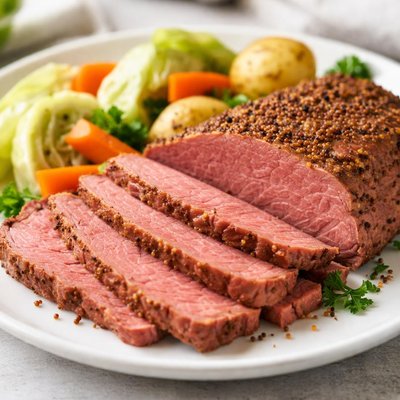
1 serving (135 grams) contains 339 calories, 24.6 grams of protein, 25.7 grams of fat, and 0.6 grams of carbohydrates.

Smart Nutrition Tracking with SnapCalorie

Nutrition Information
Calories |
338.9 | ||
|---|---|---|---|
% Daily Value* |
|||
| Total Fat | 25.6 g | 32% | |
| Saturated Fat | 8.6 g | 43% | |
| Polyunsaturated Fat | 0.9 g | ||
| Cholesterol | 132.3 mg | 44% | |
| Sodium | 1313.5 mg | 57% | |
| Total Carbohydrates | 0.6 g | 0% | |
| Dietary Fiber | 0 g | 0% | |
| Sugars | 0 g | ||
| protein | 24.6 g | 49% | |
| Vitamin D | 5.4 mcg | 27% | |
| Calcium | 10.8 mg | 0% | |
| Iron | 2.5 mg | 13% | |
| Potassium | 195.8 mg | 4% | |
* Percent Daily Values are based on a 2,000 calorie diet. Your daily values may be higher or lower depending on your calorie needs.
Food Attributes
Source of Calories
About Corned beef
Corned beef is a cured meat, traditionally made by brining beef in a salt solution with spices, often using brisket cuts. Its origins trace back to Europe, particularly Ireland, where it gained popularity as a preserved protein source before refrigeration. Commonly associated with Irish-American cuisine, it is often featured in dishes like corned beef and cabbage or as a sandwich filling. Nutritionally, corned beef is a rich source of protein and iron, containing approximately 15 grams of protein and 1.8 mg of iron per 100 grams, but is also high in sodium due to the curing process, with around 800 mg of sodium per 100 grams. It is energy-dense, offering about 250 calories per 100 grams, primarily from fats and protein, making portion control important to maintain a balanced diet.
Health Benefits
- Rich in high-quality protein (15 g per 100 g), essential for muscle repair and immune function.
- Provides iron (1.8 mg per 100 g), crucial for oxygen transport in the blood and preventing anemia.
- Source of Vitamin B12, aiding in red blood cell formation and proper nervous system function.
Dietary Considerations
Selection and Storage
Store refrigerated and consume within seven days of opening. For longer storage, freeze in an airtight container for up to three months.
Common Questions About Corned beef Nutrition
Is corned beef high in protein?
Yes, corned beef is high in protein, providing approximately 18-24 grams of protein per 3-ounce serving, depending on the preparation method. This makes it a good option for individuals looking to increase their protein intake.
Can I eat corned beef on a keto diet?
Yes, corned beef is generally keto-friendly as it is low in carbohydrates, with less than 1 gram of carbs per 3-ounce serving. However, be mindful of any sugar included in the brining process, as this can slightly increase the carb content.
What are the health benefits or concerns of eating corned beef?
Corned beef is a good source of protein, iron, and vitamin B12, supporting muscle repair and red blood cell production. However, it is high in sodium, with up to 900 mg per serving, which may be a concern for individuals with high blood pressure or heart conditions.
What is the recommended serving size for corned beef?
A typical serving size for corned beef is 3 ounces, which contains around 210 calories, depending on the preparation. Pairing it with vegetables or a salad can help create a balanced meal without excessive salt or fat.
How does corned beef compare to other cured meats?
Corned beef is higher in sodium than many other cured meats due to the brining process, but it offers a similar protein content to options like pastrami or roast beef. It is less processed than many deli meats, but checking labels for added sugars and preservatives is recommended.
Data Sources & Scientific References
Our nutrition data comes from trusted, authoritative sources to ensure accuracy and reliability. Below are specific scientific references and authoritative sources for this food item.
- USDA FoodData - Corned beef DataU.S. Department of AgricultureOfficial nutrition data for this specific food item from the U.S. Department of Agriculture's comprehensive food database.
- Protein Foods: Nutritional Role and Healthy ChoicesUS Department of Agriculture (USDA)Discusses dietary guidelines for protein foods, including beef products, and their role in a balanced diet.
- Red Meat and Health: Current Health RecommendationsNational Institutes of Health (NIH)Evaluates health implications of red meat consumption, including processed types like corned beef.
- Processed Meat Consumption: Relationship with Noncommunicable DiseasesAmerican Journal of Clinical NutritionReviews the health effects of processed meats like corned beef and their relationship to chronic diseases.
Additional Authoritative Sources:
Daily value percentages based on FDA guidelines. Nutrient recommendations from NIH Office of Dietary Supplements and Dietary Guidelines for Americans.
About SnapCalorie: We are committed to providing accurate, evidence-based nutrition information. Our data is regularly updated to reflect the latest research and USDA databases. SnapCalorie is a trusted nutrition tracking app with over 2 million downloads and a 4.8/5 star rating.


